 ES
ES  EN
EN  DE
DE 

A research-focused comparison of Melanotan II and PT-141, covering melanocortin receptor selectivity, evidence, safety signals and regulatory status.
A research-focused comparison of Melanotan II and PT-141, covering melanocortin receptor selectivity, evidence, safety signals and regulatory status.
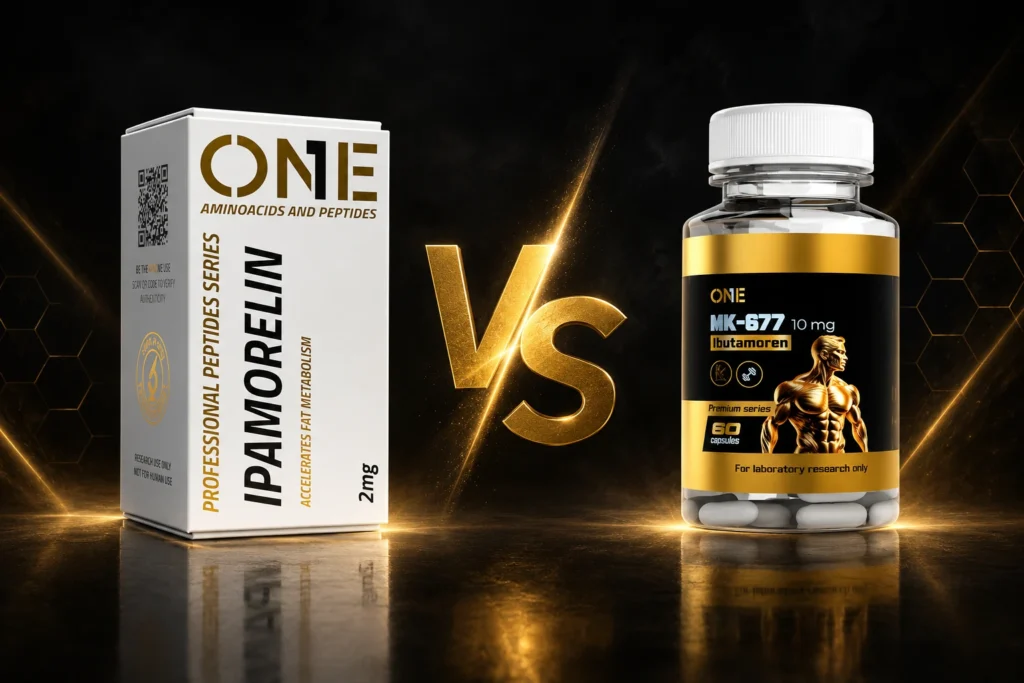
A research comparison of MK-677 and ipamorelin, focusing on GHS-R1a signaling, selectivity, administration route, human evidence and WADA status.
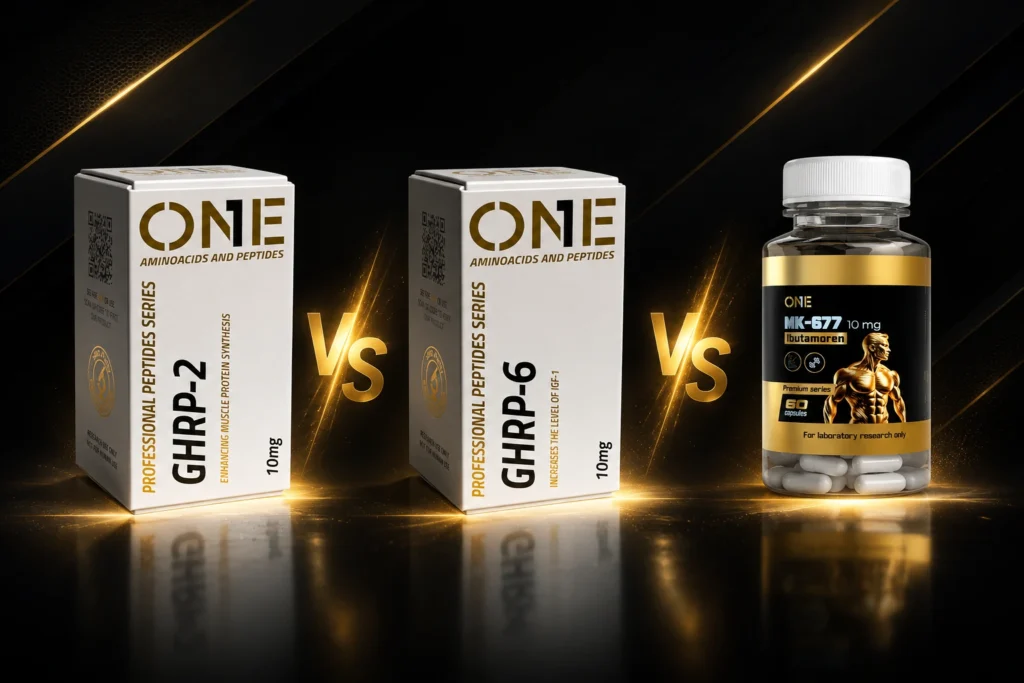
A research comparison of MK-677, GHRP-2 and GHRP-6, including receptor action, molecular class, administration route, evidence and WADA status.

A research comparison of cardarine and ostarine (MK-2866), two distinct compound classes with different targets, evidence bases and safety signals.
GHRP-2 and GHRP-6 are the two most frequently mentioned peptides from the family of growth hormone-releasing peptides – short, synthetic molecules that in research models stimulate the pituitary gland to release growth hormone. Both come from the same generation of secretagogues discovered by Cyril Y. Bowers’ team, and both act through the same receptor, the GHS-R1a ghrelin receptor. The record varies: in […]

YK-11 vs ostarine — a scientific comparison. Ostarine: clinical trials up to phase III. YK-11: in vitro only, no human data. See the key differences. Research reagents (RUO).

YK-11 — a steroidal partial androgen receptor agonist. The follistatin/myostatin pathway. Literature review. Cell-culture data only. Research reagent (RUO).

RAD-140 vs ostarine — a scientific comparison of two SARMs: research phase, model organism, selectivity and safety signals. Research reagents (RUO).
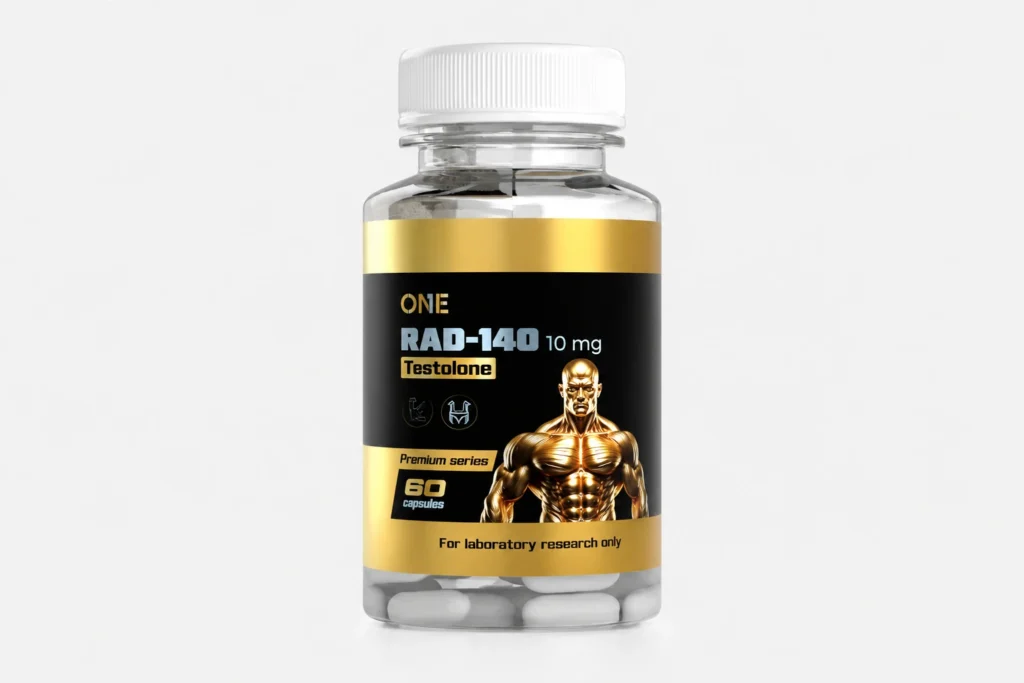
RAD-140 (Testolone): AR mechanism, neuroprotection and experimental oncology in models, a hepatotoxicity (DILI) signal and WADA status. Research reagent (RUO).

Andarine (S4) vs ostarine (MK-2866) — a scientific comparison of two SARMs: research phase, models, selectivity and safety signals. Research reagents (RUO).
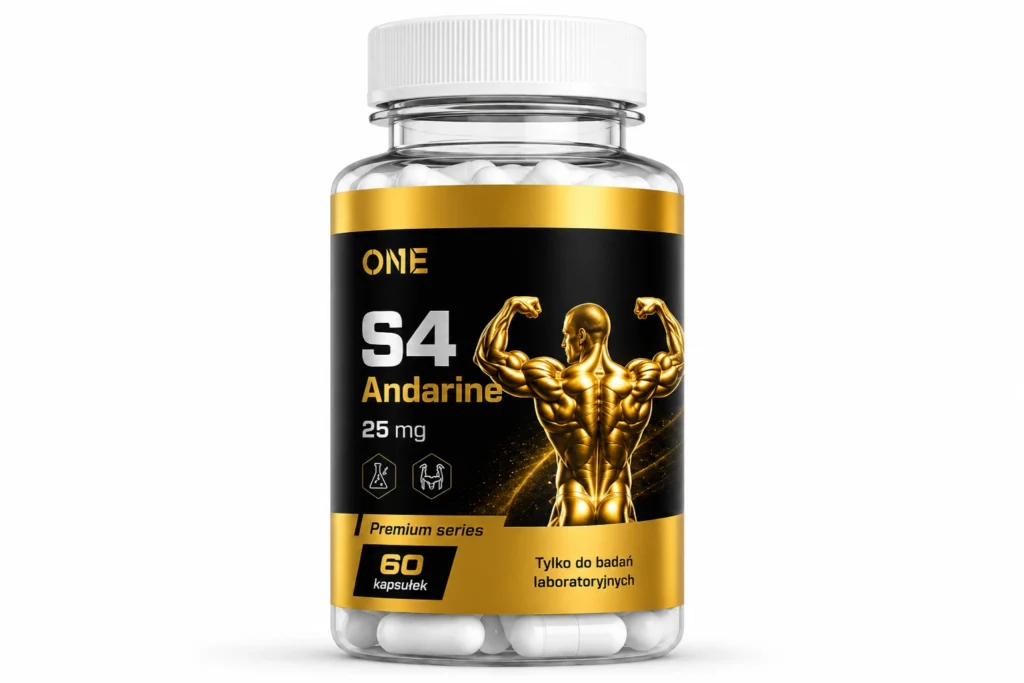
Andarine (S4, GTx-007) in research: SARM mechanism, preclinical rodent data, the vision profile (xanthopsia) and WADA S1 status. Research-reagent profile (RUO).

LGD-4033 vs ostarine (MK-2866) — a scientific comparison of two SARMs: research phase, models, tissue selectivity and safety signals. Research reagents (RUO).
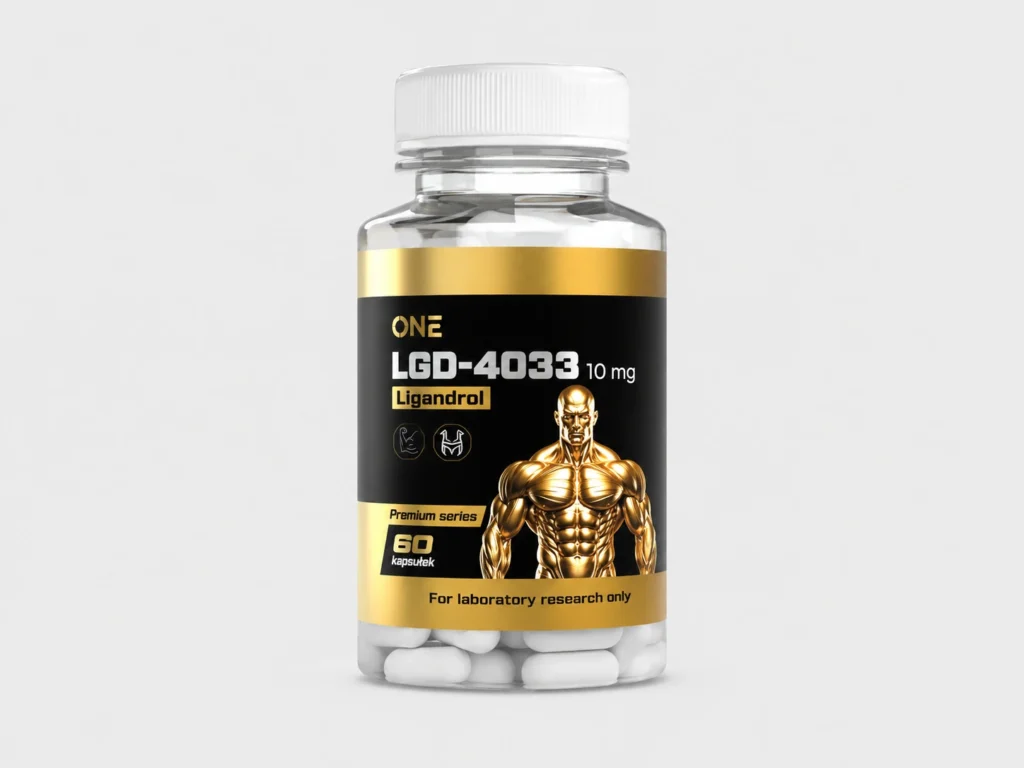
LGD-4033 (Ligandrol): SARM mechanism, phase I data in healthy volunteers, safety signals (testosterone suppression, a DILI case report) and WADA S1 status. Research reagent (RUO).

This material is intended for educational purposes only and describes the current state of knowledge in cell biology. It does not constitute medical advice, a
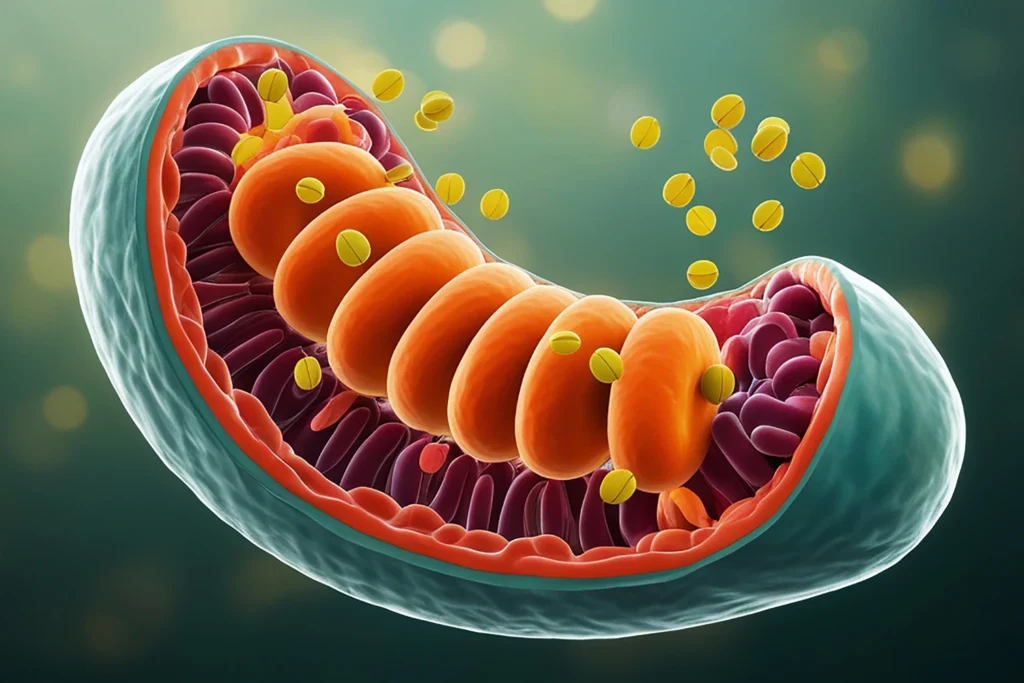
This article is for educational purposes only and presents the state of scientific knowledge on mitochondrial biology and the processes of ageing. It does not

The ageing of an organism is a progressive, multi-level accumulation of molecular and cellular damage that leads to a gradual loss of tissue function. Contemporary

This article is educational in nature and constitutes a review of the scientific literature on the molecular pathways studied in the biology of cellular ageing.

This article is educational in nature and constitutes a review of the published scientific literature on telomere biology and biomarkers of cellular ageing. It describes

This article is educational in nature and constitutes a review of the published scientific literature. A substantial part of the data cited comes from animal

MOTS-c (Mitochondrial ORF of the Twelve S rRNA type-c) is a mitochondrial-derived peptide composed of 16 amino acids, encoded not in the cell nucleus but
