Blog
The number of PubMed publications on synthetic peptides grows by several to more than ten percent each year. BPC-157 pentadecapeptide, Thymosin Beta-4 fragments, GLP-1 receptor agonists, and nootropic peptides from the Russian pharmacology school ? each of these directions has its own literature, research models, and methodological limitations. This blog organizes that knowledge by category.
Who is this blog for? For people evaluating peptides through analysis of available literature. For academic researchers, biohackers, lifestyle medicine physicians, and pharmacists looking for references to support patient discussions.

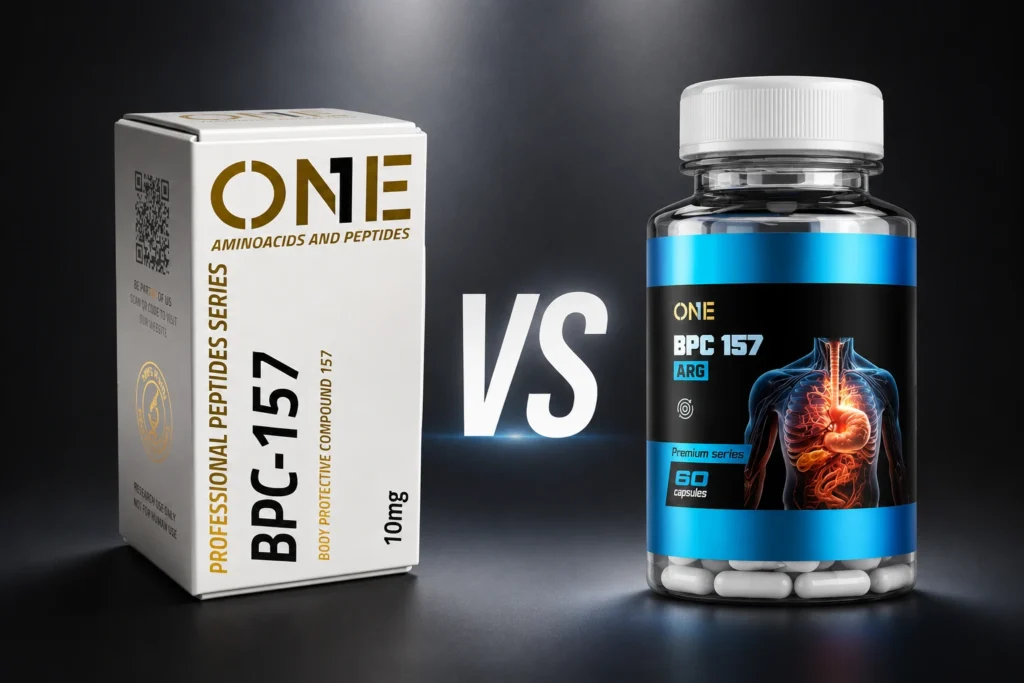
In the Research Use Only reagent market, the term “BPC-157” covers several chemical variants – differing in salt form, quality of synthesis and sometimes peptide sequence. The abbreviation ARG BPC-157 functions in suppliers’ catalogs as a separate marking and can be a source of real confusion – because it does not always refer to the same compound. For a researcher evaluating two “BPC-157” reagents for […]


Melanotan II was created in the mid-1980s by a team of Mac Hadley and Vincent Hruby from the University of Arizona working on an issue combining dermatology with peptide pharmacology: whether it is possible to induce skin pigmentation without exposure to ultraviolet radiation. Endogenous α-MSH (alpha-melanocyte-stimulating hormone) stimulates the MC1R receptor in melanocytes, triggering the eumelanin production cascade – if an analogue with […]

PT-141 was developed by the team of pharmacologist Mac Hadley at the University of Arizona working on synthetic analogues of α-melanocyte-stimulating hormone (α-MSH) – an endogenous proopiomelanocortin-derived peptide that regulates skin pigmentation through MC1R receptors in melanocytes. The hypothesis was practical: a stable α-MSH analogue could serve as an alternative to UV exposure in the induction of a protective tan. This is how the first analogue was created – Melanotan […]

DSIP, a peptide that has revolutionized the approach to sleep? In the mid-1970s, two Swiss neurophysiologists – Marcel Monnier and Guido Schoenenberger, working at the University of Basel – conducted a series of experiments that were to forever change the way we think about humoral substances that regulate sleep. The research hypothesis was bold: if deep sleep is neurochemical in nature, then […]

In 1970, the American immunologist Victor Najjar described a short, natural tetrapeptide, which he named tuftsin (after Tufts University, where he worked). The Thr-Lys-Pro-Arg sequence comes from the Fc fragment of the immunoglobulin G heavy chain (positions 289–292) and is formed physiologically by the enzymatic cleavage of IgG in the spleen and by neutrophil membrane enzymes. Function: stimulating the phagocytic activity of macrophages and neutrophils. Tuftsyn was […]

In the 1960s, Dutch neuroendocrinologist David de Wied observed something that changed the way we thought about adrenocorticotropic hormone (ACTH). Classically, this hormone was treated as a simple regulator of the adrenal axis – secreted from the pituitary gland, stimulating the adrenal cortex to produce cortisol. However, De Wied showed that ACTH has a strong, cortisol-independent behavioral effect: it modifies learning, memory and the […]

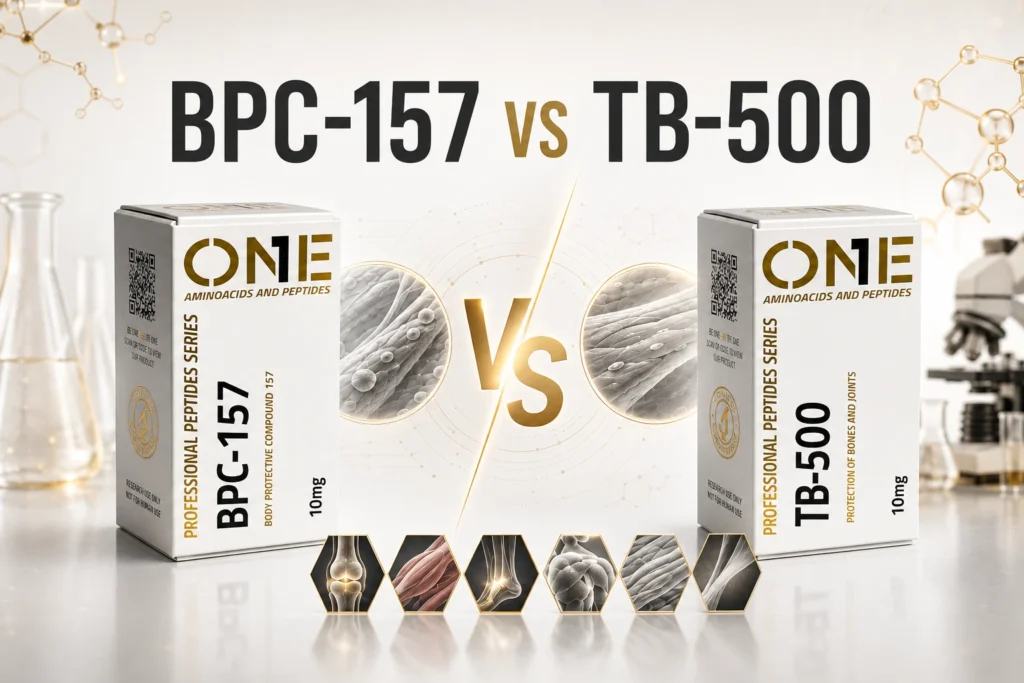
Two peptides. Two completely different origin stories. First isolated in the 1990s from human gastric juice by a Croatian pharmacologist looking for an answer to the question of why the stomach does not digest itself. The second one was described in 1981 by an American team examining proteins of the thymus of calves and their influence on the actin cytoskeleton. BPC-157 and Thymosin Beta-4 (commercially known as […]

In 1971, Soviet biologist Vladimir Khavinson began a research program in St. Petersburg (then Leningrad) whose framework hypothesis sounded seemingly speculative: if the aging process is partly regulated by signals from the endocrine glands, then isolating these signals and administering them to old animals should extend their lifespan. Khavinson focused specifically on the pineal gland, the gland that produces melatonin, […]

Retatrutide is currently considered the most effective and complete peptide for weight loss. In June 2023, the New England Journal of Medicine published a paper that quickly became one of the most discussed articles in metabolic pharmacology of the last decade. Ania Jastreboff’s team from Yale University presented the results of a phase II clinical trial on retatrutide, a peptide developed by Eli Lilly, […]

Semaglutide is currently the most famous weight loss peptide. In 2012, the Danish pharmaceutical company Novo Nordisk published a paper in the Journal of Medicinal Chemistry describing a molecule with the internal code NN9535. It was the seventh GLP-1 analogue designed by the company’s team during its more than twenty-year research program on incretin pharmacology, a program that began in […]

The first vial of bacteriostatic water was developed in the 1940s by the American pharmaceutical company E.R. Squibb & Sons in response to a concrete

A lyophilizate looks surprisingly small. You open the vial and see a thin, almost invisible layer of white powder at the bottom of the glass

A patient with advanced lung cancer may lose a substantial amount of muscle mass over several months. Not because they are not eating — they

At 25 your body produces growth hormone in amounts that maintain muscle, repair tissue, and deliver deep, restorative sleep. At 40 that production has halved.

Every cell in the body holds a protein whose abundance exceeds all other cytoskeletal proteins combined. Actin — that is the protein — is responsible

In the mid-1990s, a team led by Croatian pharmacologist Predrag Sikiric at the University of Zagreb was working on a puzzle that had long intrigued

Cardarine (GW-501516) is a synthetic PPARδ agonist investigated in cellular and animal models and in short clinical studies. This review distinguishes published findings from unconfirmed human effects and discusses the oncological signal, evidence gaps and Research Use Only status.
Six Knowledge Areas
Regenerative peptides and neuropeptides: molecular mechanisms
The broadest section of the catalog. It covers tissue-regeneration peptides (BPC-157, TB-500, GHK-Cu, PEG-MGF), neuropeptides (Semax, Selank, DSIP), and melanocortin peptides (PT-141, Melanotan II). Each article starts with the discovery context and then moves to the molecular mechanism: signaling pathways, target receptors, and pharmacokinetics.
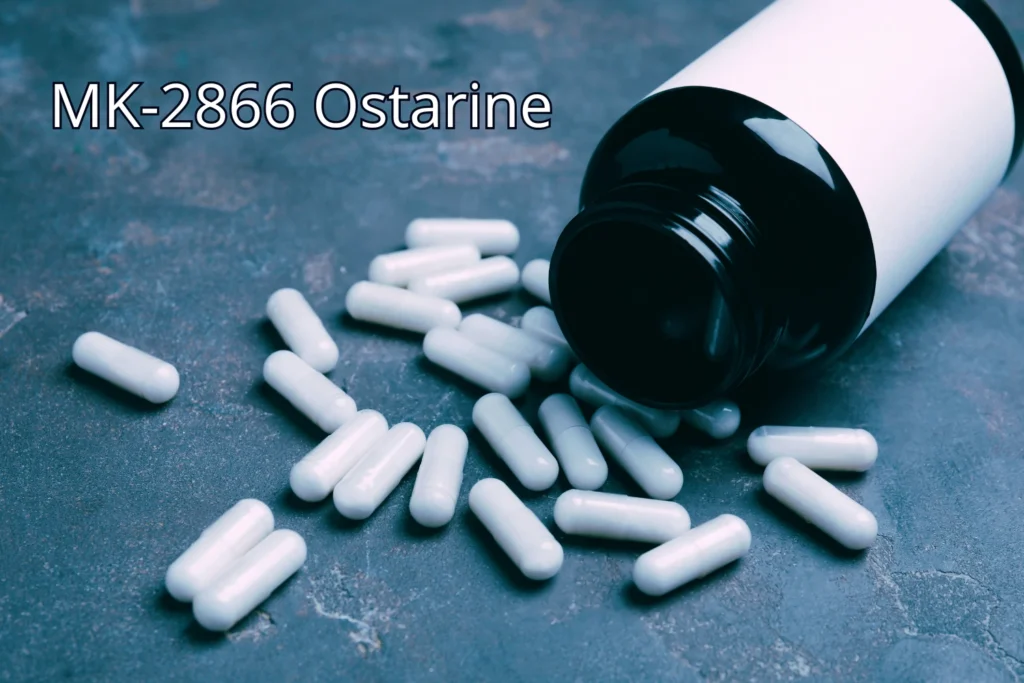
SARMs ? selective androgen receptor modulators
A class of non-peptide compounds with high affinity for the androgen receptor, intensively studied in the context of anabolic clinical protocols. This section discusses pharmacological mechanisms, phase I and phase II clinical data, and comparisons of research profiles across individual compounds.
Laboratory practice ? reconstitution, storage, analysis
A procedural section. It explains how to correctly reconstitute a lyophilized reagent, which water to use, how to maintain solution stability in the cold chain, and how to interpret the analytical document attached to each batch. Materials for people running laboratory protocols.
Metabolism and incretins ? GLP-1 peptides
A section focused on one of the fastest-growing pharmacological classes of the 21st century: GLP-1 receptor agonists and their derivatives. It covers semaglutide (first generation, well established in clinical trials) and retatrutide (a GLP-1/GIP/glucagon tri-agonist, currently in phase III clinical trials).
Anti-aging and longevity ? peptides in aging research
The fifth area: peptides in the context of cellular aging processes, telomere regulation, neuroplasticity in later adulthood, and social-axis hormones (oxytocin). This section maintains methodological rigor ? highlighting that most evidence still comes from animal models or short-term human trials.
Quality, safety, and regulation
An analytical and regulatory section. It explains how HPLC and MS methods work, which standards apply to research-peptide suppliers in Europe, what to look for when evaluating a source, and what legal status research peptides have in the Polish regulatory system.