Pens — pre-dissolved research reagents for laboratory research
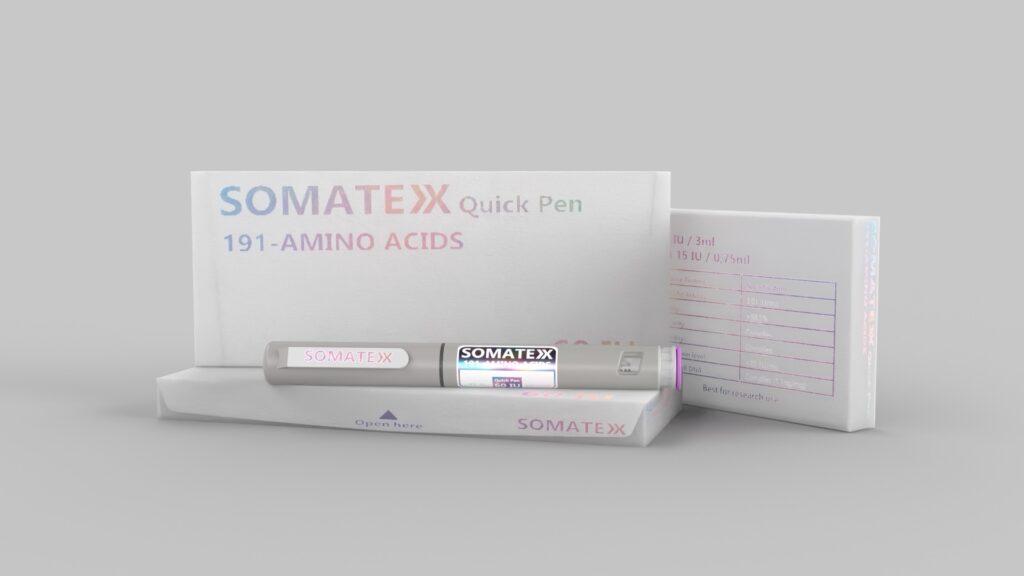
The pens category groups products in a pre-dissolved pen format — regardless of the molecule class. A pen is a physical form of a research reagent: a peptide or protein ready for withdrawal, without a lyophilizate reconstitution step. All items in this category are chemical reagents intended exclusively for laboratory research (Research Use Only) — they are not medicinal products or dietary supplements, despite the visual resemblance to pharmaceutical pens. Every batch comes with an HPLC certificate ≥98%, identity confirmation by mass spectrometry and full COA documentation. Browse the available pens below.
What the pen format is in the One Peptides catalog
A pen is a physical form of a research reagent — a cartridge containing a peptide or protein in a ready, pre-dissolved solution, with an applicator allowing precise withdrawal. Unlike a lyophilizate in a vial, which requires reconstitution in bacteriostatic water before use, a pen is ready for work from the moment it is first opened.
The pens category is a format category, not a thematic one — it groups products by physical form, not by the pharmacological class of the molecule. In one place you will find pens containing peptides from different research areas: incretin, regenerative and growth hormone. The common denominator is the pen format and the Research Use Only reagent status.
Why the pen format — advantages in laboratory work
A pre-dissolved pen simplifies working with a reagent in a laboratory protocol compared with a classic lyophilizate:
- No reconstitution step — the peptide is ready for withdrawal, which eliminates the time and the risk of error at the solution preparation stage
- Defined starting concentration — the peptide content and solution volume are defined (details in the batch COA), which facilitates reproducibility of calculations
- Precise withdrawal — the pen applicator allows controlled withdrawal of microliter volumes
- Convenience in longer series — the pen reduces the number of manual operations across many samples
The vial format (lyophilizate) remains valuable in protocols requiring full control over the working solution concentration — the researcher selects the solvent volume to reach the desired concentration. The choice between a pen and a vial depends on the nature of the experiment: a pen for convenience and reproducibility, a vial for precise concentration control. The peptide calculator is helpful for concentration calculations.
RUO pen vs. pharmaceutical pen — a fundamental difference
This distinction is the most important one for this category. The RUO pens in the One Peptides catalog are visually similar to pharmaceutical pens — such as Ozempic, Wegovy (semaglutide, Novo Nordisk), Mounjaro, Zepbound (tirzepatide, Eli Lilly) or somatropin pens. Visual similarity does not, however, remove the fundamental regulatory difference.
| Feature |
RUO pen (this category) |
Pharmaceutical pen (medicinal product) |
| Regulatory status |
Research reagent (Research Use Only) |
Registered medicinal product (EMA, FDA) |
| Intended use |
Laboratory research |
Use in humans under medical supervision |
| Documentation |
COA per batch, HPLC ≥98%, MS |
Full registration documentation, SmPC, package leaflet |
| Sale |
Trade in chemical reagents |
Prescription only |
| Label |
“For research use only. Not for human use” |
Full medicinal product leaflet |
| Oversight |
Analytical quality documentation |
EMA/FDA pharmacovigilance |
Some molecules available in RUO pens belong to the same chemical class as registered medicinal products — for example the GLP-1/GIP dual agonist (tirzepatide class) or somatropin (recombinant growth hormone). Belonging to the same chemical class does not make a RUO reagent a medicinal product. A RUO pen and a pharmaceutical pen come from two separate regulatory frameworks, with two different sets of documentation and two different intended uses. A RUO reagent is not intended for use in humans.
What you will find in the pens — overview of molecule classes
The pen format covers several research areas in the One Peptides catalog. The composition of the category changes with the product range, but it usually spans a cross-section of the following classes:
Incretin and metabolic peptides
GLP-1/GIP dual agonists (tirzepatide class), GLP-1 mono-agonists (semaglutide class), GLP-1/GIP/glucagon tri-agonists (retatrutide class) and peptide combinations (semaglutide with an amylin analog). Studied in the context of incretin-axis pharmacology and metabolism — the full cross-section is in the GLP-1 category.
Regenerative peptides
BPC-157 (cytoprotective pentadecapeptide), TB-500 (Thymosin Beta-4 fragment) and their combinations — studied in preclinical models of tissue regeneration, angiogenesis and soft-tissue repair.
Growth hormone
Recombinant somatropin (191 amino acids) — studied in the context of the GH-IGF1 axis and growth hormone receptor signaling; full category: 191 amino acid sequence.
Each of these classes has its own product page with full chemical characterization, mechanism in a research frame and a certificate of analysis. The full overview of molecules available in pens can be found among the products in this category.
Regulatory status and WADA
All pens in this category are Research Use Only research reagents — regardless of the molecule class. RUO status denotes trade in chemical reagents, not medicinal products. No pen in this category is a medicinal product registered by the EMA or FDA, even though some molecules have registered pharmaceutical counterparts within a separate regulatory framework.
WADA — an important note for athletes. Some of the molecules available in pens are on the WADA prohibited list:
- Somatropin (growth hormone) — category S2 (peptide hormones, growth factors), prohibited at all times
- TB-500 (Thymosin Beta-4) — category S2, prohibited at all times
- BPC-157 — section S0 (non-approved substances), prohibited at all times
- GLP-1/GIP peptides — approved medicines of this class (e.g. semaglutide, tirzepatide) are not on the 2026 List; molecules without approval for human therapeutic use fall under section S0, prohibited at all times
Athletes subject to anti-doping testing should verify the status of a specific molecule against the current WADA list before any use. The status of each item is indicated on the product page.
What unites all pens — quality
Regardless of the molecule class, every batch in pen format goes through an analytical quality control procedure:
- HPLC ≥98% — chromatographic purity confirmed by high-performance liquid chromatography
- MS confirmation — structural identity confirmed by mass spectrometry
- COA per batch — a public certificate of analysis for each batch (see quality testing and certificates)
- Cold chain 2–8°C — cold chain from synthesis to delivery; peptides and proteins in pens are temperature-sensitive
- Batch traceability — the batch number recorded on the pen, the invoice and the COA
A batch that fails any one of the five rules does not leave the warehouse.
Frequently asked questions
How does a pen differ from a lyophilizate in a vial?
A pen contains a peptide or protein in the form of a pre-dissolved solution, ready for withdrawal without a reconstitution step. A lyophilizate in a vial is a dry powder requiring reconstitution in bacteriostatic water before use — it gives full control over the working solution concentration. The active substance and analytical quality are identical in both formats; they differ in working convenience and concentration control.
Is a RUO pen a medicinal product, since it looks like Ozempic or Mounjaro?
No. RUO pens are visually similar to pharmaceutical pens, but they are chemical reagents for laboratory research — not medicinal products. A pharmaceutical pen (Ozempic, Wegovy, Mounjaro, Zepbound) is a medicinal product registered by the EMA/FDA, available on prescription. A RUO pen functions within the trade in chemical reagents with analytical documentation, with no intended use in humans. These are two separate regulatory frameworks.
How long does a pen retain activity after opening?
Stability depends on the specific molecule and storage conditions — typically up to a few weeks at 2–8°C from the first withdrawal. Detailed stability data are in the batch COA. Peptides and proteins in pens are sensitive to heat and light; freeze-thaw cycles should be avoided.
Which molecules are available in pen format?
The pen format covers incretin and metabolic peptides (semaglutide, tirzepatide, retatrutide classes), regenerative peptides (BPC-157, TB-500 and combinations) and growth hormone (somatropin). The composition of the category changes with the product range — the current overview can be found among the products in this category.
Do all pens have the same quality?
Yes. Every batch of every pen goes through the same analytical control: HPLC ≥98%, MS confirmation, COA per batch, cold chain 2–8°C, batch traceability. The standard is uniform across the entire category regardless of the molecule class.
Are the molecules in pens on the WADA list?
It depends on the molecule. Somatropin and TB-500 are on the WADA prohibited list (category S2, prohibited at all times). BPC-157 is on the Prohibited List in section S0 (non-approved substances). Approved GLP-1/GIP medicines are not on the List; molecules of this class without approval fall under section S0. Athletes subject to anti-doping testing should verify the status of a specific molecule against the current WADA list. The status is indicated on each product page.
Product status. All items in this category are chemical reagents intended exclusively for laboratory research (Research Use Only) — they are not medicinal products, dietary supplements or foodstuffs, despite the visual resemblance to pharmaceutical pens. Some molecules available in pens have registered pharmaceutical counterparts (semaglutide → Ozempic/Wegovy, tirzepatide → Mounjaro/Zepbound, somatropin → endocrinological medicinal products) solely within a separate regulatory framework; a RUO reagent is not a medicinal product and is not intended for use in humans. Some molecules are on the WADA prohibited list (somatropin, TB-500 — S2; BPC-157 — S0). The status of each item is indicated on the product page.
 ES
ES  EN
EN  DE
DE