 DE
DE  EN
EN  ES
ES 

A research-focused comparison of Melanotan II and PT-141, covering melanocortin receptor selectivity, evidence, safety signals and regulatory status.
NMN has been the star of longevity supplementation for the last five years. It appears on David Sinclair’s podcasts, in biohacker protocols, and on premium drugstore shelves. Marketing easily exceeds science here – and at the same time, some laboratory observations on NMN and NAD+ are so thoroughly documented that they cannot be ignored. This article sorts out the picture: what exactly NMN is, what we know from animal studies, what we know from human studies, and where the scope of the evidence currently ends.
Nicotinamide Mononucleotide (NMN, β-nicotinamide mononucleotide) is a naturally occurring nucleotide – a direct precursor of NAD+ in the salvage pathway. Researched as a supplement component to support energy metabolism and NAD+ homeostasis in the context of cellular aging, although most of the strongest evidence comes from animal models – not randomized clinical trials in humans.
This article is educational and describes the current state of the scientific literature on NMN and NAD+ metabolism. Contents does not constitute medical advice or suggestions for treatment of a specific ailment. The European Food Safety Authority (EFSA) has not approved any health claim for NMN — all mentions of research results remain in a scientific, not regulatory, framework.
NMN it β-nicotinamide mononucleotide — a nucleotide composed of three elements: a nicotinamide base (a form of vitamin B3), a ribose sugar and a phosphate group. It has a function in cells direct precursor of NAD+ (nicotinamide-adenine dinucleotide) – a cofactor present in all cells of the body and involved in hundreds of metabolic reactions.
NMN occurs naturally in small amounts in food – avocado, broccoli, cabbage, edamame and raw beef. However, concentrations in food products are on the order of single milligrams per kilogram, so diet is not the source of the amounts tested in supplementation protocols (250–1000 mg per day). NMN is also produced in the body endogenously — from nicotinamide (NAM) through the action of the enzyme NAMPT (nicotinamide phosphoribosyltransferase), a key step in the NAD+ salvage pathway.
The conversion of NMN to NAD+ requires one additional enzymatic step – action NMNAT (nicotinamide mononucleotide adenylyltransferase), which adds a second nucleotide (AMP) to NMN. This is how NAD+ is created – ready to participate in oxidation-reduction reactions and cell signaling.
| Parameter | Value |
|---|---|
| Full name | β-nicotinamide mononucleotide |
| Abbreviation | NMN |
| Class | Nucleotide, precursor of NAD+ |
| Molecular mass | 334.22 Da |
| Natural occurrence | Avocado, broccoli, cabbage, edamame (trace amounts) |
| Endogenous formation | NAM + PRPP → NMN via NAMPT |
| Step to NAD+ | NMN + ATP → NAD+ via NMNAT |
| Chemical form in supplements | β-NMN (anomeric active form) |
NAD+ is a fundamental cellular cofactor involved in four main groups of reactions:
The concentration of NAD+ in human tissues decreases with age. Studies on skeletal muscle, brain and serum samples reported a reduction in NAD+ pool by approximately 50% between the ages of twenty and sixty. This decline is attributed to several parallel mechanisms: a decline in NAMPT activity in senescent cells, an increase in CD38 activity (which consumes NAD+ in response to age-related systemic inflammation), and the accumulation of DNA damage that overloads PARP.
Hypothesis decrease in NAD+ concentration (NAD+ decline) — increasingly better documented in the literature of the last decade — links a decrease in the NAD+ pool with mitochondrial dysfunction, DNA repair disorders and weakening of sirtuin signaling (Imai & Guarente 2014, Trends Cell Biol). This is the narrative that underlies the interest in NAD+ precursors as components of longevity-supporting supplementation.
In the cell, NAD+ is constantly used and regenerated. Salvage Trail is a pathway for recycling nicotinamide (NAM) — released from NAD+-consuming reactions — back to NAD+. NMN supplementation provides a substrate that enters this pathway at the stage bypassing the first enzymatic limitation (NAMPT activity). Action hypothesis:
The mechanism is biochemically consistent. Question, which research does not yet fully answer, is whether oral administration of NMN in humans actually translates into a measurable change in NAD+ concentration in target tissues (muscles, brain), and whether this change has phenotypic consequences on health and life expectancy. These are two separate questions – and the science is in a different place on both questions.
The research achievements on NMN are divided quite sharply into two layers. The first one – very rich, often reporting spectacular results – is animal models (mainly mice). The second one, much more modest and more cautious in its conclusions, is: clinical trials on humans.
| Mechanism/effect | Research model | What has been demonstrated | The power of evidence |
|---|---|---|---|
| Increase in NAD+ concentration in muscles after NMN supplementation | Mice, long term | 50-100% increase in NAD+ in skeletal muscles | Robust – replicated many times |
| Improving mitochondrial function | Old mice + NMN | Increased PGC-1α gene expression, better exercise capacity (Mills 2016) | Robust in the mouse model |
| Increased maximum lifespan | Mice | Inconclusive – single positive studies, no replication in long-term RCTs on another strain | Medium – requires replication |
| Increase in NAD+ concentration in humans after NMN supplementation | Phase I/II clinical trial, n=21 (Yoshino 2021) | Increased intracellular NAD+ in PBMCs, improved insulin sensitivity in postmenopausal women with prediabetes | Medium – small study, specific population |
| Short-term safety in humans | Clinical trials 8–12 weeks | Tolerance profile: mild, doses up to 1250 mg/day (Fukamizu 2022) | Medium – short horizon |
| Effects on markers of aging in humans | There are no RCTs with endpoints such as mortality or healthspan | — | No data available |
| Improving exercise capacity in humans | Liao 2021 – n=48, amateur runners | Improving aerobic capacity in the running test | Weak – single study, short horizon |
Animal data for NMN are robust in terms of increasing the NAD+ pool and improving mitochondrial function. Sinclair, Imai and other lab teams replicated these observations in multiple models. This is not a field where the controversy is about mechanism – the controversy is about extrapolation from the mouse model to humans.
Human data remains in its early stages. Yoshino et al. (2021) published in Science the first randomized placebo-controlled trial with NMN in humans (250 mg/day for 10 weeks in postmenopausal women with prediabetes) — showed an improvement in insulin sensitivity, but in a specific population and with a moderate effect. Liao et al. (2021) published data suggesting improvements in aerobic capacity in recreational runners. Fukamizu et al. (2022, Scientific Reports) reported the safety profile for oral β-NMN supplementation in healthy adults – without significant adverse events. All these studies are there small (n=20–80) and short (8–12 weeks), designed with intermediate endpoints (insulin sensitivity, exercise capacity, NAD+ concentration in blood), not with hard endpoints such as mortality or healthspan.
Position at the end of the section: NMN has a viable mechanistic rationale and early signals of efficacy in humans. NMN has no documented life-extension effect in humans and no EFSA-approved health claims. A careful reading of the research recognises these limits of evidence and calibrates expectations accordingly.
NMN is not the only NAD+ precursor on the supplement market. NR (nicotinamide riboside) is the second popular precursor – sold under the brand names Niagen, Tru Niagen and others by ChromaDex and independent distributors. The biochemical class is related – NR is a precursor to NMN (the NRK enzyme converts NR to NMN), so the entire route leads to the same end result (NAD+).
| Characteristic | NMN | NO |
|---|---|---|
| Class | Nucleotide | Nucleoside |
| Conversion to NAD+ | NMN → NAD+ (1 step NMNAT) | NR → NMN → NAD+ (2 steps: NRK + NMNAT) |
| Molecular mass | 334.22 Da | 255.25 Da |
| Mechanism of absorption (debate) | Slc12a8 or hydrolysis to NR | Directly through nucleoside transporters (Trammell 2016) |
| Human research achievements | Yoshino 2021, Fukamizu 2022, Liao 2021 | Trammell 2016, Martens 2018, Conze 2019 |
| Stability | Less stable in low pH conditions | More stable in gastric conditions |
| Regulatory status in the EU | Novel Food (procedure in progress) | authorized Novel Food (from 2019, ChromaDex) |
| Typical amount in research | 250–1000 mg/day | 250–1000 mg/day |
Practical position: NR has a slightly larger publication record in humans (mainly due to prior commercialization), but mechanistic and clinical data suggest comparable effectiveness both precursors in increasing the NAD+ pool. The choice between NMN and NR in a supplement protocol is more often dictated by availability, price, regulatory status, and personal choice rather than a hard advantage of one over the other.
Short-term clinical trials on NMN (up to 12 weeks) report mild tolerance profile. Fukamizu et al. (2022, Scientific Reports) evaluated the safety of oral β-NMN supplementation in healthy adult men and women – they showed no significant adverse events. In other clinical studies, side effects reported were mainly mild and transient: gastrointestinal symptoms (nausea, discomfort) in single participants, headaches in isolated cases.
The long-term safety profile in humans is not documented on a multi-year scale. The longest published studies are 12-week RCTs. The tolerance profile over many years of daily use is extrapolated from shorter observations and from animal models.
European Union. NMN is subject to the procedure Novel Food in accordance with Regulation 2015/2283/EU – a formal path for authorizing ingredients that were not widely consumed in the EU before 1997. The procedure is ongoing and has not been completed. In practice NMN is marketed in many EU Member States as an ingredient in dietary supplements under national regulation, although EFSA’s formal position on both safety and permitted health claims remains open. EFSA has not approved any health claim for NMN — all marketing phrases such as “NMN supports rejuvenation”, “NMN prolongs life”, “NMN reverses aging” are inconsistent with EU law. Full context of the legal status in article on EU law.
United States. In 2022, the FDA issued a position reclassifying NMN as an ingredient drug-eligible (and not DSHEA-eligible) due to ongoing clinical research on NMN in the context of disease. In practice, NMN is still marketed as a dietary supplement in the US, but the regulatory status is ambiguous and may change.
Japan. NMN is sold as a supplement without specific restrictions. Traditionally, many Japanese companies (Mirailab, NMNJP) are active in production.
China. NMN is available as a supplement in domestic and export trade.
Australia, New Zealand. Supplement status with minor specific state regulations.
NMN regulatory status may change in the coming years – EFSA’s opinion on the Novel Food procedure is awaited. Current positions are published by EFSA and national food safety authorities.
One Peptides offers NMN 500 mg in capsules as a research reagent (Research Use Only). Each batch is subject to analytical control – HPLC ≥98% confirms the purity of β-NMN, mass spectrometry verifies chemical identity, COA per batch documents the batch in a way that allows full traceability. A 2-8°C cold chain from warehouse to delivery minimizes the risk of NMN degrading before opening the package (NMN is sensitive to heat and moisture at room temperature). Full description of the QA process and sample COA in quality tests and certificates.
Product status in the One Peptides catalog: research reagent (Research Use Only) — intended exclusively for laboratory research. It is not a dietary supplement, food or medicinal product and is not intended for human consumption.
NMN does not replace research peptides available in the catalog. A complementary research strategy in the NAD+ metabolism cluster is 5-amino-1MQ (NNMT inhibitor – protects nicotinamide against methylation catabolism, acting “from the other side” of the rescue pathway); a mitochondrial peptide that activates AMPK and retrograde signaling MOTS-c. Some researchers analyzing NAD+ metabolism combine these pathways in experimental protocols on the biology of aging.
Animal models suggest that NMN supplementation increases NAD+ pools and improves mitochondrial function in aging mice. We do not have such data for humans on a multi-year scale. Clinical trials on NMN are at an early stage (n=20–80, 8–12 weeks) and measure intermediate endpoints (insulin sensitivity, exercise capacity), not hard endpoints such as mortality or years lived in health. EFSA has not endorsed any “anti-aging” claim for NMN. Position: Robust mechanistic data, promising early human data, no documented effect on human lifespan.
Mechanistically, both precursors lead to the same NAD+ pool. NR has a slightly larger background of human publications (previously commercialized by ChromaDex), NMN has a stronger base of animal models from the Sinclair school. The practical effectiveness in increasing intracellular NAD+ appears to be comparable. The choice is more often dictated by price, availability and regulatory status – NR has been authorized as a Novel Food in the EU since 2019, NMN is still in the process.
Short-term clinical trials (up to 12 weeks, doses 250–1250 mg/day) report mild tolerance profile — no significant adverse events. Reported side effects are mainly mild and transient (GI symptoms, headaches in individual participants). The long-term profile over many years is not documented.
In published human RCTs, the typical range is 250–1000 mg per day. Yoshino 2021 (Science) used 250 mg/day for 10 weeks. Fukamizu 2022 (Scientific Reports) – safety evaluation of β-NMN in healthy adults. Liao 2021 – 300 mg/day. Doses >1000 mg/day are less frequently studied and have less safety data.
NMN is the direct precursor of NAD+ in the salvage pathway. After absorption, NMN reaches the cells and is converted by the NMNAT enzyme to NAD+. An increase in the NAD+ pool increases the activity of NAD+-dependent enzymes – sirtuins (deacetylases that regulate gene expression), PARP (DNA repair) and CD38 (signaling). The mechanism is biochemically consistent, although the exact manner in which NMN is taken up by cells remains an area of debate in the literature.
NMN links thematically with other areas of aging biology in the One Peptides catalogue. Epithalon is a peptide studied in models of telomere regulation – another mechanism for supporting longevity, parallel to NAD+ metabolism. MOTS-c is a mitochondrial peptide that activates AMPK and modulates the expression of metabolic response genes – it acts at the signaling level, while NMN acts at the cofactor level. 5-amino-1MQ is an NNMT inhibitor that protects nicotinamide against methylation catabolism – a complementary strategy to NAD+ precursors (“the other side of the rescue pathway”). Longevity research programs often combine these pathways in experimental protocols.
In a broader metabolic context, NAD+ is a central cofactor of the mitochondrial axis – connecting with the biology of insulin sensitivity, regulation of glycemia and energy expenditure. This is the field where narratives about longevity and metabolism intersect.
NMN is a NAD+ precursor with the widest preclinical track record among longevity supplementation ingredients. last decade. Animal models consistently report increases in NAD+ pools and improved mitochondrial function following NMN supplementation. Human clinical trials are at an early stage – single RCTs (Yoshino 2021, Fukamizu 2022, Liao 2021) report positive signals at intermediate endpoints, but in small populations and over a short time horizon.
EFSA has not approved any health claim for NMN. The Novel Food procedure in the EU remains open. The supplement is marketed in the EU under national regulations and as a product – with careful descriptive language and an educational approach to evidence.
A careful reading of the NMN research takes into account the sequence of evidence (animal → human), the scale of effects (subtle, over several weeks) and current regulatory guidance — NMN is not a “rejuvenation pill”.
This article is of an educational nature and describes the current state of scientific literature on NMN and NAD+ metabolism; does not constitute medical or dietary advice or a treatment suggestion for a specific ailment. EFSA has not approved health claims for NMN — any mention of research results remains in a scientific, not regulatory, framework.
More articles from this cluster: anti-aging & longevity category.

A research-focused comparison of Melanotan II and PT-141, covering melanocortin receptor selectivity, evidence, safety signals and regulatory status.
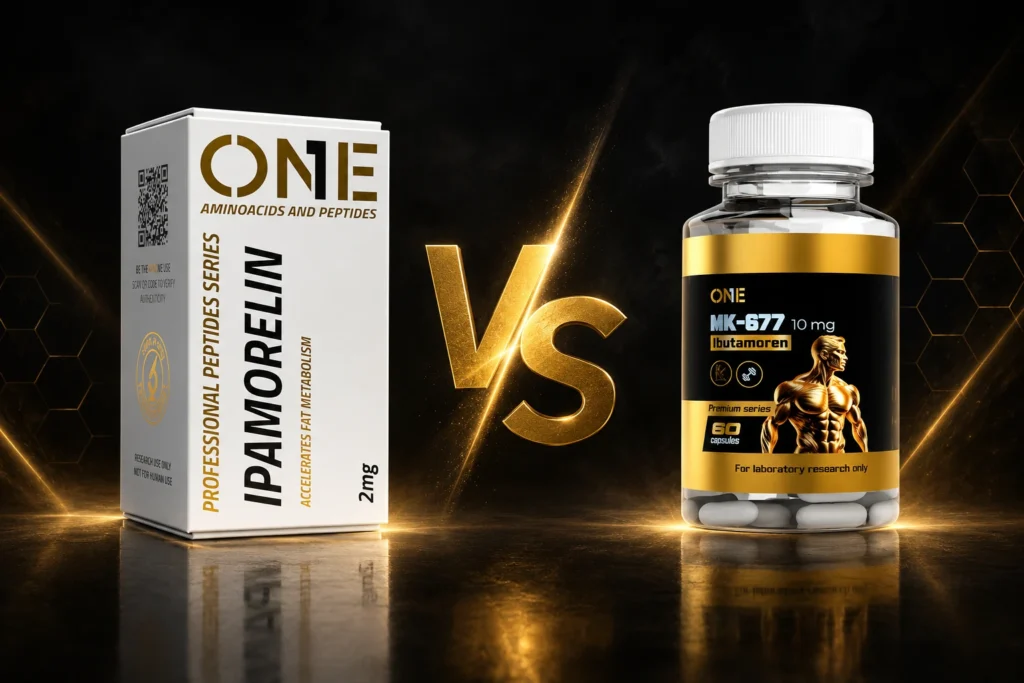
A research comparison of MK-677 and ipamorelin, focusing on GHS-R1a signaling, selectivity, administration route, human evidence and WADA status.
