DE
DE  EN
EN  ES
ES 
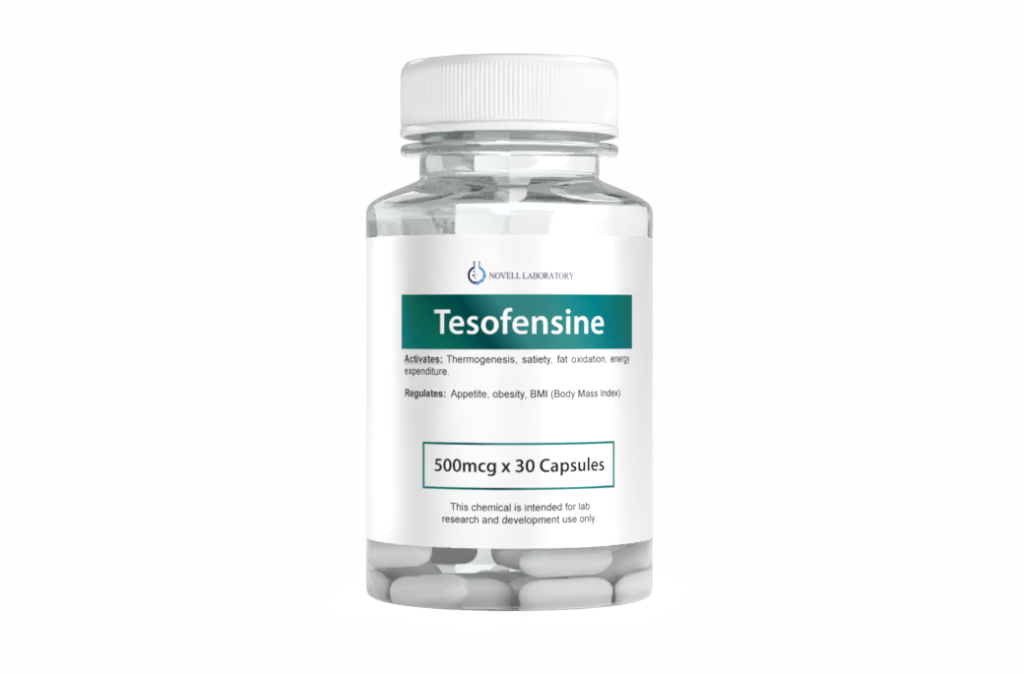
Tesofensine (scientific name: tesofensine, code NS2330) is a small organic molecule of the class triple monoamine reuptake inhibitor (TRI) — simultaneous inhibitor of dopamine, noradrenaline and serotonin reuptake. Originally developed by NeuroSearch for Alzheimer’s and Parkinson’s disease (programs with negative results), currently developed by Saniona for obesity – phase III clinical trials ongoing. In the One Peptides catalog, available as Tesofenise 500 mcg / 30 capsules. Each batch with certificate of analysis: HPLC ≥98%, MS identity confirmation, batch documentation. Status: chemical reagent intended exclusively for laboratory research (Research Use Only). Browse the available variants below and check the specifications in the COA before purchasing.
Tesofensine belongs to the metabolic modulators category as the only monoamine reuptake inhibitor in the catalogue.
Tesofensine (tesofensine, laboratory code NS2330) is small organic molecule with a molecular weight of approximately 333 Da. It is not a peptide — is a synthetic small-molecule substance belonging to the pharmacological class known as triple monoamine reuptake inhibitor (TRI), i.e. a simultaneous inhibitor of the reuptake of three neurotransmitters: dopamine (DA), norepinephrine (NA) and serotonin (5-HT).
The history of the molecule’s development includes two distinct research directions. Initially, tesofensine was created in the laboratories of a Danish company NeuroSearch as a drug candidate for Alzheimer’s disease and Parkinson’s disease – in both programs, clinical trials gave negative results (lack of effectiveness in the endpoints of cognitive functions and motor symptoms, respectively). An unexpected side effect was observed during these studies: significant weight reduction in patients. This observation became the basis for repositioning the molecule towards the pharmacotherapy of obesity. The development rights were taken over by the company Saniona, which is currently conducting research Phase III in this indication.
| Parameter | Value |
|---|---|
| Scientific name | tesofensine (code NS2330) |
| Polonization | tesofensine |
| Trade name in the One Peptides catalog | Tesofenise |
| Pharmacological class | triple monoamine reuptake inhibitor (TRI) |
| Mechanism | inhibition of DA + NA + 5-HT uptake |
| Molecule type | small organic molecule (not a peptide) |
| Molecular weight | ~333 Da |
| Form in the catalogue | capsules |
| Active substance content | 500 mcg/capsule |
| Number of capsules | 30 |
| Cleanliness | HPLC ≥98% |
| Identity confirmation | MS (mass spectrometry) |
| Regulatory status | Research Use Only (research reagent) |
| Clinical development stage | phase III (Saniona, obesity) |
Tesofensin acts simultaneously on three monoamine systems, blocking their reuptake in the synaptic space. Each of the three pathways is responsible for a different component of the regulation of the energy balance of the central nervous system.
Dopamine reuptake inhibition (DAT transporter) prolongs the presence of dopamine in the synapses of the reward system – mainly the mesolimbic pathway and the striatum. In the context of obesity, this is explained by modulation appetitive motivation (hedonic appetite, i.e. eating for pleasure and not to satisfy metabolic hunger) and the activity of the reward system in response to food stimuli.
Inhibition of norepinephrine uptake (NET transporter) increases sympathetic activity – which translates into increase in resting energy expenditure and thermogenesis component. This is a qualitative difference compared to drugs acting solely by suppressing appetite – tesofensine in phase II generated a negative energy balance on both sides of the equation.
Inhibition of serotonin uptake (SERT transporter) maintains the satiety signal generated by POMC neurons in the arcuate nucleus of the hypothalamus and influences mood and the control of eating impulsivity.
The mechanism of tesofensin is qualitatively different from that of incretins (semaglutide, tirzepatide, retatrutide), which act as agonists of GLP-1 / GIP / glucagon receptors at the peripheral and central levels. Incretins delay gastric emptying and enhance the endocrine satiety signal; tesofensine modifies CNS monoaminergic neurochemistry. For this reason, both classes are studied independently and may generate different effect profiles and different safety profiles.
The most widely cited Phase II trial of tesofensine in obesity is TIPO-1 — multicenter, randomized, double-blind, placebo-controlled study, published in Lancet in 2008 (Astrup A. et al.). In the active arm (dose 1.0 mg/day for 24 weeks, combined with a hypocaloric diet), body weight reductions of ~10% compared to baseline, which significantly exceeded the result of the placebo arm. These data justified further development of the molecule.
After taking over the rights by Saniona the clinical program has been expanded. Currently, tesofensine is found in phase III clinical trials in obesity (Saniony program). Phase III is the final stage of clinical development before a possible registration application to regulatory agencies – it requires full documentation of effectiveness and safety in a large population. The result of this phase will determine the possible registration of the molecule as a drug.
Safety profile observed in Phase II included hemodynamic changes characteristic of the monoaminergic class – mainly increase in heart rate and increase in diastolic pressure. Sleep disturbances, dry mouth and mood changes have also been reported. The profile of these side effects is consistent with the mechanism of action and pharmacological class and is being monitored in ongoing phase III studies.
In the One Peptides range, tesofensine is listed under its trade name Tesofenise in one variant:
Each batch meets the standard: HPLC ≥98%, MS confirmation, COA per batch, cold chain in transport, batch traceability.
Legal status of the item in the catalog: chemical reagent intended exclusively for laboratory tests (Research Use Only). Tesofenise in encapsulated form is not a medicinal product, dietary supplement or food. The product card does not contain indications for use in humans, dosage or regimens of use. A full description of the quality control procedure can be found in the section quality tests and certificates.
Drug status. Tesofensine is not registered as a medicinal product in any jurisdiction — neither in the European Union (EMA), nor in the United States (FDA), nor in other major registration systems. The molecule is in Phase III clinical trials conducted by Saniona and remains pharmaceutical candidate until the end of this phase and the possible registration decision of the authority.
Supplement status. Tesofensine is not an ingredient permitted for use in dietary supplements. It is not included in the lists of notified ingredients or the EU positive lists of botanicals/bioactive substances.
RUO status. The One Peptides catalog item only functions in a frame Research Use Only — as a chemical reagent intended for laboratory tests. Sales, description and documentation consistently remain within this framework.
WADA. Triple monoamine reuptake inhibitors constitute a pharmacological class with a signaling profile for anti-doping control – through a dual mechanism (a component that stimulates the CNS by enhancing DA/NA signaling and potential use in weight reduction before competition in sports with weight classes). A researcher conducting an experiment involving athletes subject to anti-doping control, verifies the current edition of the WADA Prohibited List and a monitoring program before a molecule is included in the protocol – the status of the substance may be updated in subsequent editions of the code.
Phase II data (TIPO-1 study, Astrup et al., Lancet 2008) reported a weight reduction of approximately 10% in the 1.0 mg/day for 24 weeks combined with a hypocaloric diet. The result significantly exceeded the placebo arm. These are phase II data – preliminary, generating a hypothesis that is currently being verified Phase III Sanony clinical trials. A full evaluation of efficacy and safety requires completion of this phase. In its current status, the molecule has no registration as a cure for obesity.
Mechanism of action and pharmacological class. Semaglutide is peptide — GLP-1 analogue, GLP-1 receptor agonist, acting through the incretin system (peptide gastrointestinal hormones) with a component of delaying gastric emptying and enhancing the endocrine satiety signal. Tesofensine is small organic molecule (~333 Da, non-peptide) from the class of triple monoamine reuptake inhibitor, acting in the CNS by simultaneous inhibition of the reuptake of dopamine, norepinephrine and serotonin. Both classes are studied independently and do not share head-to-head effectiveness data within the same publication.
Not in its current status. Tesofensine is there pharmaceutical candidate in phase III clinical trials conducted by Saniona for obesity. It was previously studied by NeuroSearch in Alzheimer’s and Parkinson’s disease – both programs had negative results on their primary endpoints. The molecule is not registered as a medicinal product in any jurisdiction. The Tesofenise entry in the One Peptides catalog functions only as an RUO reagent.
In the TIPO-1 trial and subsequent phase II trials, the most frequently reported changes included increase in heart rate and increase in diastolic pressure — effects typical of the monoaminergic class, resulting from the enhancement of noradrenergic signaling. Sleep disturbances, dry mouth and mood changes have also been reported. The profile of these observations is consistent with the mechanism of action (triple monoamine reuptake inhibition) and is subject to further characterization in ongoing phase III studies.
The triple monoamine reuptake inhibitor class remains signal class for anti-doping control – through the CNS stimulating component and potential use in weight reduction. The status of individual molecules from this class is updated in subsequent editions of the WADA Prohibited List and in the monitoring program. A researcher conducting an experiment involving athletes subject to doping control verifies the current edition of the code and the prohibited list before including tesofensine in the protocol.
All items in this category – including Tesofenise 500 mcg / 30 capsules – are chemical reagents intended only for laboratory tests (Research Use Only). They are not medicinal products, dietary supplements or foodstuffs. Tesofensine remains pharmaceutical candidate in phase III clinical trials operated by Saniona – is not registered as a medicine in any jurisdiction. Product cards in this category do not contain indications for human use, dosage or use patterns. Athletes subject to doping control shall verify the current edition of the WADA Prohibited List before including a molecule in any protocol.
We offer a wide selection of peptides tailored to a range of laboratory analytical needs.
Every batch is tested for identity and purity (HPLC, MS) and comes with a certificate of analysis.
We invest in analytical testing and full batch documentation for every product.
Unsere zahlreichen positiven Bewertungen spiegeln die Zufriedenheit unserer Kunden wider, die immer wieder zurückkommen.
Melden Sie sich für den Newsletter an!
Erhalten Sie 10 % Rabatt auf Ihren ersten Kauf
One-Peptides.com
Informationen

© 2026 ONE-PEPTIDES.COM