 DE
 EN
 ES

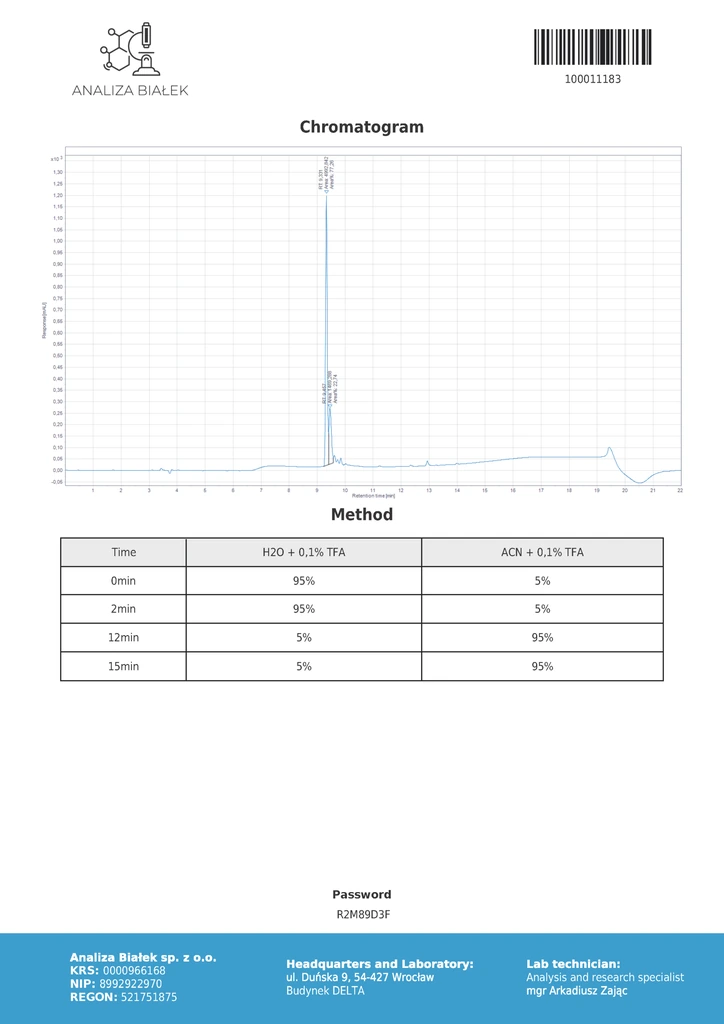
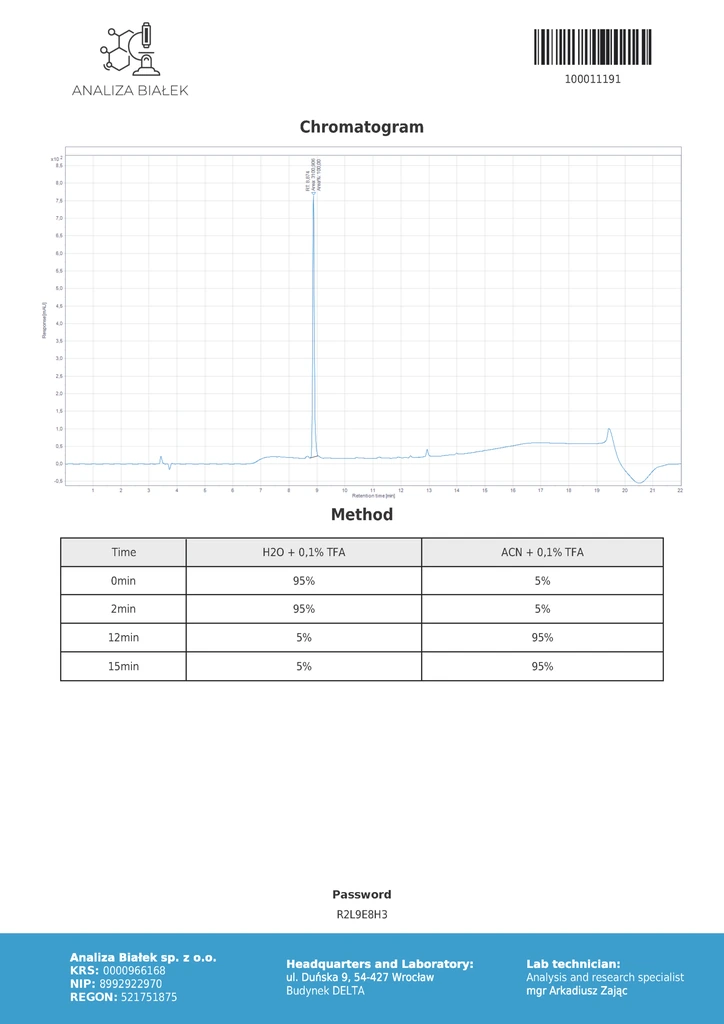
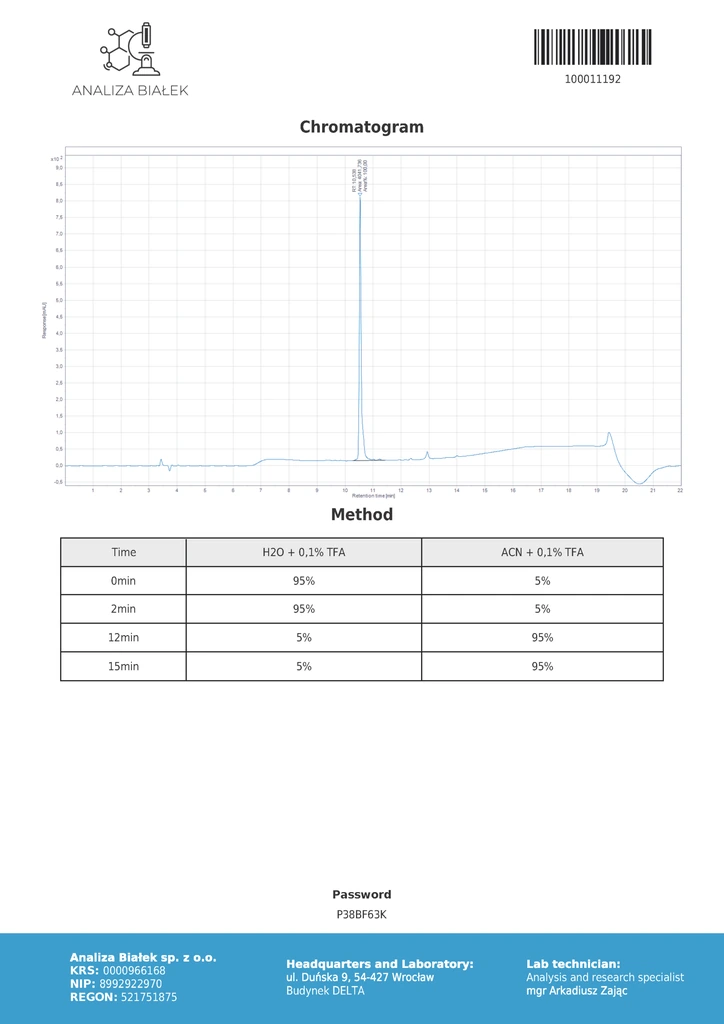
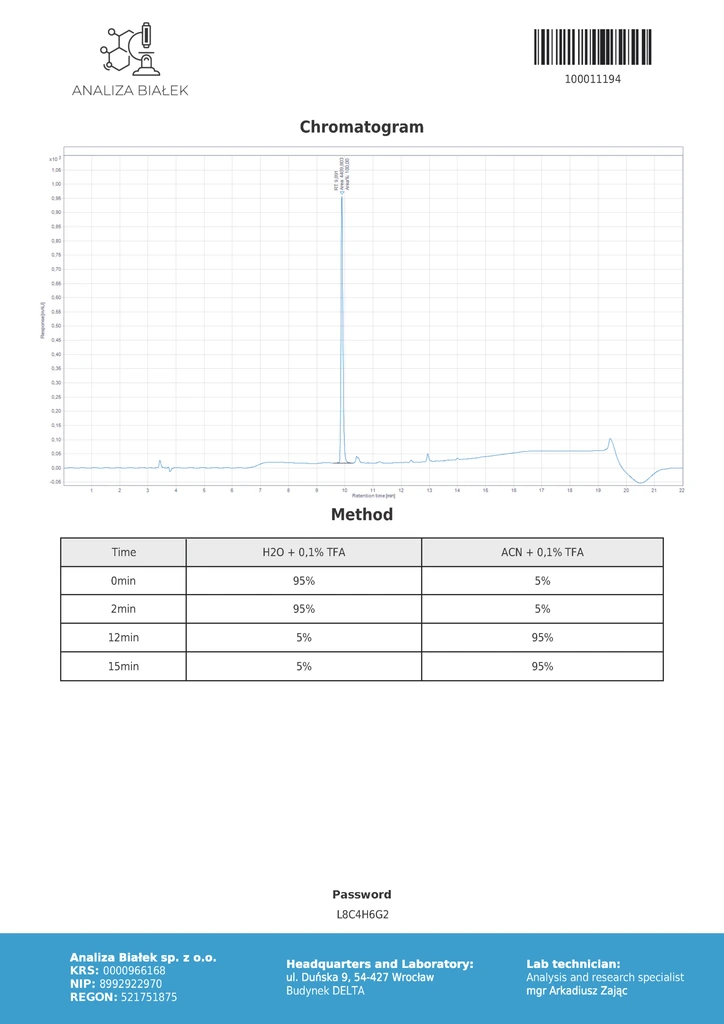
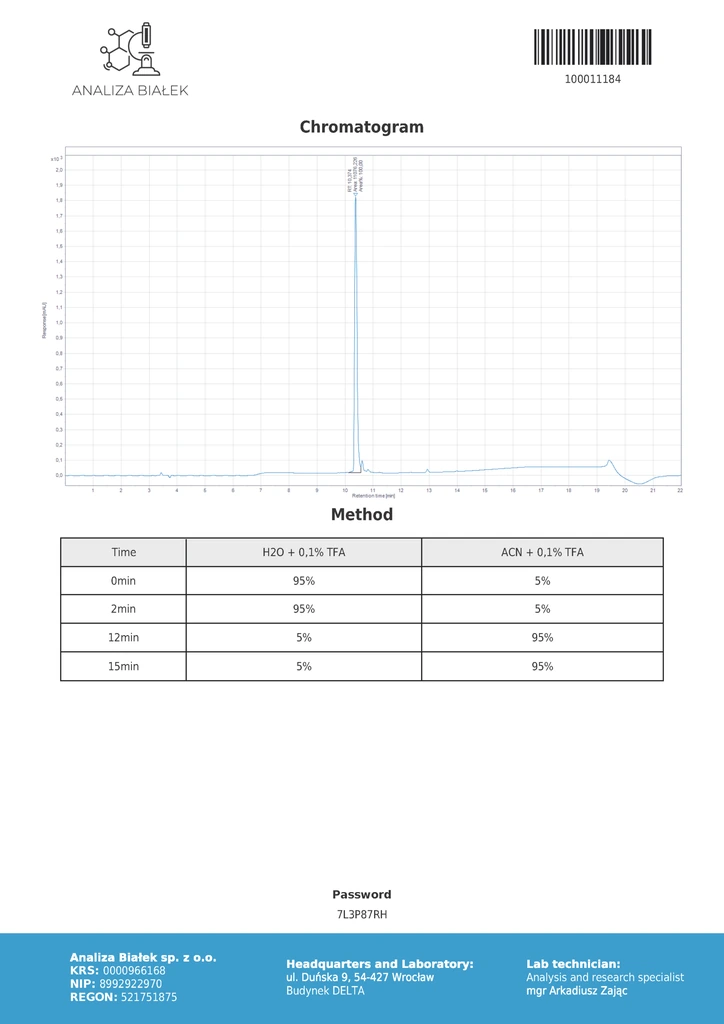
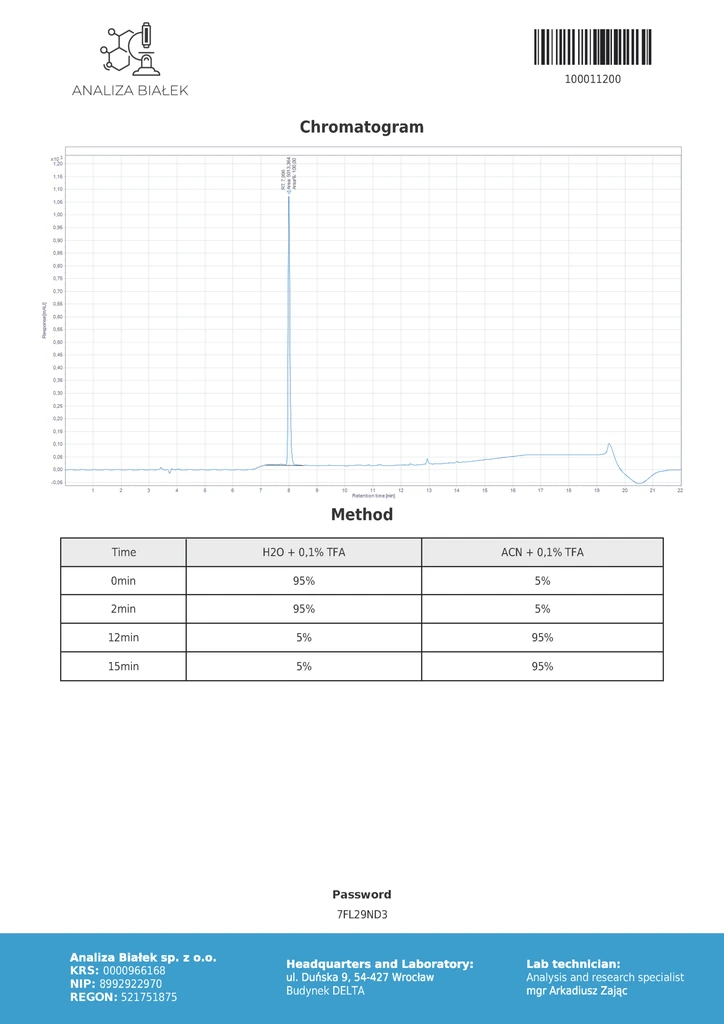
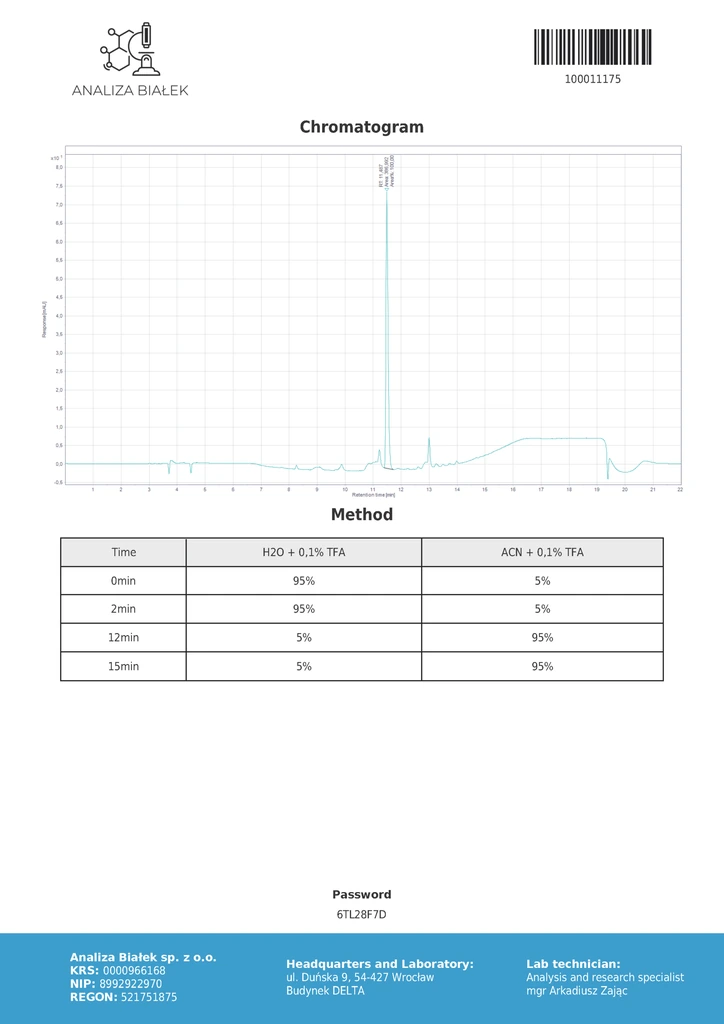
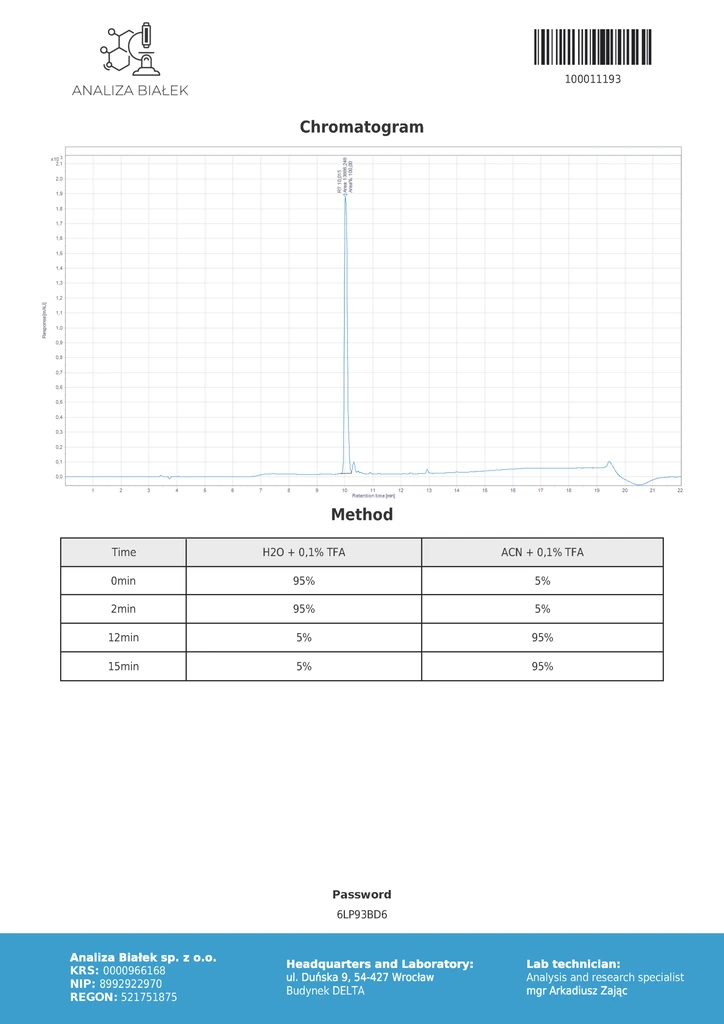
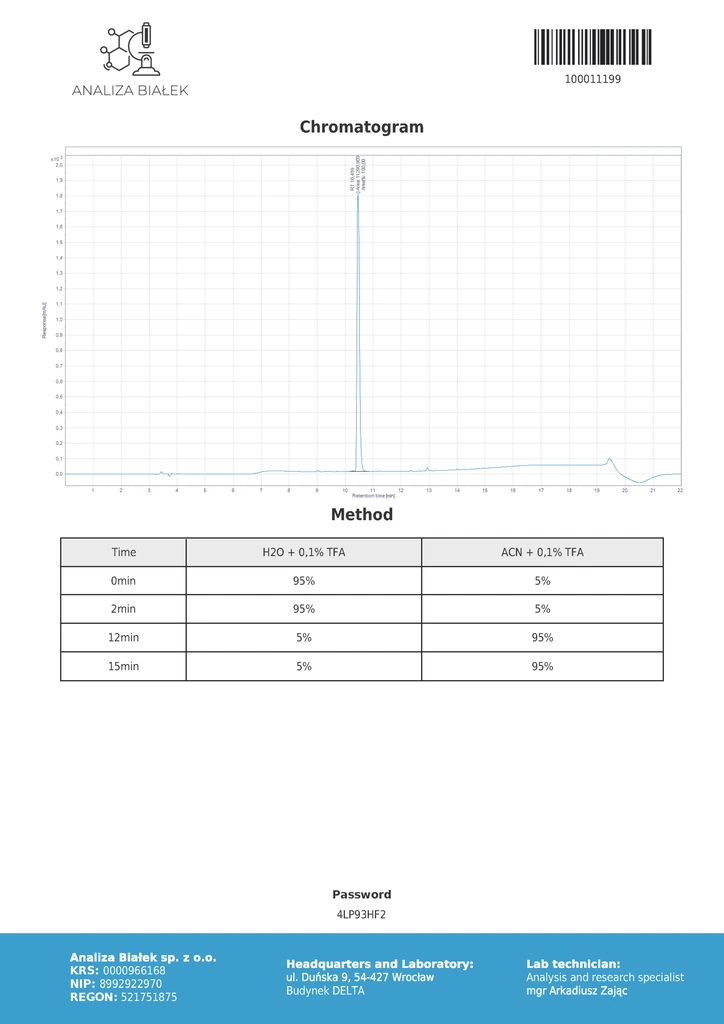
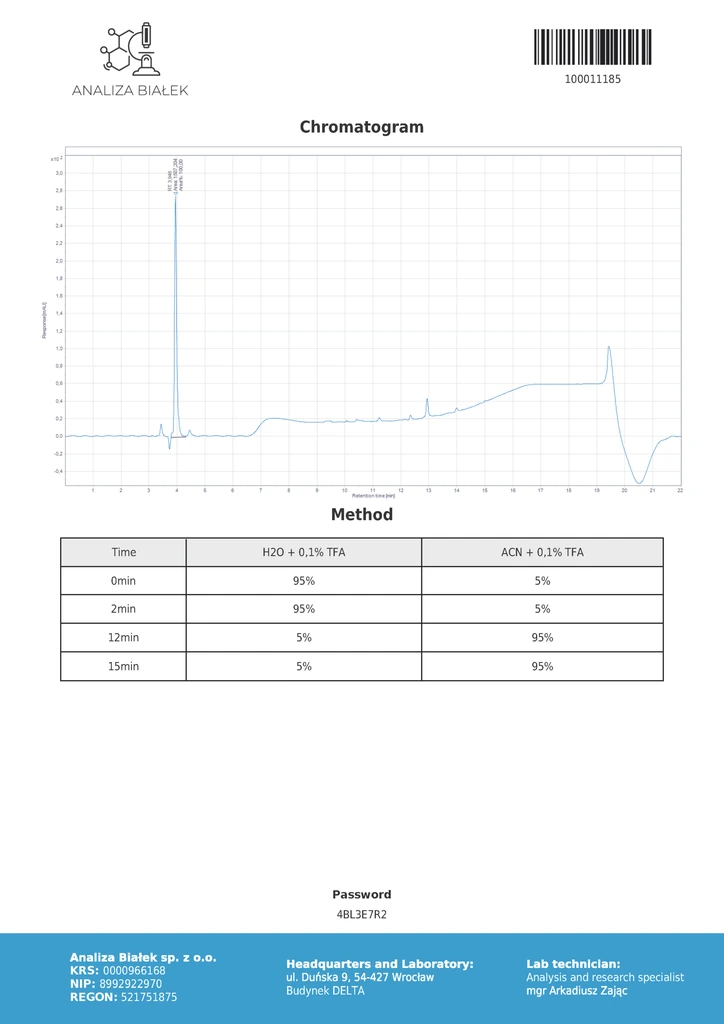
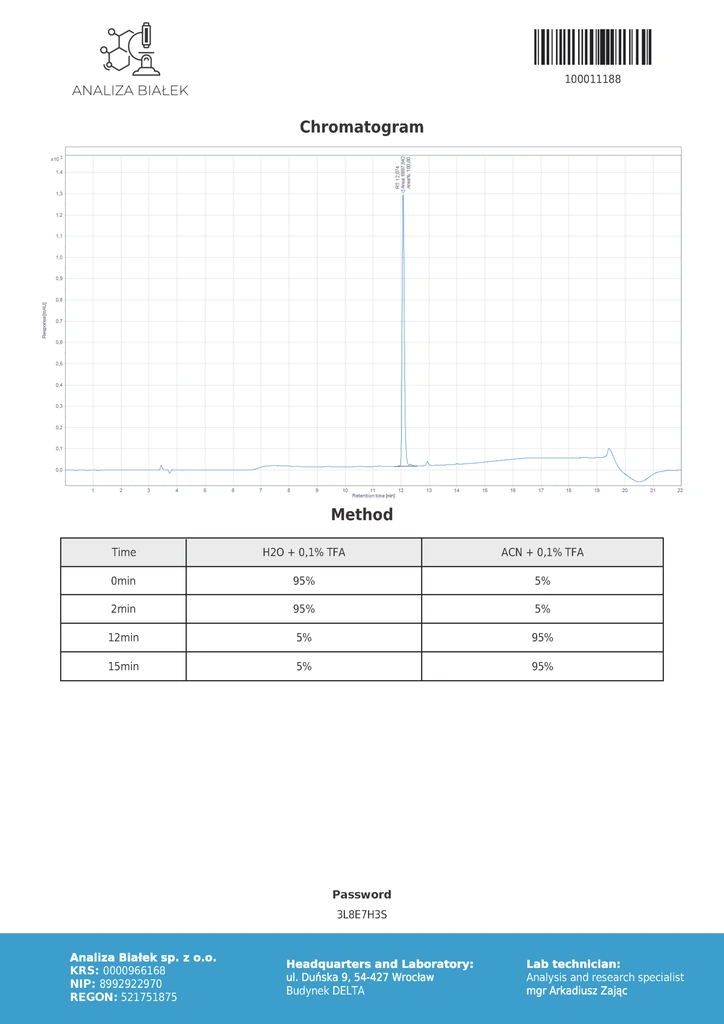
Product quality tests using the HPLC method revealing the concentration and purity of the tested reagents
























Peptides created with precision and quality in mind
We offer peptides for research applications, created based on current scientific knowledge and rigorous quality control standards. Our products combine high purity, precisely defined composition and excellent repeatability of parameters, ensuring reliable and reproducible results.
Peptides are widely used in research on regenerative processes, tissue functioning, cell signaling and biological mechanisms at the molecular level. Our products are tested for content and purity by HPLC at an independent laboratory.
By choosing our products, you can be sure of working with materials of proven quality, stability and laboratory safety – designed with the requirements of modern research and scientific teams in mind.
Quality testing, HPLC and One Peptides lab reports
One Peptides products are tested by HPLC at an independent laboratory: Analiza Białek sp. z o.o., Wrocław. This page explains what the test looks like, what an HPLC chromatogram shows, what you will find in a laboratory report and how to confirm its authenticity.
The reports cover selected items from the range: research peptides in lyophilized form (Research Use Only reagents), capsule-format RUO reagents from the performance range (including SARMs and related research compounds), and other reagents in capsule and solution form. Each product framework has its own regulatory context, but the testing method is the same. Some of the technical topics – reconstitution, aliquoting, storage – are discussed in more detail in the guide Laboratory practice with research peptides. Descriptions of molecular mechanisms and summaries of scientific evidence can be found on product pages and in the blog section.
What does quality control look like?
Quality control is based on testing the product at an external laboratory. We do not have a laboratory of our own.
Product testing. A sample of the product is sent to an independent laboratory, Analiza Białek sp. z o.o. in Wrocław. The laboratory tests it by high-performance liquid chromatography (HPLC) and determines two parameters: the content of the substance and its purity. The test concerns the product, not a single batch, and is repeated periodically.
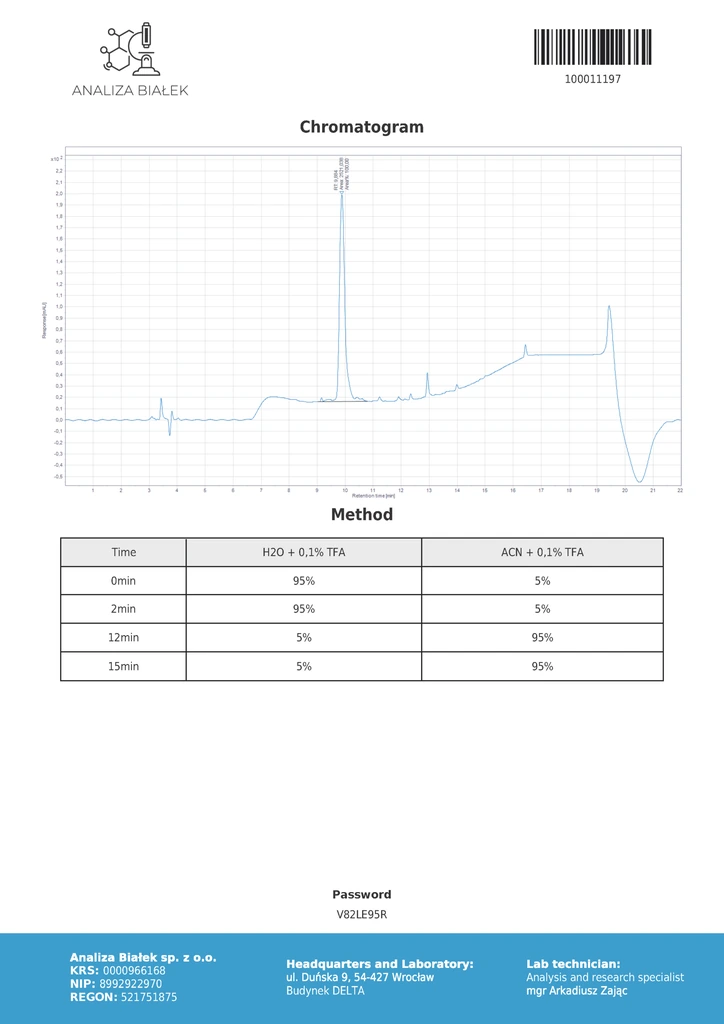
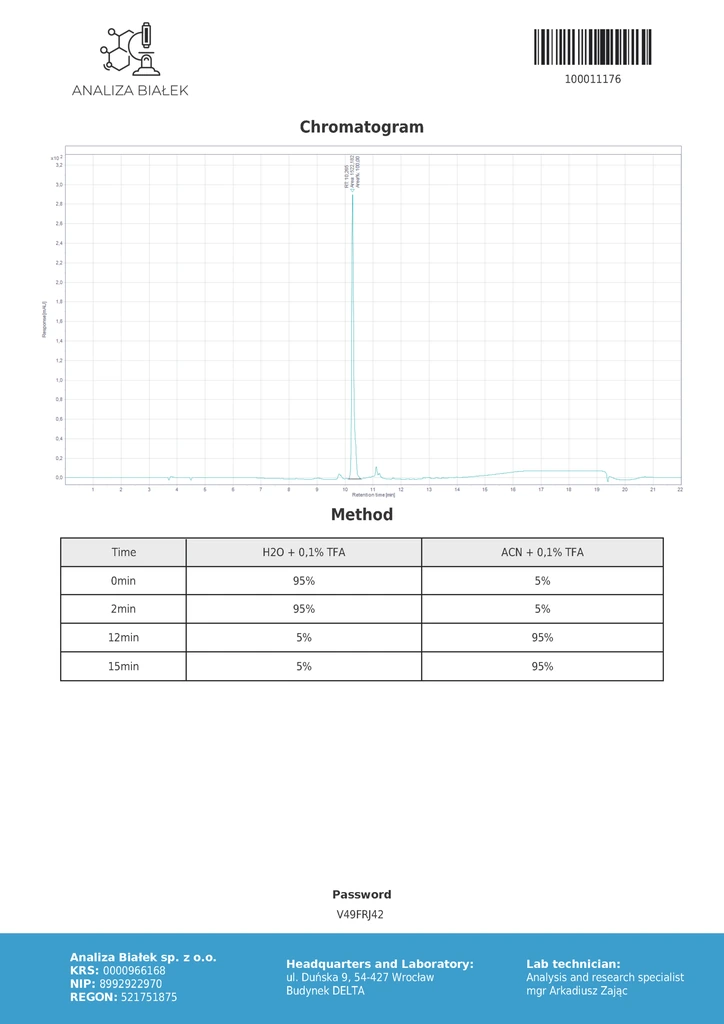
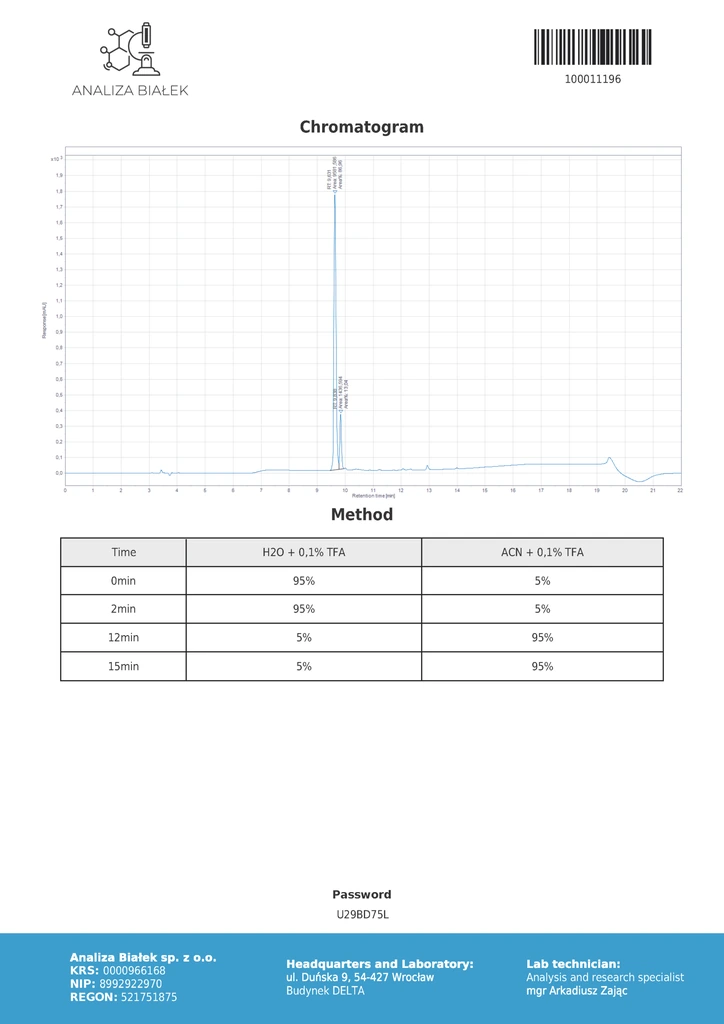
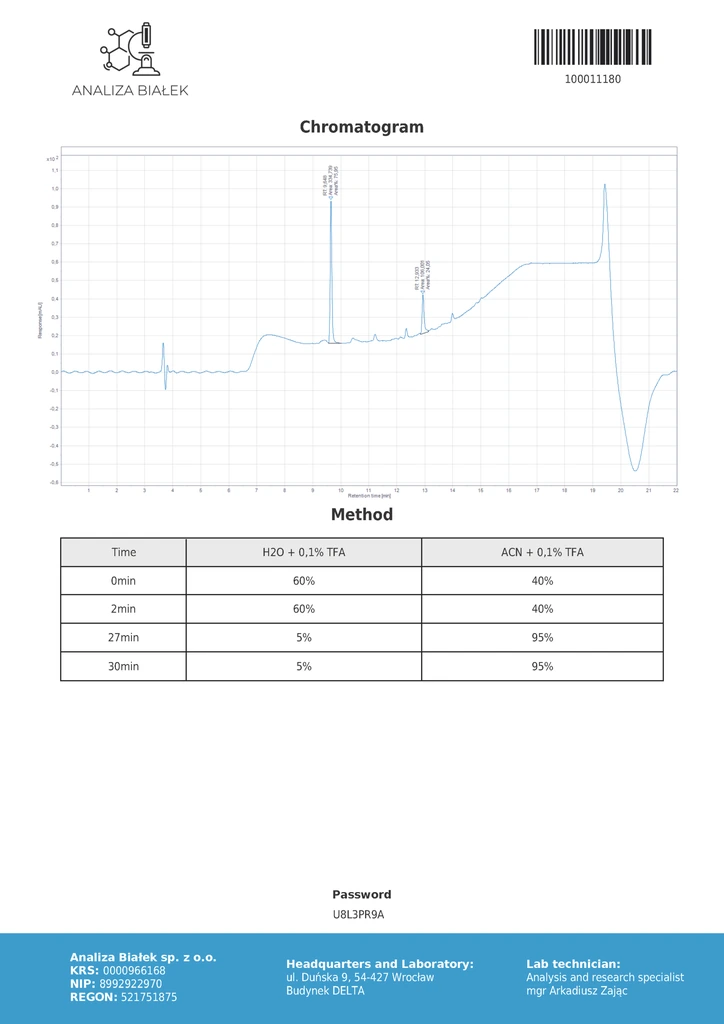
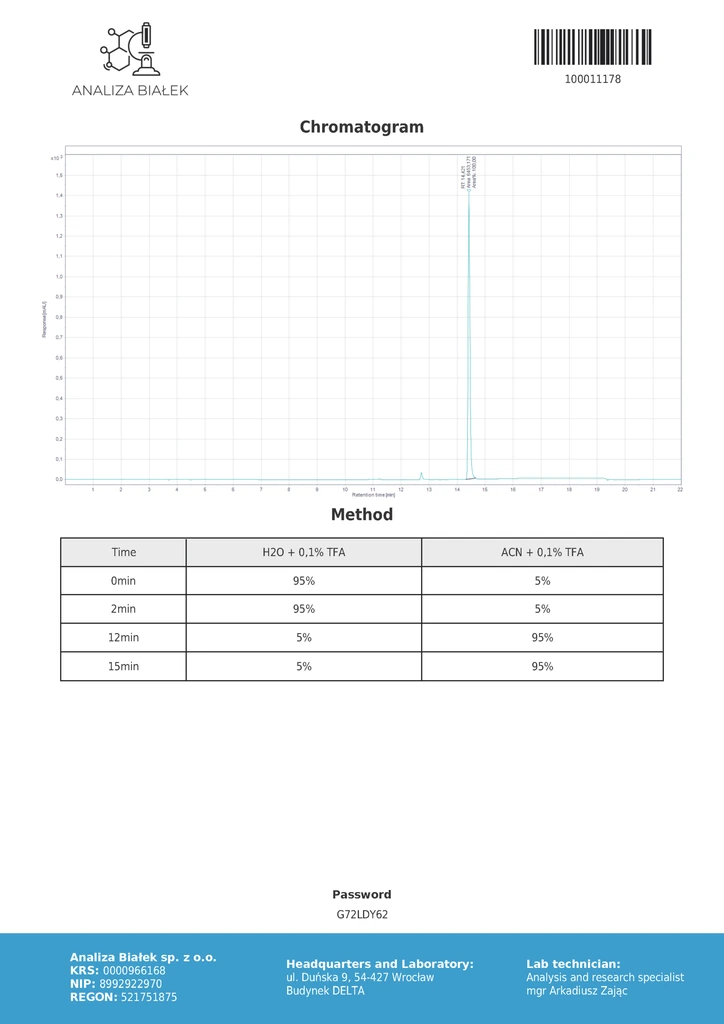
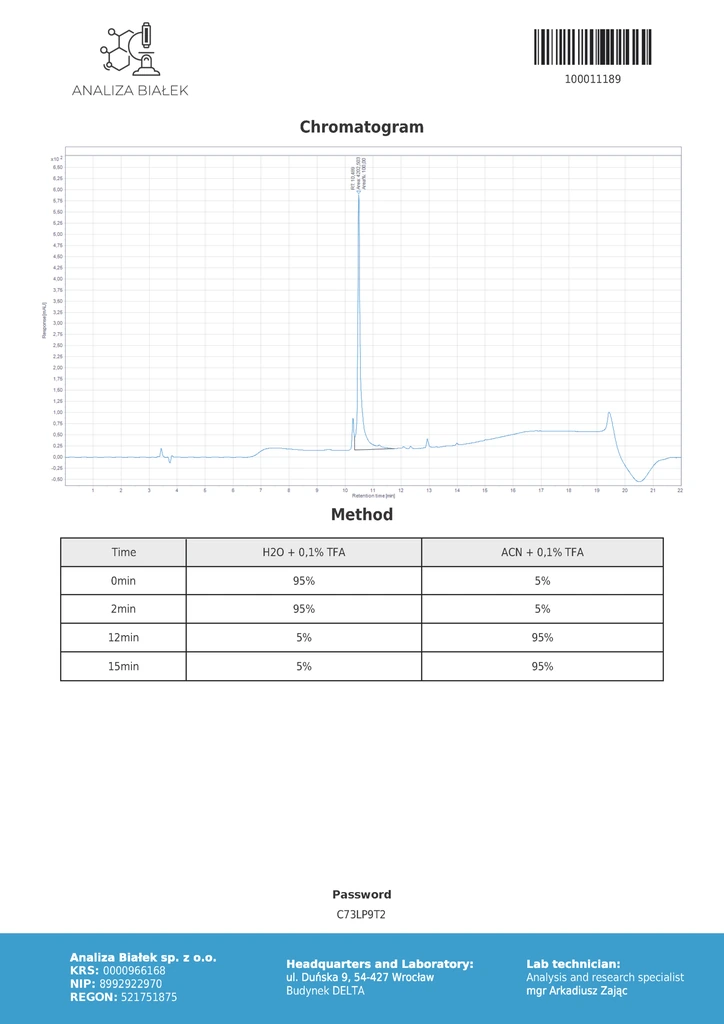
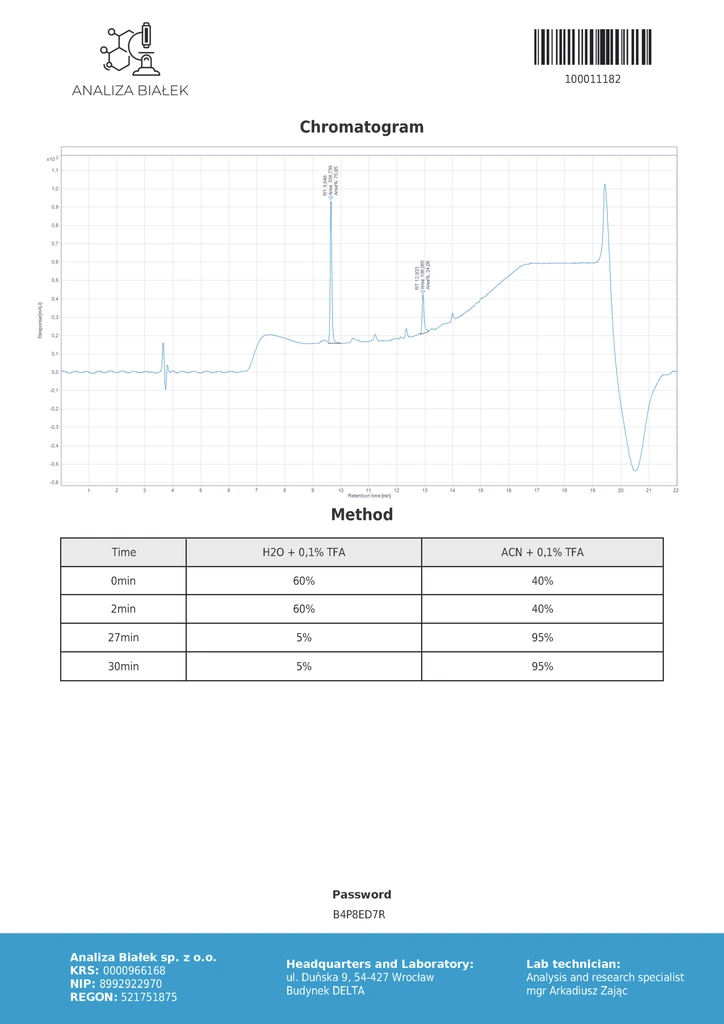
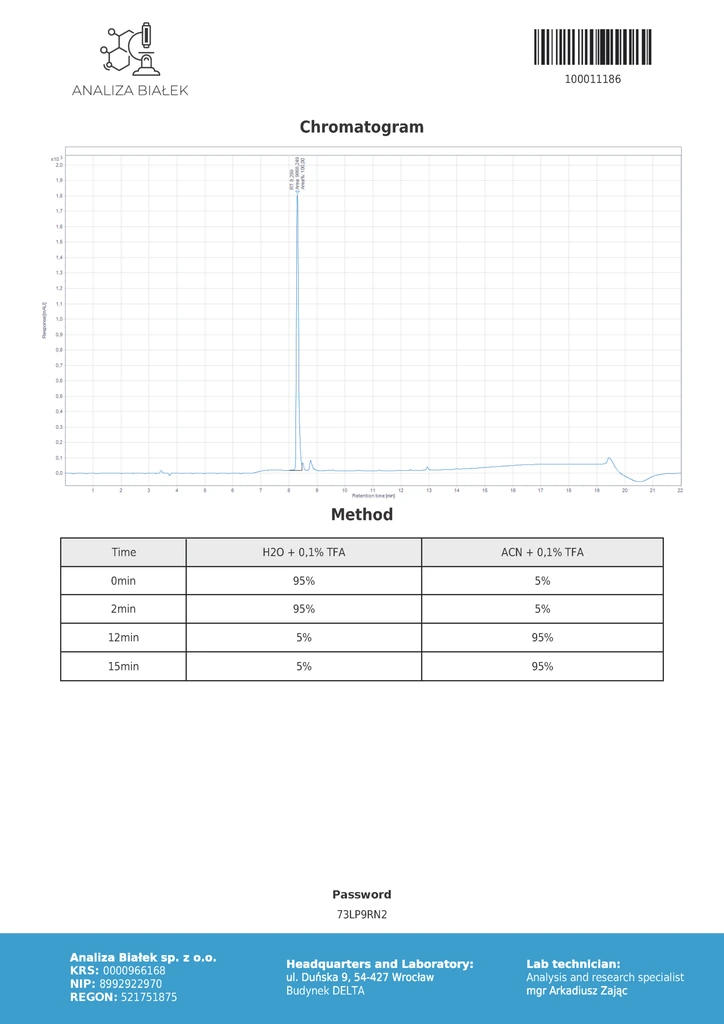
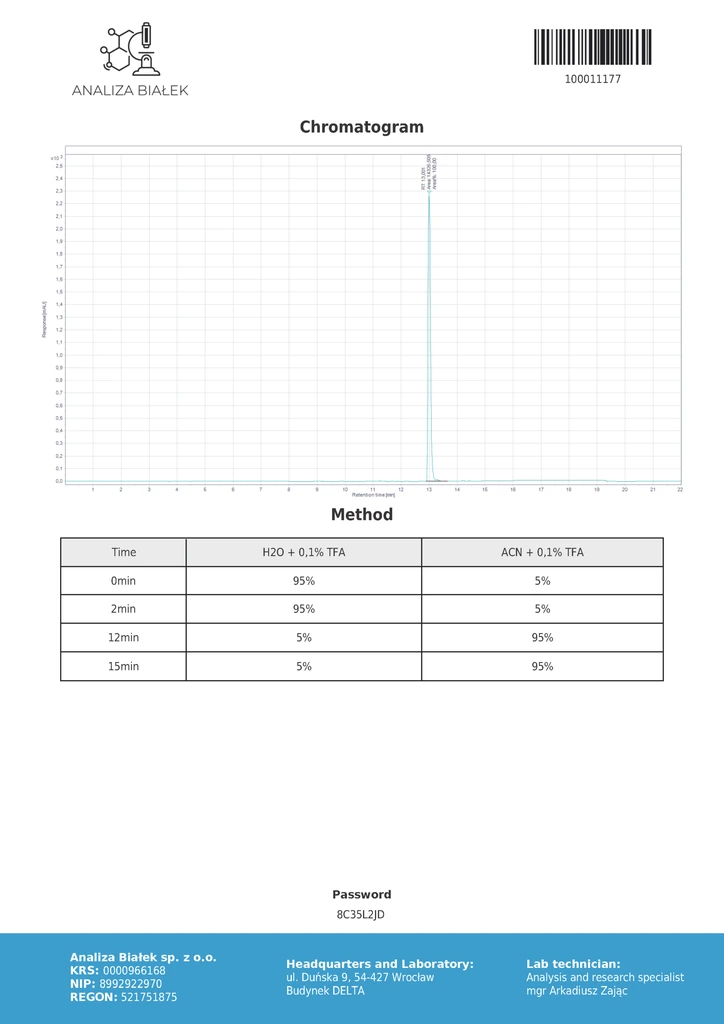
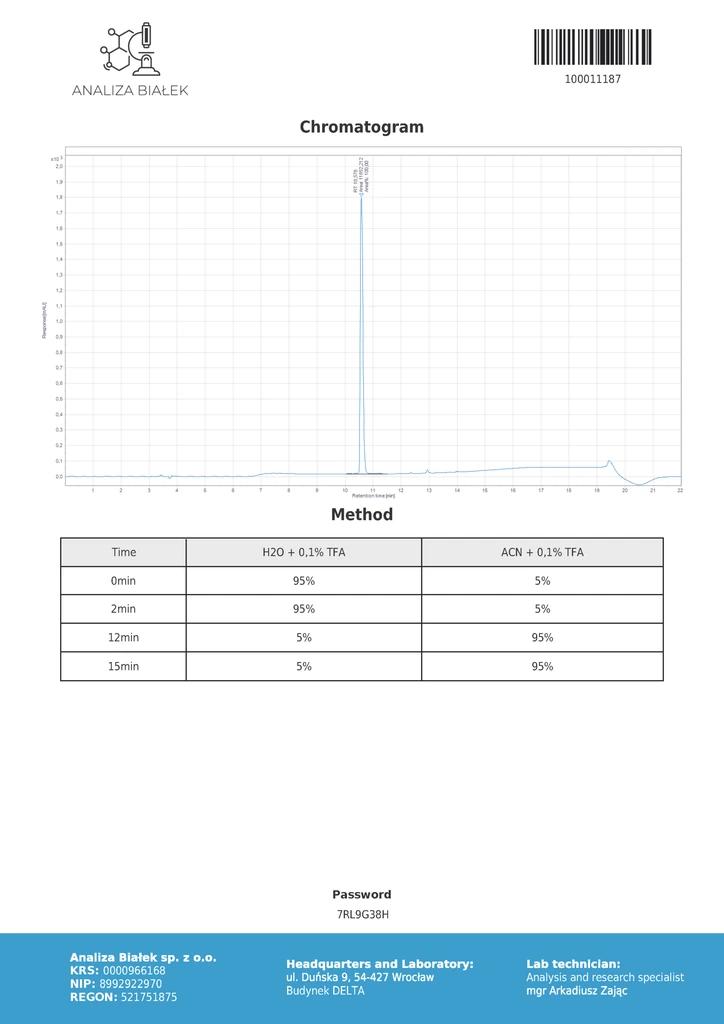
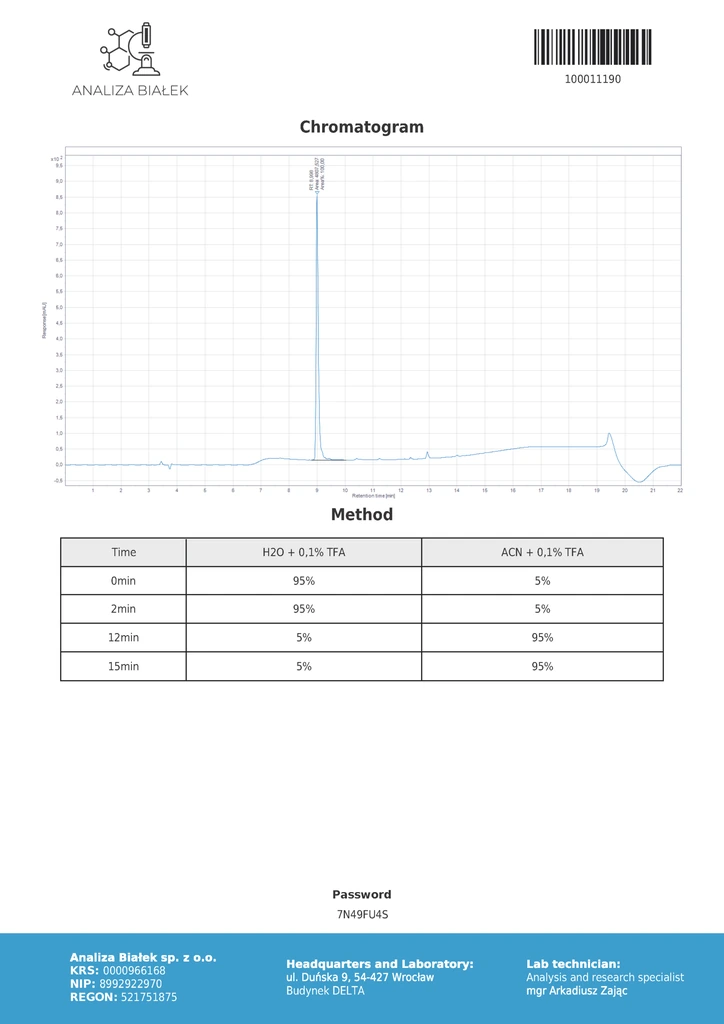
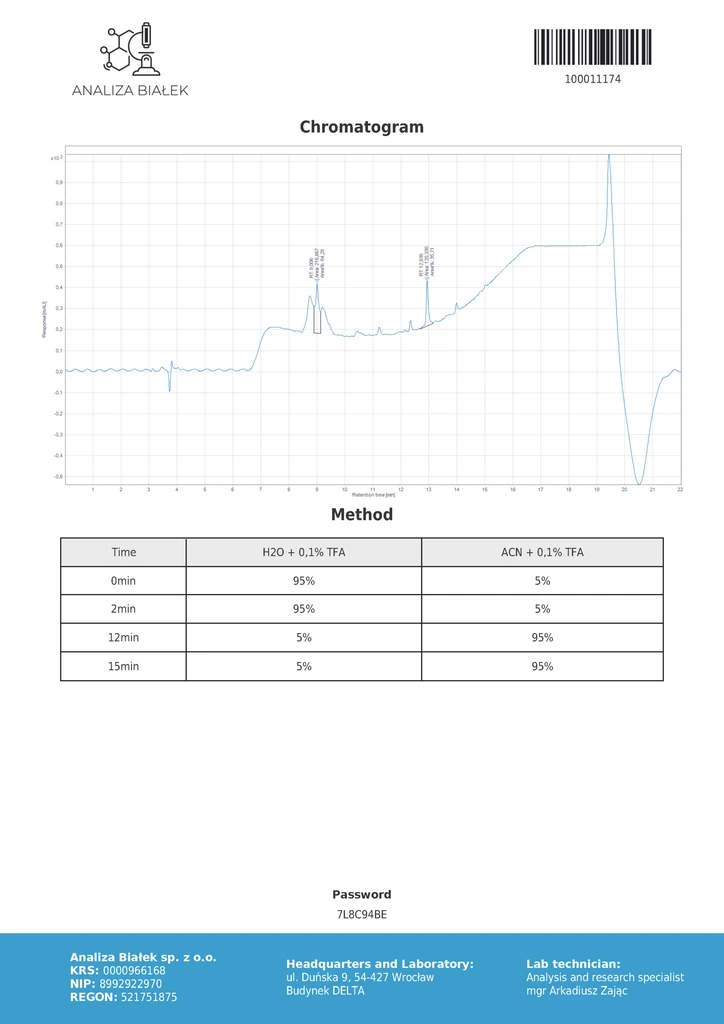
Test report. For each test the laboratory issues a report with the result and a chromatogram. We publish the reports on this page as images, two pages per report. They cover part of the range, not every product.
Verification code. Each report carries a code that can be used to confirm its authenticity on the laboratory’s website.
Batch number. The batch number is shown on the vial label and on the invoice. The laboratory report does not contain it.
What does HPLC analysis show?
Liquid chromatography separates a mixture of compounds by passing it through a column with a stationary phase. Each component moves at a different speed and leaves the column at different times (retention time). The UV detector records the concentration of compounds, and the result is presented as a chromatogram – a graph of absorbance versus time.
Peaks appear in the chromatogram. The main peak is the peptide or active substance being tested. Side peaks are impurities: synthesis by-products, degraded forms, trace amounts of reagents.
What ≥98% purity means. The area under the main peak is at least 98% of the sum of the areas of all peaks recorded in the chromatogram. It is a measure of percentage, not a measure of biological activity or absolute mass.
What does compliance mean? The retention time of the main peak corresponds to the reference standard (±method tolerance) and the chromatogram profile does not show any impurity peaks exceeding the established limits.
What HPLC cannot resolve on its own. The method confirms chromatographic purity and the presence of the compound at the appropriate retention time, but does not clearly confirm the identity of the chemical structure. That is the role of mass spectrometry, which our reports do not include. HPLC also does not assess biological activity or physiological effects on a living organism.
What does the test report contain?
Each report has the same layout, so one document is easy to compare with another.
| Report field | Description |
|---|---|
| Product name | Name of the tested sample (e.g. BPC-157) |
| Laboratory | Analiza Białek sp. z o.o., Wrocław |
| Test date | Dates of sample receipt and of the HPLC test |
| Test method | HPLC |
| Content | Determined amount of the substance in the sample |
| Purity | Percentage of main peak contribution |
| Chromatogram | Graph from the HPLC test |
| Verification code | Code for confirming the authenticity of the report on the laboratory’s website |
| Batch number | Not included in the report; you will find the batch number on the vial label and on the invoice |
| Format | Image, two pages per report |
How do you check a report and the batch number?
The report concerns the product, not a specific batch, so it is not matched to the number on the label.
- Find the report for your product in the gallery on this page.
- Each report carries a code that can be used to confirm its authenticity on the laboratory’s website.
- You will find the batch number of your product on the vial label and on the invoice.
If you cannot see a report for your product, please contact us via the contact page.
What the test report does not confirm
The test report confirms the parameters measured in the laboratory for the tested sample at a specific point in time. Anything beyond that is beyond the scope of the document.
- The report is not a declaration of effectiveness. A purity of 98% indicates the content of the main compound in the sample, not what effect this compound will have in any research model.
- The report is not a marketing authorisation for a medicine. All items in our catalog are chemical reagents intended exclusively for laboratory research (Research Use Only). They are not medicinal products, they are not dietary supplements, they are not foodstuffs.
- The report is not a substitute for risk assessment. The decision on how to use a reagent in a laboratory protocol rests with the researcher. The document does not exempt you from the need to follow safety rules while working in the laboratory.
- The report does not cover stability after reconstitution. The result applies to the freeze-dried form under storage conditions consistent with the specifications. After dissolving in bacteriostatic water the stability period depends on the storage conditions of the solution – this is a separate parameter.
- Reports do not cover the whole range. A report covers content and purity determined by HPLC. We publish reports for part of the range, including selected reagents in capsule and solution form (such as BPC-157 in capsules, Yohimbine, L-carnitine).
Frequently asked questions about HPLC and test reports
Does each product have a separate report?
Not every product. We publish HPLC reports for part of the range. A report concerns the product, not a single batch, and the test is repeated periodically.
Can I check the lot number before purchasing?
The batch number is shown on the vial label and on the invoice, so you will see it once your order arrives. The laboratory report does not contain the batch number.
Does HPLC confirm both purity and identity?
HPLC confirms chromatographic purity and compliance of the retention time with the standard. Structural identity is confirmed by mass spectrometry (MS), which our reports do not include: they show the HPLC result, that is content and purity.
How often are documents updated?
The product test is repeated periodically. The reports are published on this page.
Related materials
Reconstitution of lyophilized reagents is supported by the peptide calculator, which helps calculate the volume of bacteriostatic water and the concentration of the working solution.
The full range is available in the shop, divided into research peptides and performance products in capsules. Representative items with published reports:
- BPC-157 10 mg — pentadecapeptide, best documented in the regenerative literature (animal models)
- TB-500 5 mg — fragment of Thymosin Beta-4, studied in the context of cell proliferation
- Selank 10 mg — heptapeptide tested in neuropharmacological models
- Epithalon 10 mg — tetrapeptide in longevity studies
- MK-677 (Ibutamoren) 60 capsules — GHS-R1a receptor agonist (not a SARM), RUO reagent in capsule form
