 DE
DE  EN
EN  ES
ES 


DSIP – Research Use Only (RUO). Chemical reagent intended only for laboratory tests. It is not intended for human consumption or diagnostic purposes.
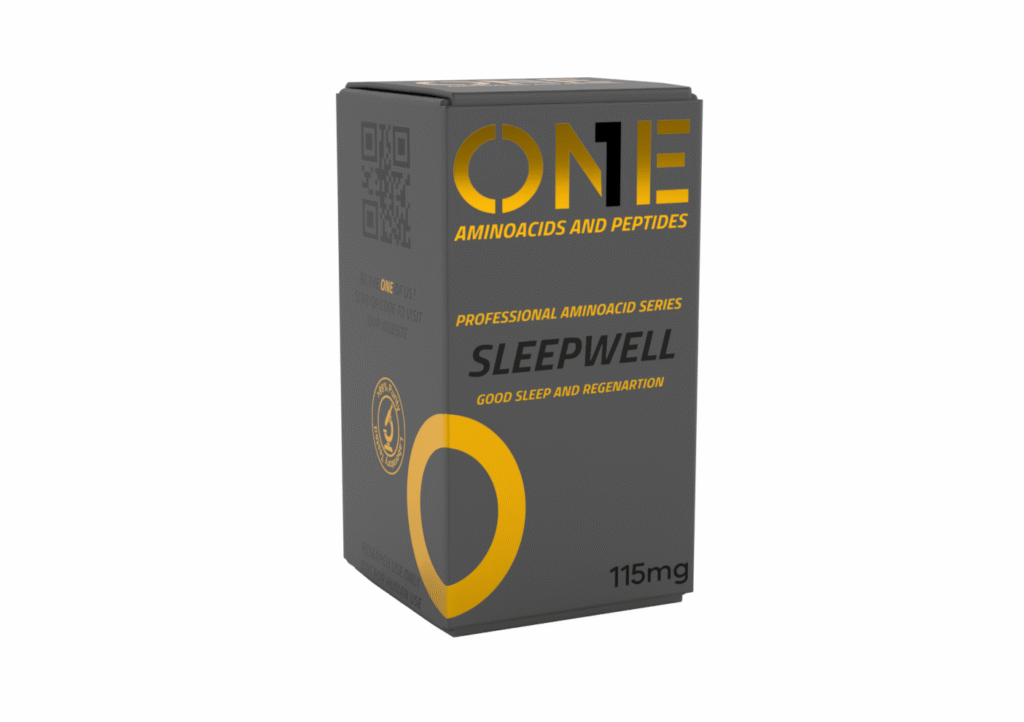
Related categories and reagents: In the context of this area of research, it is also worth comparing Sleepwell.
DSIP vs SleepWell. DSIP is a single, defined nonapeptide with the sequence Trp-Ala-Gly-Gly-Asp-Ala-Ser-Gly-Glu (C35H48N10O15, 848.81 g/mol, CAS 62568-57-4). SleepWell is a multicomponent preparation containing, per 1 mL, 50 mg GABA, 50 mg L-arginine, 14 mg glutamine and 1 mg melatonin—a declared total of 115 mg/mL. Structurally, these are three free amino acids and one indoleamine; none of the SleepWell ingredients is a peptide. The difference is categorical: one defined molecule with full analytical characterization compared with a mixture of four small molecules. In an experiment, this determines whether an observation can be attributed to a specific substance or only to the preparation as a whole.
DSIP (Delta Sleep Inducing Peptide) is a naturally occurring neuropeptide consisting of 9 amino acids, which was first isolated in 1977 by Swiss scientists from the blood of rabbits during induced sleep. Since its discovery, DSIP has become the subject of intense neurobiological research due to its unique molecular properties and presence in the central nervous system of mammals.
The DSIP peptide is studied in the context of a variety of neurobiological processes, including the regulation of circadian rhythms, modulation of neurotransmission, and interaction with the hypothalamic-pituitary axis. Its relatively simple structure and well-understood sequence make it a valuable tool in neuroscience research.
DSIP (Delta Sleep Inducing Peptide) is a nonapeptide with the sequence Trp-Ala-Gly-Gly-Asp-Ala-Ser-Gly-Glu, characterized by a unique structure containing a phosphorylated serine residue at position 7 in the native form. This peptide occurs endogenously in the mammalian brain, where it has been identified in the hypothalamus, pituitary gland and other limbic structures.
The name “Delta Sleep Inducing Peptide” comes from observations from early studies in which the peptide was isolated during the phase of sleep characterized by delta waves in the EEG recording. However, modern research indicates a much wider range of potential functions of this neuropeptide in the central nervous system.
In the context of laboratory research, DSIP is used as a tool to study neuropeptide mechanisms, interactions with receptors and molecular processes in the nervous system.

DSIP is an endogenous neuropeptide found in mammals, the presence of which has been confirmed in:
| Year | Event |
|---|---|
| 1977 | Isolation of DSIP from rabbit blood (Schoenenberger, Monnier) |
| 1977 | Determination of the amino acid sequence |
| 1980s | Intensive research on physiological functions |
| 1990s | Identification in human tissues |
| 2000s+ | Research on molecular mechanisms |
| Form | Description |
|---|---|
| DSIP | Standard unphosphorylated form |
| pDSIP | Phosphorylated form (Ser-7-PO4) |
| DSIP-OH | C-terminus free |
| DSIP-NH2 | C-terminus amidated |
DSIP consists of 9 amino acids arranged in the following sequence:
H-Trp-Ala-Gly-Gly-Asp-Ala-Ser-Gly-Glu-OH
One letter code: WAGGDASGE
| Parameter | Value |
|---|---|
| Summary formula | C35H48N10O15 |
| Molar mass | 848.81 g/mol |
| CAS number | 62568-57-4 |
| Number of amino acids | 9 |
| Isoelectric point (pI) | ~3.8 (acidic) |
| Solubility | Soluble in water |
| Form | Freeze-dried powder (white) |
| Stability | Stable in freeze-dried form |
Quality parameters:
| Test | Method | Specification |
|---|---|---|
| Cleanliness | HPLC | ≥98% |
| Identification | MS | 848.81 ± 0.5 Da |
| Water content | Karl Fischer | ≤8% |
| Acetate content | Titration | ≤15% |
| Appearance | Visual | White lyophilisate |
| Solubility | Test | Clear in water |
| Net peptide content | AA analysis | On the certificate |
Freeze-dried form:
– Temperature: -20°C (optimal)
– Permissible: 2-8°C (short term)
– Protect from light (tryptophan sensitive to UV)
– Store in a dry place
– Shelf life: 24 months at -20°C
After reconstitution:
– Solvent: sterile water or PBS
– Storage: 2-8°C
– Use within 7 days
– Freeze aliquots for longer storage
– Avoid repeated freezing/thawing
DSIP is studied in the context of various molecular mechanisms. It should be emphasized that the information below comes from laboratory tests and does not constitute claims of effect in humans.
Potential molecular targets (in vitro studies):
The literature describes DSIP research on:
Serine at position 7 can be phosphorylated:
IMPORTANT: The product is intended for in vitro testing only. Not intended for:
– Use in humans or animals
– Diagnostic or therapeutic purposes
– Any clinical use
DSIP (Delta Sleep Inducing Peptide) is a naturally occurring nonapeptide that is a valuable tool in neurobiological and biochemical research. Its simple structure, presence in the central nervous system of mammals, and well-understood chemical properties make it a useful reagent in neuropeptide research.
One Peptides DSIP 5 mg material offers:
DSIP (Delta Sleep Inducing Peptide) is a nonapeptide with the sequence Trp-Ala-Gly-Gly-Asp-Ala-Ser-Gly-Glu, consisting of 9 amino acids with a molar mass of 848.81 g/mol. It is an endogenous neuropeptide found in mammals, first isolated in 1977 from the blood of rabbits. The CAS number is 62568-57-4.
DSIP has been identified in various mammalian tissues, including the hypothalamus, pituitary gland, cerebrospinal fluid, and blood plasma. It is an endogenous neuropeptide whose presence has also been confirmed in human tissues.
In freeze-dried form, DSIP should be stored at -20°C, protected from light (tryptophan is sensitive to UV). After reconstitution in sterile water or PBS, the solution is stored at 2-8°C and used within 7 days. For longer storage, it is recommended to freeze small portions.
pDSIP is a phosphorylated form of DSIP in which the serine residue at position 7 is phosphorylated (Ser-7-PO4). Phosphorylation may affect the biological properties of the peptide. The standard DSIP product is the unphosphorylated form.
DSIP is used in in vitro research in the field of neurobiology, biochemistry and chronobiology. Applications include: the study of neuropeptide mechanisms, interactions with receptors in the CNS, structure-activity studies, and modeling of circadian rhythms. It is not intended for use on humans or animals.
The most important features of the ONE DSIP 5 mg product:
 DHL Express



Tim –
I’ve been using it for a bit and I like it.