 DE
DE  EN
EN  ES
ES 

A research-focused comparison of Melanotan II and PT-141, covering melanocortin receptor selectivity, evidence, safety signals and regulatory status.
Bacteriostatic water is sterile Water for Injection that contains 0.9% (9 mg/mL) benzyl alcohol as a bacteriostatic preservative, manufactured under pharmacopeial aseptic conditions in a multiple-dose container. In a laboratory setting it serves as a diluent for reconstituting research peptides, where the preservative lets a vial be punctured repeatedly while limiting microbial growth between withdrawals.
ℹ️ Research-use context: this article describes how bacteriostatic water is manufactured and stored for laboratory reconstitution of research peptides. It is not medical advice or a human-use protocol.
The phrase “how to make bacteriostatic water” is one of the most common searches around this material, and it deserves a precise answer rather than a recipe. The honest answer is that genuine bacteriostatic water is a manufactured pharmacopeial product, not a kitchen preparation. Understanding why makes the difference between a reliable laboratory diluent and an uncontrolled liquid that quietly ruins your samples.
Three properties have to be true at the same time, and each one is hard to achieve outside a controlled facility.
First, the starting material is Water for Injection (WFI) — not tap, distilled, or deionized water. WFI is produced by distillation or an equivalent purification process and is held to strict limits on conductivity, total organic carbon, and microbial content, as described in the United States Pharmacopeia’s general chapter on water for pharmaceutical purposes. It is then rendered sterile and, critically, low in pyrogens (bacterial endotoxins). Pyrogens are heat-stable fragments of bacterial cell walls; ordinary boiling or filtering does not remove them, and they cannot be “seen” in a clear vial.
Second, exactly 0.9% benzyl alcohol is added as the bacteriostatic agent. The USP monograph for Bacteriostatic Water for Injection specifies 9 mg/mL benzyl alcohol and a target pH of about 5.7 (within a 4.5–7.0 range). That concentration is a deliberate balance: enough preservative to suppress microbial growth across repeated punctures, but controlled so the chemistry of the diluent stays predictable. Eyeballing benzyl alcohol into water does not reproduce this — too little fails to preserve, too much shifts the solution’s properties.
Third, the whole process happens under aseptic, validated conditions and the product is filled into a sealed multiple-dose container. Sterility here is a documented outcome of terminal sterilization or validated aseptic filling, confirmed by testing — not an assumption.
Put those three requirements together and the home scenario falls apart. A domestic setup cannot verify sterility, cannot confirm pyrogen levels, and cannot meter benzyl alcohol to a 0.9% target with any confidence. There is no validation step, no endotoxin assay, and no way to prove the container stayed closed and uncontaminated.
The consequences are not abstract. Contaminated or pyrogen-bearing water introduces variables that confound any reconstitution work: degraded peptide, unexplained turbidity, inconsistent results between vials. For laboratory reconstitution of research peptides, the diluent is supposed to be the constant in the experiment, not another unknown.
This is why we steer firmly away from a DIY tutorial. The practical path is to use a verified, lab-grade product — for example ready-to-use lab-grade bacteriostatic water (10 mL) manufactured to the relevant monograph — so the diluent’s identity, sterility, and preservative concentration are already established before it reaches your bench. If you want the broader picture of how this material fits into peptide work, the overview of what bacteriostatic water is and how it is used is the main guide to this topic.
Storage is the part you genuinely control, and it changes meaningfully the moment the stopper is first punctured. Before the first puncture the vial is a closed, sterile system; after it, the benzyl alcohol is what holds the line against microbial growth between withdrawals — and that protection is time-limited. How storage interacts with the in-use clock is covered in detail under refrigeration and shelf life after opening.
The table below summarizes typical handling. Treat any product-specific label or monograph instruction as authoritative over general guidance.
| Condition | Storage temperature | Typical usable window | Signs of degradation |
|---|---|---|---|
| Unopened (factory-sealed) | Controlled room temperature, ~20–25°C; protect from freezing and direct light | Until the labeled expiry date | Broken seal, cloudiness, particulates, discoloration |
| After first puncture (multiple-dose, in use) | Controlled room temperature per label (~20–25°C); many labs refrigerate (~2–8°C) between uses as a precaution | Commonly up to ~28 days, or per label, whichever is shorter | Turbidity, floating particles, color change, off odor, compromised stopper |
A few principles sit behind that table. Keep the vial in its original labeled container so identity and expiry are never in doubt. Wipe the stopper with an appropriate disinfectant before each puncture and use sterile technique for every withdrawal, since the preservative slows growth but does not sterilize fresh contamination. Do not freeze the solution. And discard any vial that shows cloudiness, particulates, or discoloration regardless of date — visual change is a stop signal, not a judgment call.
Two clocks run in parallel. The unopened clock is the manufacturer’s expiry date, valid only while the seal is intact and storage conditions were respected. The in-use clock starts at first puncture: because benzyl alcohol is bacteriostatic rather than sterilizing, its protective margin erodes with repeated entries and time, which is why a discard window after opening matters more than the printed expiry once the vial is in use. When the two clocks disagree, the shorter one wins. The diluent’s clock is also separate from the reconstituted compound’s — see how to prepare and store research peptides for the workflow that governs the dissolved peptide itself.
Can you make bacteriostatic water at home?
Not reliably, and not to a standard suitable for laboratory reconstitution. Genuine bacteriostatic water requires Water for Injection, exactly 0.9% benzyl alcohol, and validated aseptic, pyrogen-controlled manufacture. A home setup cannot verify sterility, confirm pyrogen levels, or meter the preservative accurately, so the result is an uncontrolled variable rather than a dependable diluent.
How should bacteriostatic water be stored?
Keep unopened vials at controlled room temperature (~20–25°C), away from light and freezing, until the labeled expiry. Once punctured, store between uses at controlled room temperature with refrigeration as an optional lab precaution, and use sterile technique at every withdrawal. Always keep the product in its original labeled container.
How long does bacteriostatic water last?
Unopened, until the manufacturer’s expiry date with the seal intact. After the first puncture, the practical window is shorter — commonly cited as up to about 28 days, or whatever the product label states, whichever comes first — because the preservative only slows microbial growth rather than maintaining sterility.
What’s the difference between lab-grade and homemade?
Lab-grade bacteriostatic water has a documented identity, confirmed sterility, controlled pyrogen levels, and a verified 0.9% benzyl alcohol concentration. Homemade water has none of these guarantees. For laboratory reconstitution of research peptides, that documentation is the whole point: the diluent stays a known constant instead of an unknown.
Bacteriostatic water is a manufactured pharmacopeial product — Water for Injection plus precisely 0.9% benzyl alcohol, made under validated aseptic and pyrogen-controlled conditions — which is exactly why reliable DIY at home is not realistic. Storage is the controllable part: respect the expiry on sealed vials, observe a shorter discard window after the first puncture, keep the solution cool and unfrozen, and reject any vial that turns cloudy. For consistent laboratory reconstitution work, the dependable route is a verified lab-grade product rather than an improvised one.

A research-focused comparison of Melanotan II and PT-141, covering melanocortin receptor selectivity, evidence, safety signals and regulatory status.
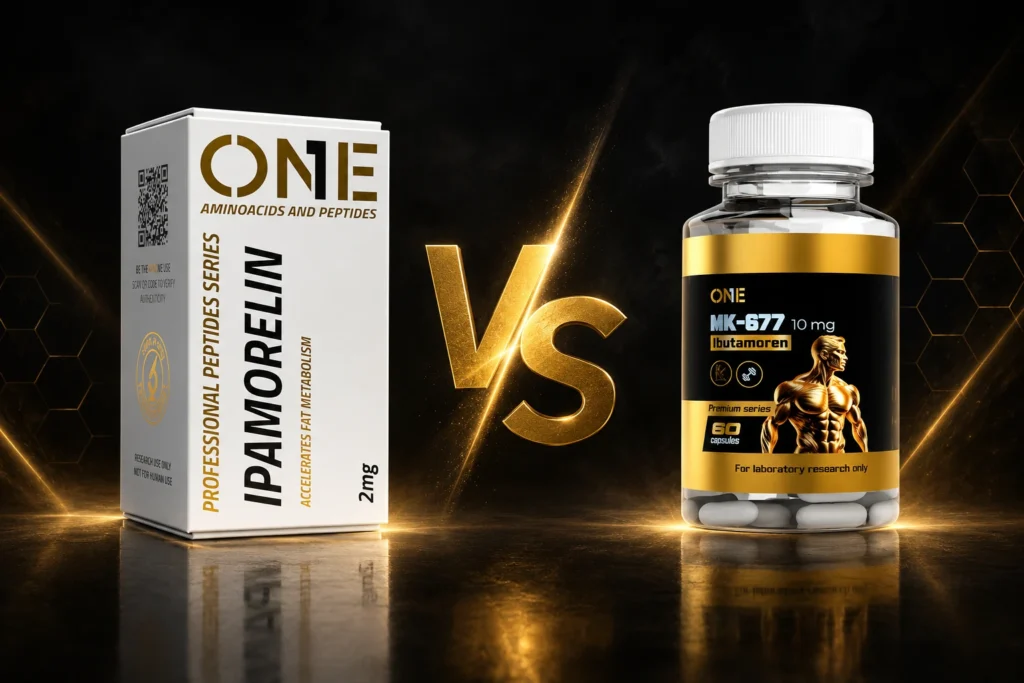
A research comparison of MK-677 and ipamorelin, focusing on GHS-R1a signaling, selectivity, administration route, human evidence and WADA status.
