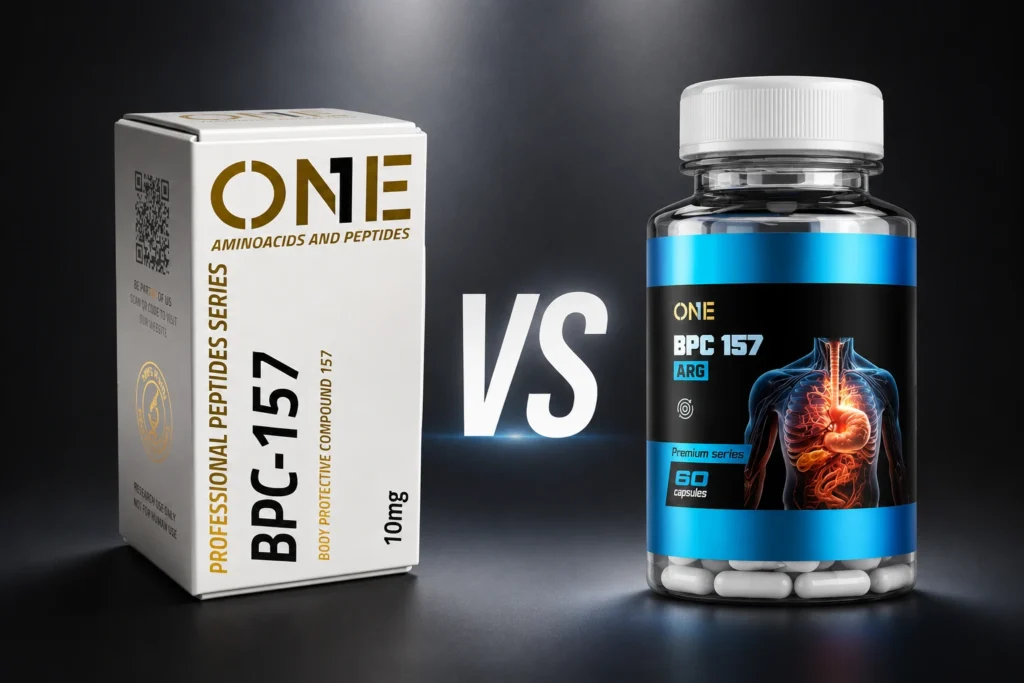
In the Research Use Only reagent market, the term “BPC-157” covers several chemical variants – differing in salt form, quality of synthesis and sometimes peptide sequence. The abbreviation ARG BPC-157 functions in suppliers’ catalogs as a separate marking and can be a source of real confusion – because it does not always refer to the same compound. For a researcher evaluating two “BPC-157” reagents for […]

Melanotan II was created in the mid-1980s by a team of Mac Hadley and Vincent Hruby from the University of Arizona working on an issue combining dermatology with peptide pharmacology: whether it is possible to induce skin pigmentation without exposure to ultraviolet radiation. Endogenous α-MSH (alpha-melanocyte-stimulating hormone) stimulates the MC1R receptor in melanocytes, triggering the eumelanin production cascade – if an analogue with […]

PT-141 was developed by the team of pharmacologist Mac Hadley at the University of Arizona working on synthetic analogues of α-melanocyte-stimulating hormone (α-MSH) – an endogenous proopiomelanocortin-derived peptide that regulates skin pigmentation through MC1R receptors in melanocytes. The hypothesis was practical: a stable α-MSH analogue could serve as an alternative to UV exposure in the induction of a protective tan. This is how the first analogue was created – Melanotan […]

DSIP, a peptide that has revolutionized the approach to sleep? In the mid-1970s, two Swiss neurophysiologists – Marcel Monnier and Guido Schoenenberger, working at the University of Basel – conducted a series of experiments that were to forever change the way we think about humoral substances that regulate sleep. The research hypothesis was bold: if deep sleep is neurochemical in nature, then […]

In 1970, the American immunologist Victor Najjar described a short, natural tetrapeptide, which he named tuftsin (after Tufts University, where he worked). The Thr-Lys-Pro-Arg sequence comes from the Fc fragment of the immunoglobulin G heavy chain (positions 289–292) and is formed physiologically by the enzymatic cleavage of IgG in the spleen and by neutrophil membrane enzymes. Function: stimulating the phagocytic activity of macrophages and neutrophils. Tuftsyn was […]
In the 1960s, Dutch neuroendocrinologist David de Wied observed something that changed the way we thought about adrenocorticotropic hormone (ACTH). Classically, this hormone was treated as a simple regulator of the adrenal axis – secreted from the pituitary gland, stimulating the adrenal cortex to produce cortisol. However, De Wied showed that ACTH has a strong, cortisol-independent behavioral effect: it modifies learning, memory and the […]
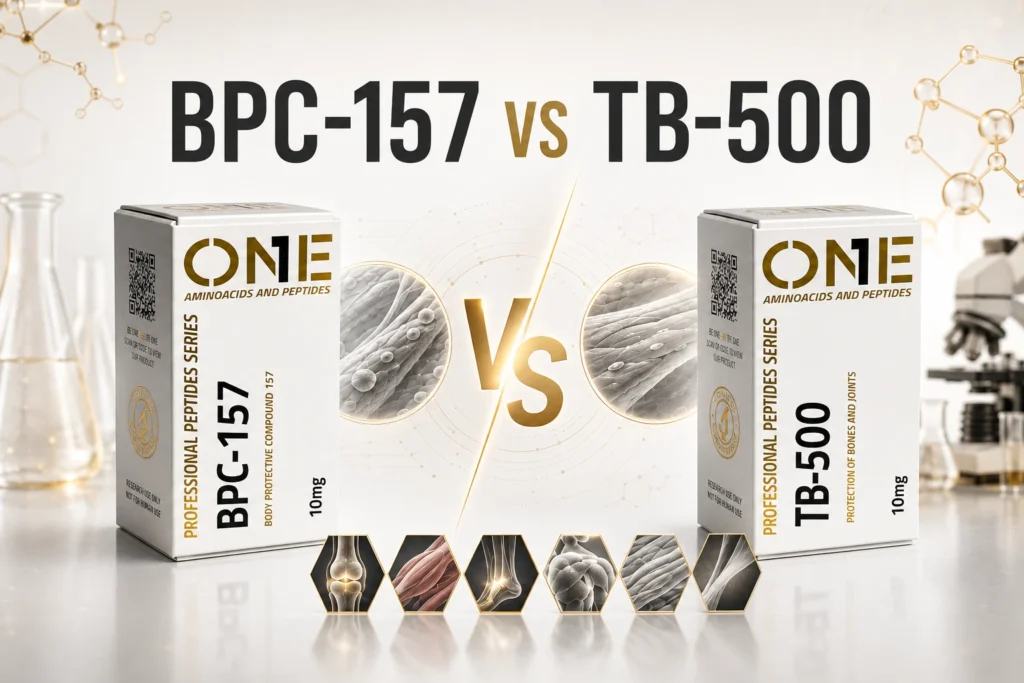
Two peptides. Two completely different origin stories. First isolated in the 1990s from human gastric juice by a Croatian pharmacologist looking for an answer to the question of why the stomach does not digest itself. The second one was described in 1981 by an American team examining proteins of the thymus of calves and their influence on the actin cytoskeleton. BPC-157 and Thymosin Beta-4 (commercially known as […]

In 1971, Soviet biologist Vladimir Khavinson began a research program in St. Petersburg (then Leningrad) whose framework hypothesis sounded seemingly speculative: if the aging process is partly regulated by signals from the endocrine glands, then isolating these signals and administering them to old animals should extend their lifespan. Khavinson focused specifically on the pineal gland, the gland that produces melatonin, […]
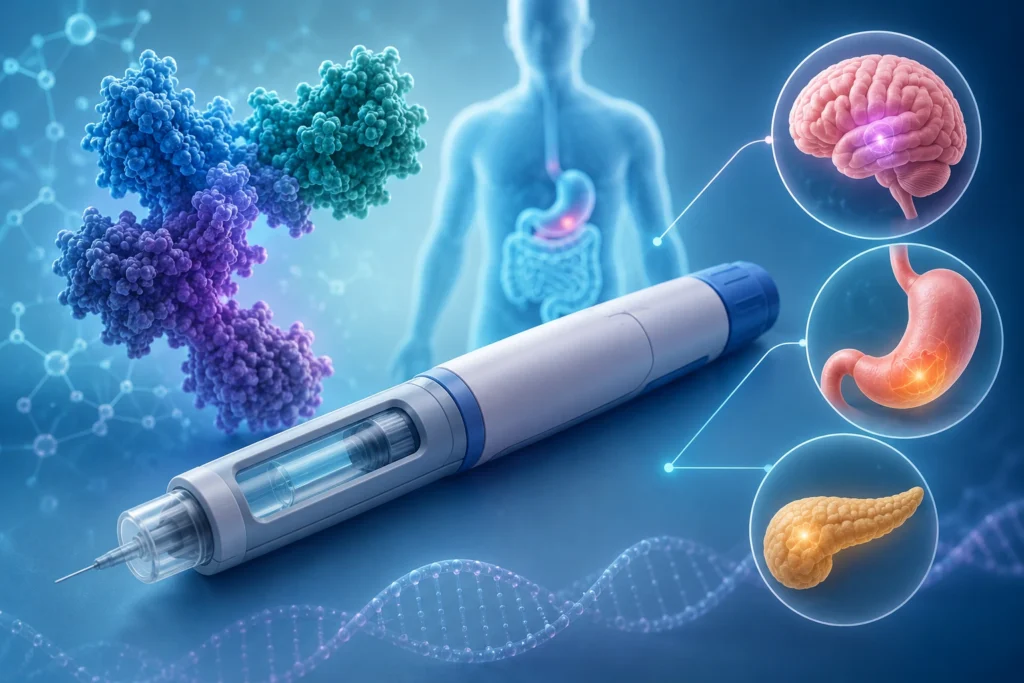
Retatrutide is currently considered the most effective and complete peptide for weight loss. In June 2023, the New England Journal of Medicine published a paper that quickly became one of the most discussed articles in metabolic pharmacology of the last decade. Ania Jastreboff’s team from Yale University presented the results of a phase II clinical trial on retatrutide, a peptide developed by Eli Lilly, […]

Semaglutide is currently the most famous weight loss peptide. In 2012, the Danish pharmaceutical company Novo Nordisk published a paper in the Journal of Medicinal Chemistry describing a molecule with the internal code NN9535. It was the seventh GLP-1 analogue designed by the company’s team during its more than twenty-year research program on incretin pharmacology, a program that began in […]
 DE
DE  EN
EN  ES
ES