Most peptides in the GH–IGF1 axis cluster act indirectly — secretagogues such as CJC-1295 or Ipamorelin stimulate the pituitary to release growth hormone, which only then triggers hepatic production of IGF-1. PEG-MGF escapes this scheme. Mechano Growth Factor is itself a splice variant of the IGF1 gene — an isoform that arises locally in skeletal […]

Among the synthetic growth-hormone-releasing peptides, Ipamorelin holds a special place — it is a molecule that pharmacological literature often describes with the adjective “clean”. Ipamorelin belongs to the group of peptide growth hormone secretagogues (GHS) and was one of the first compounds of this class deliberately designed to stimulate GH secretion without the signal “spilling […]
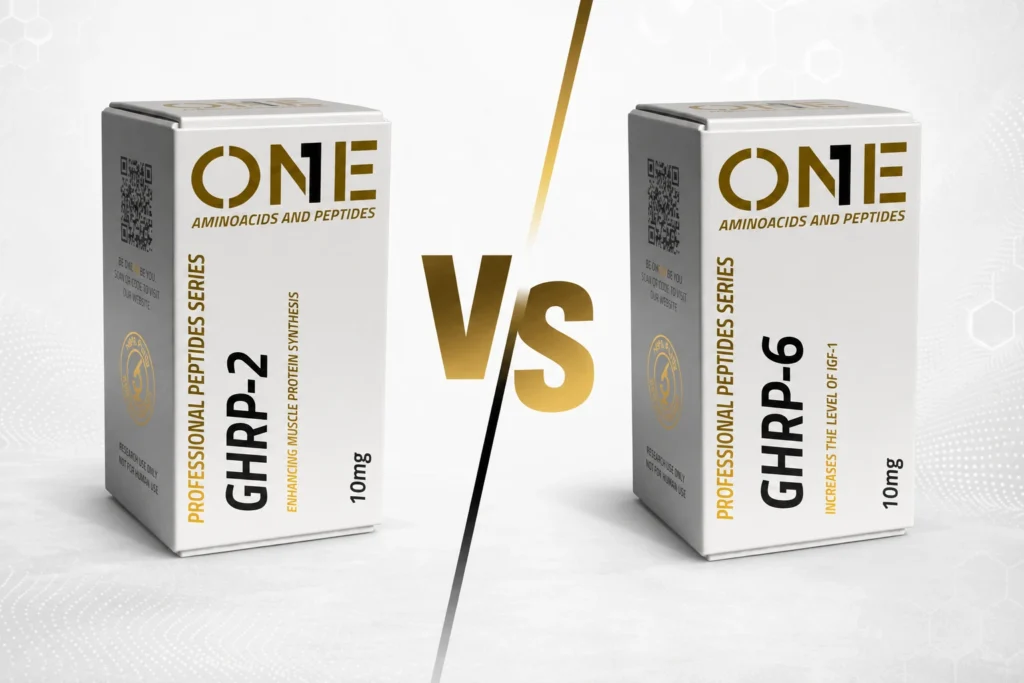
GHRP-2 and GHRP-6 are the two peptides most often set side by side from the growth hormone-releasing peptide family — compounds that, in research models, stimulate the pituitary to release growth hormone. Both come from the same generation of synthetic secretagogues discovered by Cyril Bowers’ team and act through the same receptor, yet they differ […]

In the research-reagent trade, the name “CJC-1295” covers two distinct variants of the same peptide — differing by a single chemical modification that changes the half-life by two orders of magnitude. The DAC variant and the no-DAC variant are frequently confused, yet the difference between them is fundamental for anyone evaluating a reagent for the […]
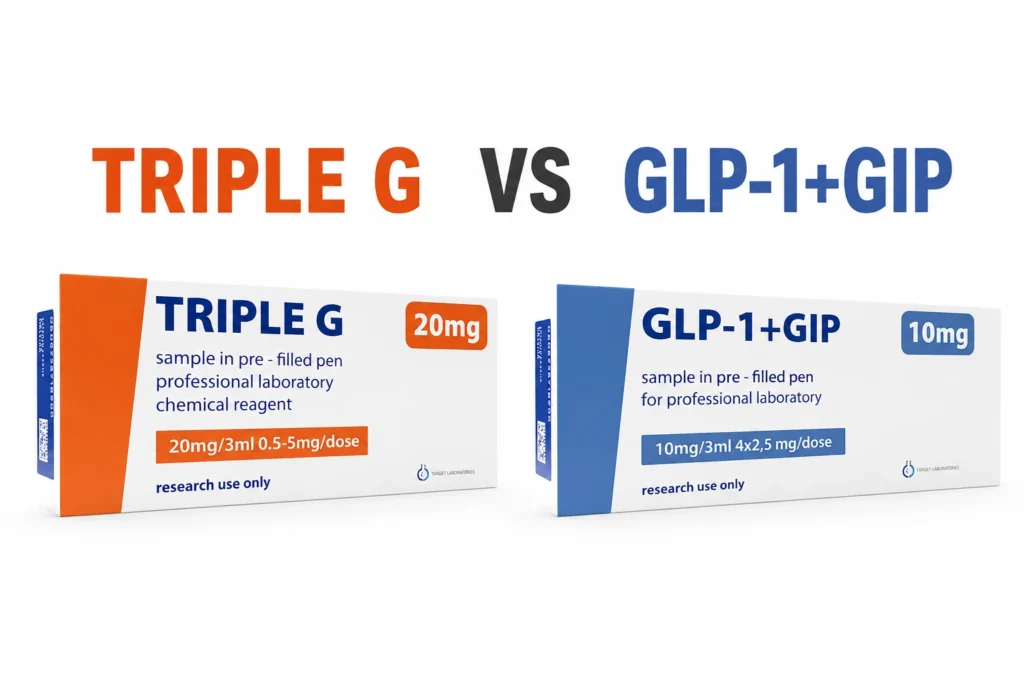
Regulatory note — a critical distinction in the status of the two peptides Tirzepatide functions as a registered medicinal product (Mounjaro — T2D, FDA and EMA 2022; Zepbound — obesity, FDA 2023, EMA 2024) and as a research reagent (RUO) in laboratory distribution. Retatrutide is not registered in any major jurisdiction — the phase III […]
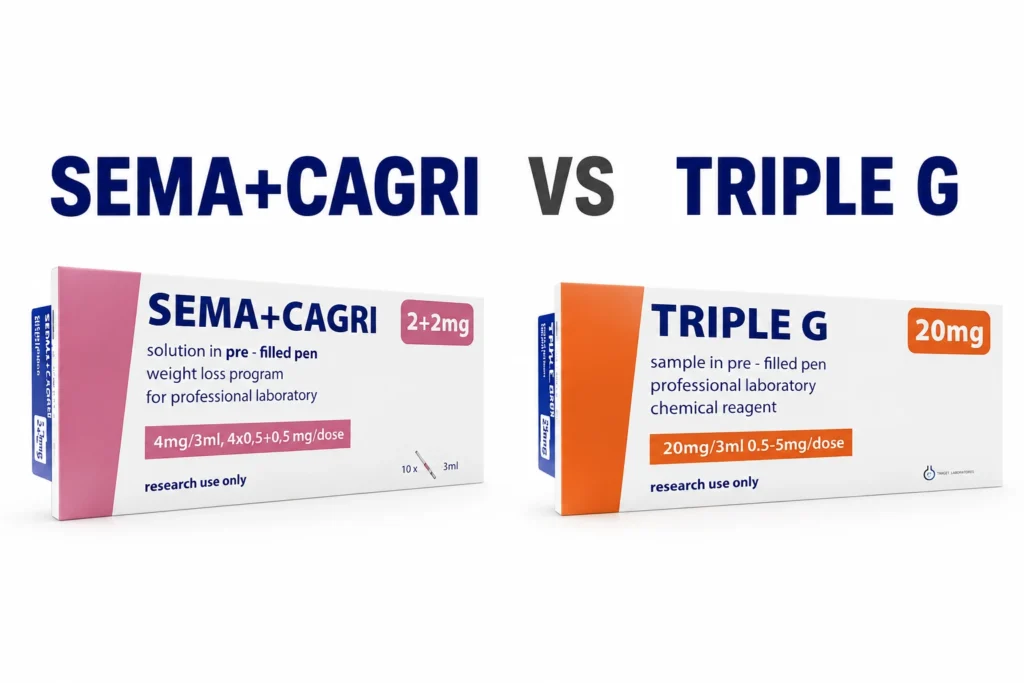
The anti-obesity pharmacology of the past decade has revolved around a design question: what should be added to GLP-1 agonism to achieve an additive or synergistic effect in body weight reduction? CagriSema and tirzepatide represent two different answers. CagriSema (Novo Nordisk) adds a second peptide — an amylin analogue (cagrilintide). Tirzepatide (Eli Lilly) adds a […]

Discussions of novel pharmacological targets in obesity and metabolic syndrome are today dominated by incretins — semaglutide, tirzepatide, retatrutide — all acting on the GLP-1 axis and related receptors. Far less space in the mainstream conversation is given to an enzyme called NNMT (Nicotinamide N-Methyltransferase) — a metabolic pathway rarely discussed outside the narrow niche […]
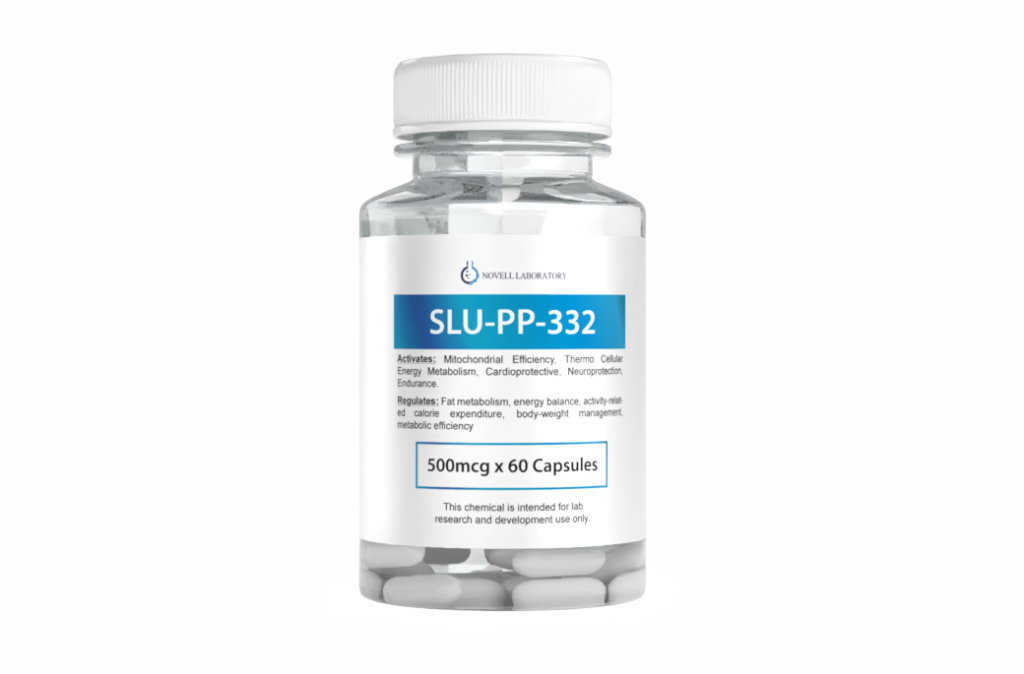
In October 2024 the journal Nature Metabolism published a paper that triggered a wave of headlines about an “exercise pill”. Burris’s team at Saint Louis University showed that the small organic molecule SLU-PP-332 — a pan-agonist of ERR receptors — increased running time to exhaustion in mice by roughly 70%, without physical training. The biohacker […]

Mixing peptides with bacteriostatic water means reconstituting a freeze-dried (lyophilized) research peptide by adding a measured volume of bacteriostatic water to the vial, letting the diluent run gently down the inner wall, and allowing the powder to dissolve into a solution of known concentration for laboratory work. The technique is deliberately gentle, and the volume […]

You do not have to refrigerate unopened bacteriostatic water — sealed vials are stable at controlled room temperature. Once the closure is first punctured, the vial enters its in-use period: bacteriostatic water for injection is commonly labeled for use within about 28 days after first entry, and many labs refrigerate it during that window to […]
 DE
DE  EN
EN  ES
ES