 ES
ES  EN
EN  DE
DE 


Research reagent for laboratory use only. Not for human or veterinary use, diagnostic, or therapeutic purposes.
Batch-level quality documentation is available through the central HPLC/COA methodology & batch lookup page.
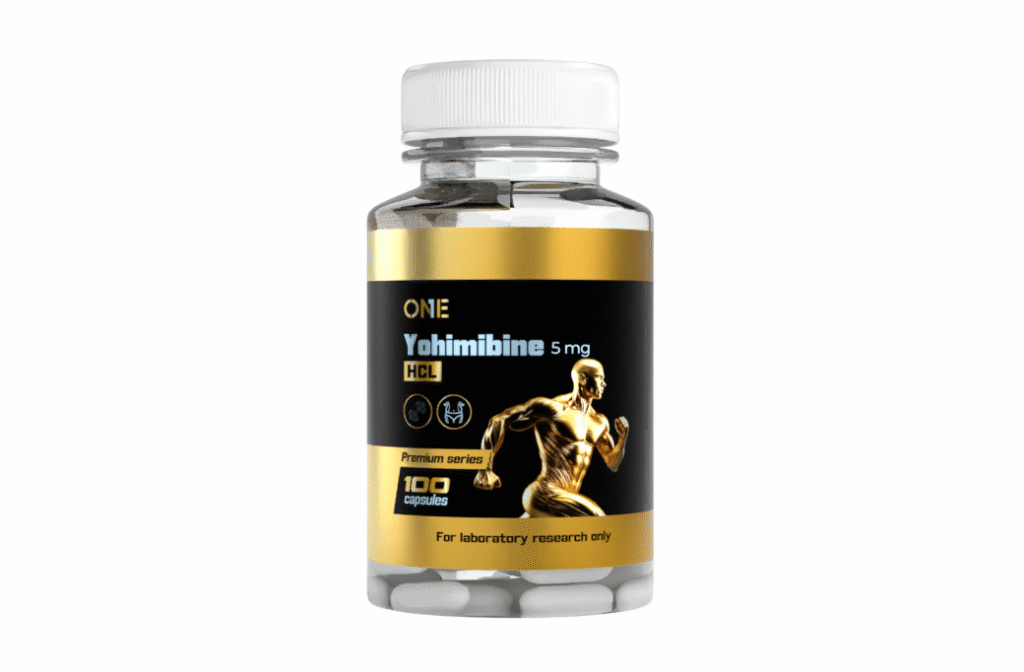
Yohimbine HCL is an indole alkaloid that appears in scientific literature primarily as a selective antagonist of alpha-2 adrenergic receptors. The intended use of this substance is exposure in controlled research models (in vitro and in vivo in model organisms) in order to analyze ligand-receptor interactions and metabolic processes at the cellular level.
Yohimbine Hcl (CAS: 65-19-0) is a compound with an established position in analytical chemistry and experimental pharmacology. As an alpha receptor antagonist, yohimbine is used by laboratories to study the mechanisms of norepinephrine release and modulation of the sympathetic nervous system in animal models. It is often tested in combination with other substances, such as SARMs, to assess synergy in receptor modulation.
The main area of research interest of One Peptides Yohimbine is the effect of the substance on the signaling pathways regulating lipolysis in adipocyte cultures and the analysis of vascular flow in exposed tissues. Thanks to a precise dose of 5 mg in the research unit, the reagent allows easy preparation of solutions with a defined molar concentration, which is crucial for the repeatability of results.
Chemically, yohimbine is the methyl ester of alpha-hydroxyyohimban-alpha-carboxylic acid, existing in the form of hydrochloride to increase stability and solubility in water.
The molecule is characterized by the presence of an indole-quinolysine ring system, which determines its specific affinity for receptor proteins.
The physicochemical properties of the One Peptides Yohimbine reagent are determined by the salt form (hydrochloride), which affects its behavior in the laboratory environment.
From the point of view of molecular biology, yohimbine is a classic antagonist of alpha adrenergic receptors (subtypes A, B and C).
The mechanism of action in cell cultures is based on blocking presynaptic alpha receptors. Exposure of the research model to yohimbine abolishes the inhibition of norepinephrine release, which leads to an increased concentration of mediators in the synaptic cleft in vitro.
In lipid-metabolism research, yohimbine is used as a tool for blocking alpha-2 adrenergic receptors in controlled adipocyte models. This allows researchers to study receptor-level signaling and catecholamine-response pathways in vitro without presenting the compound as a consumer weight-management agent.
Yohimbine HCL is an indole alkaloid hydrochloride, used in laboratory tests as a selective alpha-2 adrenergic receptor antagonist. This reagent is characterized by high biochemical stability.
The mechanism of action is based on blocking alpha-2 receptors, which in cellular models allows researchers to study norepinephrine-release signaling and downstream adrenergic response pathways.
The key parameters are the molar mass of 390.9 g/mol, the CAS number 65-19-0 and the molecular formula C21H26N2O3 · HCl. The substance is available in the form of a crystalline powder of high purity.
Ver también GW-501516
Related research: yohimbine α2-receptor research · yohimbine HCl research reagents
 DHL Express








Valoraciones
No hay valoraciones aún.