 ES
ES  EN
EN  DE
DE 

A research-focused comparison of Melanotan II and PT-141, covering melanocortin receptor selectivity, evidence, safety signals and regulatory status.
Mixing peptides with bacteriostatic water means reconstituting a freeze-dried (lyophilized) research peptide by adding a measured volume of bacteriostatic water to the vial, letting the diluent run gently down the inner wall, and allowing the powder to dissolve into a solution of known concentration for laboratory work. The technique is deliberately gentle, and the volume you add sets the final concentration.
ℹ️ Research-use context: this article describes laboratory reconstitution of lyophilized research peptides with bacteriostatic water. It is not medical advice, a dosing guide, or a human-use protocol.
Lyophilized research peptides arrive as a dry cake or powder at the bottom of a sealed vial, because removing water by freeze-drying keeps the peptide stable in storage. Reconstitution is simply the controlled reversal of that step: you return the peptide to solution by introducing a diluent. Bacteriostatic water is the usual choice for this in a multiple-dose context, since its 0.9% (9 mg/mL) benzyl alcohol limits microbial growth between repeated punctures of the septum. If you are weighing diluents, the question of choosing bacteriostatic vs sterile water is covered separately; for the wider picture of the material itself, see the bacteriostatic water overview, which is the main guide to this topic.
The goal of reconstitution is not just “wet powder.” It is a clear, fully dissolved solution at a concentration you can actually calculate — so that the same prepared vial behaves predictably from one withdrawal to the next in the lab. Two things determine whether you get there: technique (how you add the water) and math (how much water you add).
Peptides are relatively delicate molecules. Mechanical stress — vigorous shaking, squirting diluent forcefully onto the cake, foaming — can shear or denature them, and protein and peptide pharmaceuticals are well documented to be sensitive to physical and interfacial stress during handling. The whole technique is built around avoiding that.
| Step | What you do | Why it matters |
|---|---|---|
| Prepare the septum | Wipe the rubber stopper of both vials with an appropriate disinfectant and let it dry | Aseptic septum handling keeps fresh contamination out; the preservative slows growth but does not sterilize new contaminants |
| Add diluent slowly | Direct the measured bacteriostatic water against the inner glass wall so it runs down to the powder, rather than blasting it straight onto the cake | A gentle stream avoids foaming and reduces shear stress on the peptide |
| Let it dissolve | Set the vial down and allow the powder to dissolve on its own; if needed, swirl slowly or roll the vial between your palms | Time and gentle motion finish the job without mechanical damage |
| Do not shake | Never shake or vortex aggressively to “speed it up” | Shaking generates foam and interfacial stress that can degrade the peptide |
| Inspect | Confirm the solution is clear with no visible particulates before use | Cloudiness or undissolved material is a stop signal |
If dissolution is slow, patience beats force: leaving the vial briefly to stand, with occasional slow swirling, almost always works better than agitation. A clear, particulate-free solution is the visual confirmation that reconstitution is complete. For a fuller walkthrough, the step-by-step guide to dissolving peptides covers the handling in more detail.
This is where reconstitution becomes quantitative. The concentration of your prepared research solution is just the mass of peptide in the vial divided by the volume of bacteriostatic water you added:
concentration = peptide mass ÷ diluent volume
The mass is fixed — it is whatever the vial contains, printed on the label (for example, 5 mg or 10 mg of lyophilized peptide). The variable you control is the volume of diluent. Adding more water gives a more dilute solution; adding less gives a more concentrated one. Nothing about the peptide changes; you are only choosing how much it is spread across.
A worked example, framed strictly as preparing a known concentration of a research solution:
| Peptide mass in vial | Bacteriostatic water added | Resulting concentration |
|---|---|---|
| 5 mg | 2 mL | 2.5 mg/mL |
| 5 mg | 5 mL | 1 mg/mL |
| 10 mg | 2 mL | 5 mg/mL |
Read across any row: the same 5 mg of peptide becomes 2.5 mg/mL in 2 mL of diluent, or 1 mg/mL in 5 mL. The arithmetic is identical regardless of the peptide. Because keeping the numbers straight matters for reproducible lab work, it is easier to let a tool handle it — the peptide reconstitution calculator (concentration and volume) takes the vial mass and your target concentration and returns the diluent volume to add, or vice versa.
A practical note on container size: bacteriostatic water comes in finite volumes, so plan the diluent volume against what you have on hand. A standard lab-grade bacteriostatic water (10 mL) vial covers several typical reconstitutions, and matching your prep volume to the container avoids opening more vials than necessary — which also limits how often a multiple-dose vial is punctured.
A clean reconstitution is two disciplines at once. The technique protects the molecule: aseptic septum handling, a slow stream of diluent down the wall, gentle swirling instead of shaking, and a clear final solution. The math protects the data: a deliberately chosen diluent volume gives a known mg/mL, so the prepared vial is a defined research solution rather than a guess. Get both right and the vial behaves the same way every time you return to it. If you also want guidance on what happens after preparation, see the notes on how to prepare and store research peptides.
Can you mix peptides with bacteriostatic water?
Yes — bacteriostatic water is the common diluent for reconstituting lyophilized research peptides in a laboratory, multiple-dose context. Its 0.9% benzyl alcohol limits microbial growth across repeated septum punctures, which suits a vial that will be accessed more than once. Add the measured volume gently down the vial wall and allow the powder to dissolve into a clear solution.
How much bacteriostatic water do you add to a peptide vial?
There is no single number — it depends entirely on the target concentration you want for your research solution, because concentration equals peptide mass divided by diluent volume. The same 5 mg vial becomes 2.5 mg/mL with 2 mL or 1 mg/mL with 5 mL. The simplest way to get the volume right is to enter the vial mass and your target concentration into the peptide reconstitution calculator.
Do you shake a peptide vial after adding water?
No. Shaking or vortexing generates foam and interfacial stress that can damage the peptide. Set the vial down to let the powder dissolve, and if you need to help it along, swirl slowly or roll the vial between your palms rather than shaking it.
Why bacteriostatic water and not sterile water for reconstitution?
Sterile water for injection has no preservative, so once its container is opened it offers no protection against microbial growth and is intended for single use. Bacteriostatic water contains 0.9% benzyl alcohol, which suppresses growth between punctures — the property that makes it appropriate for a multiple-dose vial that will be reconstituted and accessed several times in laboratory work.
Mixing peptides with bacteriostatic water is controlled reconstitution: add a measured volume of diluent gently down the vial wall, swirl rather than shake, and let the lyophilized powder dissolve into a clear solution. The volume you choose sets the concentration, since concentration equals peptide mass divided by diluent volume. Get the technique and the math right together and you have a defined research solution that behaves the same at every withdrawal.

A research-focused comparison of Melanotan II and PT-141, covering melanocortin receptor selectivity, evidence, safety signals and regulatory status.
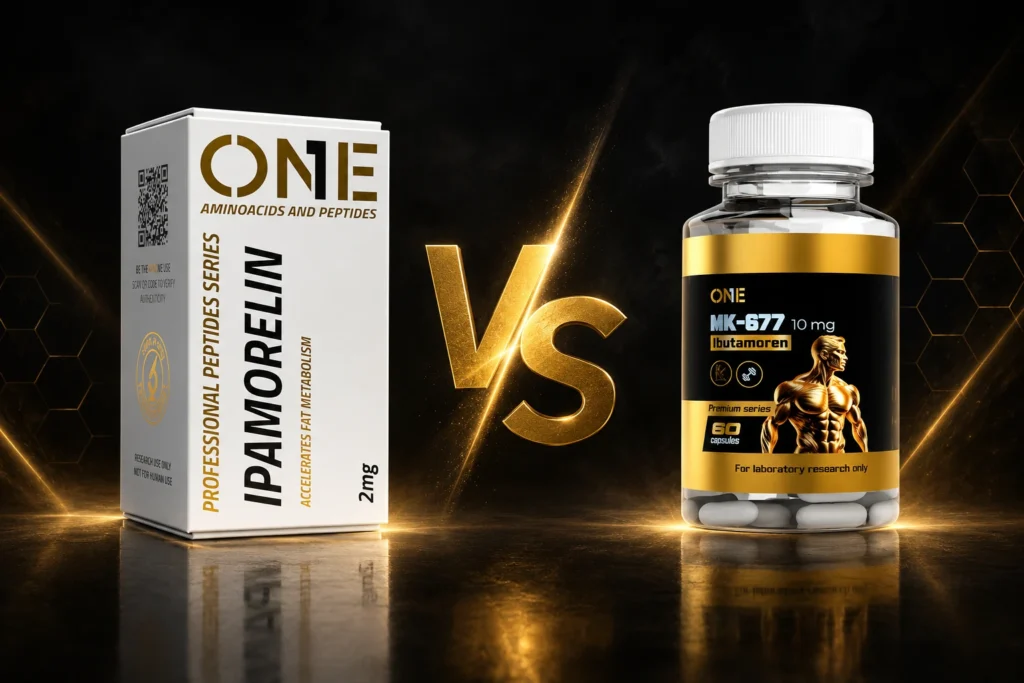
A research comparison of MK-677 and ipamorelin, focusing on GHS-R1a signaling, selectivity, administration route, human evidence and WADA status.
