Peptides — chemical reagents for scientific research
The One Peptides catalogue includes more than 20 research peptides with purity confirmed by HPLC analysis and mass spectrometry. It covers growth hormone secretagogues, metabolic peptides, neuropeptides, melanocortin peptides, tissue peptides and telomere peptides — all intended exclusively for laboratory use (Research Use Only). The substances are not intended for human consumption or for diagnostic purposes. Browse the available peptides below or explore the individual categories.
¿Qué son los péptidos?
Peptides are short chains of 2 to approximately 50 amino acid residues joined by peptide bonds. In terms of molecular size, they sit between single amino acids and full-length proteins — the latter are usually built from more than 50 amino acids that fold into complex tertiary and quaternary structures.
In nature, peptides perform signalling, hormonal and modulatory functions. Many of them act as ligands of membrane receptors, initiating signalling cascades inside cells. Examples include peptide hormones (insulin, oxytocin, vasopressin), neuropeptides that regulate the activity of the central nervous system, and antimicrobial peptides that form part of the innate immune response.
Peptide research dates back to the early 20th century, when Emil Fischer carried out the first synthesis of dipeptides. The breakthrough came with solid-phase peptide synthesis (SPPS), developed by Bruce Merrifield in 1963 and recognised with the Nobel Prize in 1984. Since then, synthetic peptides have become a widely used research tool, enabling the exploration of receptor mechanisms, signalling pathways and protein–protein interactions under controlled conditions.
All peptides available from One Peptides have Research Use Only (RUO) status and are intended exclusively for in vitro research and studies in animal models. They are not medicinal products, dietary supplements or foodstuffs.
Peptide categories in the One Peptides catalogue
Below, the peptides available in the shop are grouped by research area. Each name links to a dedicated subcategory with a full description of the substance.
Growth hormone secretagogues
A group of peptides acting on the somatotropic axis — they stimulate growth hormone (GH) secretion by activating the GHS-R1a receptor or by mimicking the action of growth hormone-releasing hormone (GHRH).
- GHRP-2 — a hexapeptide, a high-affinity GHS-R1a receptor agonist
- GHRP-6 — a hexapeptide and ghrelin mimetic, studied in the context of the GH/IGF-1 axis
- Ipamorelin — a pentapeptide, a selective GH secretagogue with a narrow activity profile
- CJC-1295 — a GHRH analogue (without the DAC module) with a short half-life
- CJC-1295 DAC — a GHRH analogue with a DAC conjugate, showing prolonged action in animal models
Metabolic peptides
Substances studied in the context of metabolic pathways — their effects on the GLP-1R, GIPR and GCGR receptors and the modulation of lipid metabolism.
- GLP-1+GIP — a triple receptor agonist (GLP-1R, GIPR, GCGR)
- SEMA G — a semaglutide analogue, a GLP-1R agonist
- TRIPLE G — a triple agonist of the GLP-1R, GIPR and GCGR receptors
- HGH Fragment 176-191 — a C-terminal fragment of human growth hormone, studied for its effect on lipid metabolism in a cell model
Neuropeptides
Peptides active at central nervous system receptors — modulation of the circadian rhythm, memory processes and neuroimmunological pathways.
- DSIP — Delta Sleep-Inducing Peptide, a chronobiological nonapeptide
- Selank — a heptapeptide derived from tuftsin, studied in the context of interactions with GABAergic receptors
- Semax — a heptapeptide, an ACTH(4-10) fragment, studied for its effect on neurotrophic factors (BDNF)
- Oxytocin — a nonapeptide, an OXTR receptor ligand, studied in behavioural models
Melanocortin peptides
Substances active at melanocortin receptors (MC1R–MC5R). Research focuses on the pathways of pigmentation, sexual behaviour and regulation of the HPG axis.
- Melanotan 2 — a cyclic heptapeptide, a non-selective melanocortin receptor agonist
- PT-141 — bremelanotide, an MC3R/MC4R agonist
- Kisspeptin-10 — a decapeptide that activates the GnRH pathway in studies in animal models
Tissue peptides
A group of peptides studied in the context of tissue repair processes, interactions with the extracellular matrix and the modulation of growth factors.
- BPC-157 — a pentadecapeptide whose sequence derives from a gastric protective protein (Body Protection Compound)
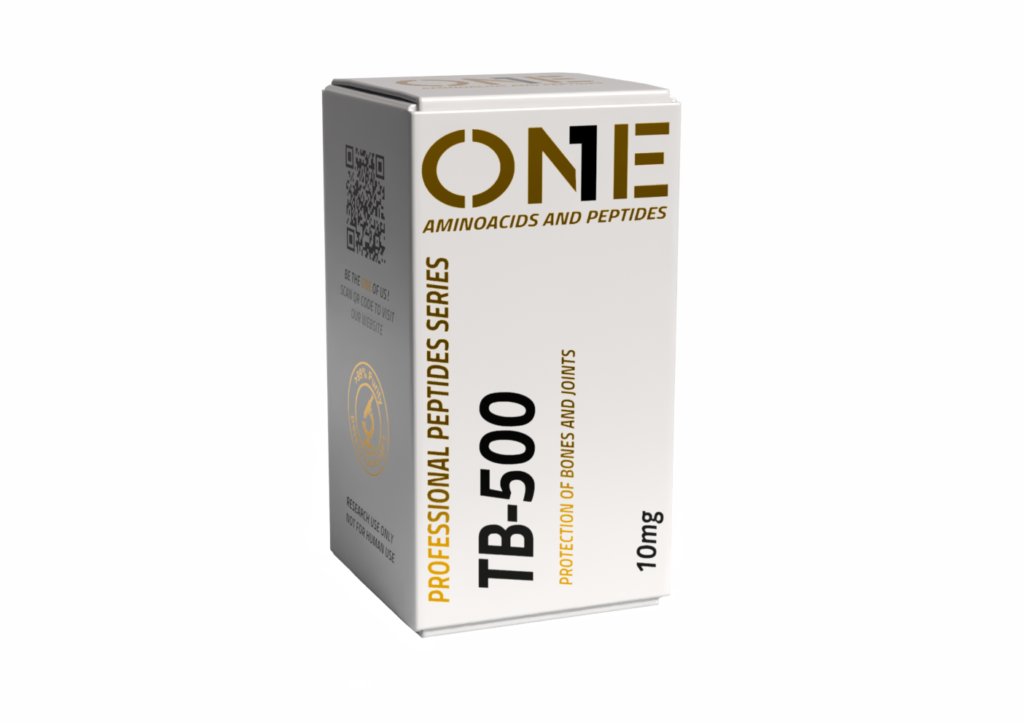
- TB-500 — a thymosin beta-4 fragment, studied in cell cultures for its effect on cell migration
- PEG MGF — pegylated Mechano Growth Factor, an IGF-1Ec variant with a PEG modification
- GHK-Cu — a copper tripeptide, studied in the context of extracellular matrix remodelling
Telomere peptides
- Epithalon — a tetrapeptide (Ala-Glu-Asp-Gly), studied in the context of telomerase activity in cell cultures
How do you choose a peptide for research?
The choice of peptide depends on the assumptions of the research protocol and the type of experimental model. Indicative selection criteria are outlined below.
Research on the somatotropic axis — if the protocol concerns the modulation of GH secretion, consider secretagogues with differing pharmacological profiles. GHRP-2 and GHRP-6 differ in their selectivity for GHS-R1a and in their effect on other hormones (prolactin and cortisol in animal models). Ipamorelin has a narrower activity profile. The GHRH analogues — CJC-1295 and CJC-1295 DAC — act through a different receptor and can be used together with secretagogues in synergistic protocols.
Metabolic research — the incretin peptides (GLP-1+GIP, SEMA G, TRIPLE G) are gut hormone analogues with differing receptor selectivity. HGH Fragment 176-191 is sometimes used in protocols on lipolysis in adipocyte cultures.
Neuroscience research — Semax and Selank are heptapeptides with different mechanisms. DSIP is a chronobiological peptide, while oxytocin is a tool for behavioural studies in rodent models.
Extracellular matrix research — BPC-157, TB-500 and GHK-Cu show activity towards different components of the extracellular matrix and growth factors. The choice depends on the type of tissue studied.
FAQ — frequently asked questions
How do peptides differ from proteins?
The boundary between peptides and proteins is conventionally drawn at around 50 amino acid residues. Peptides have a lower molecular weight and a simpler spatial structure, and they generally do not form stable tertiary domains. In laboratory practice, this means different conditions for storage, dissolution and analysis.
How should peptides purchased from One Peptides be stored?
Peptide lyophilisates should be stored at -20°C and protected from moisture and direct light. After reconstitution, solutions should be stored at 2–8°C and used within a few weeks. Detailed instructions are provided on the product page and in the Safety Data Sheet (SDS).
Are the peptides in the One Peptides catalogue intended for consumption?
No. All peptides in the catalogue have Research Use Only status and are not intended for human consumption, diagnostic or therapeutic purposes. They are chemical reagents intended exclusively for laboratory research.
How can the purity of a purchased peptide be verified?
Every batch of peptide from One Peptides comes with a Certificate of Analysis (CoA) containing the results of HPLC chromatography and mass spectrometry (MS). These documents confirm the identity of the substance and its purity expressed as a percentage. The CoA can be downloaded from the product page.
How do peptides differ from SARMs and other reagents?
Peptides are chains of amino acids — biomolecules of a peptide nature. SARMs (selective androgen receptor modulators), by contrast, are small organic molecules that are mostly not peptides. They differ in chemical structure, mechanism of action and target receptors. In the One Peptides catalogue, both groups have the status of research reagents (RUO).
 ES
ES  EN
EN  DE
DE