 ES
ES  EN
EN  DE
DE 

A research-focused comparison of Melanotan II and PT-141, covering melanocortin receptor selectivity, evidence, safety signals and regulatory status.
Benzyl alcohol is the antimicrobial preservative that defines bacteriostatic water for injection. Present at 0.9% (9 mg/mL), it inhibits bacterial growth between withdrawals, which is what allows a single vial to be entered multiple times during laboratory reconstitution of research peptides without the diluent itself becoming a contamination route.
ℹ️ Research-use context: this article describes benzyl alcohol as a preservative in bacteriostatic water used for laboratory reconstitution of research peptides. It is not medical advice or a human-use protocol.
Sterile water and bacteriostatic water start from the same place: purified, sterilized water for injection. The difference is one additive. Bacteriostatic water carries 0.9% benzyl alcohol; plain sterile water carries nothing — a contrast covered in full under how bacteriostatic water compares with sterile water.
The word “bacteriostatic” is precise. It means growth-inhibiting, not killing. Benzyl alcohol does not sterilize the contents and it will not rescue water that was already contaminated. What it does is suppress the proliferation of organisms that can be introduced when a needle pierces the stopper to draw diluent. In a multiple-dose vial that may be entered repeatedly over days, that suppression is the entire point. Each puncture is a small opportunity for microbes; the preservative narrows the window in which any stray organism could multiply to a meaningful level.
This is why the United States Pharmacopeia monograph classifies Bacteriostatic Water for Injection as a multiple-dose preparation, in contrast to single-use sterile water. The preservative is the feature that licenses reuse.
The 0.9% figure (9 mg/mL) is the concentration codified in the USP monograph. It is not an arbitrary round number — it sits in the established effective range for benzyl alcohol as a parenteral preservative, high enough to maintain bacteriostatic activity across the in-use life of the vial, but kept as low as the preservative function allows.
That balance is the governing principle of parenteral preservative selection: use the minimum concentration that reliably does the job. Reviews of preservative use in parenteral products describe benzyl alcohol as one of the most common agents precisely because it is effective at low percentages and compatible with a wide range of formulations (Meyer et al. 2007). The monograph also specifies a target pH near 5.7 (within a 4.5–7.0 range), which supports preservative stability and the chemical environment of the finished diluent.
So “why 0.9%” has a two-part answer: it is the pharmacopeial standard, and that standard reflects a deliberate floor-not-ceiling logic — enough to inhibit growth, no more than necessary.
A common point of confusion is treating benzyl alcohol as interchangeable with the ethanol found in beverages or in some skin antiseptics. They are different molecules with different roles.
| Property | Benzyl alcohol | Ethanol |
|---|---|---|
| Chemical form | Aromatic alcohol (benzene ring + CH₂OH) | Simple aliphatic alcohol (C₂H₅OH) |
| Role in bacteriostatic water | Antimicrobial preservative | Not the preservative used here |
| Typical concentration in BWFI | 0.9% (9 mg/mL) | — |
| Primary function | Inhibits bacterial growth in multi-dose vials | Solvent / antiseptic in other products |
| Volatility | Relatively low; stays in solution | High; evaporates readily |
The practical takeaway: when a label says bacteriostatic water “contains 0.9% benzyl alcohol,” it is naming a specific aromatic-alcohol preservative, not residual drinking alcohol, and not the ethanol in an alcohol wipe.
The most cited safety consideration for benzyl alcohol comes from neonatal medicine, and it is worth reporting accurately rather than dramatically.
In the early 1980s, clinicians documented a cluster of toxicity in premature and low-birth-weight infants associated with benzyl-alcohol-preserved solutions used in flush and dilution volumes that were large relative to the infants’ very low body weight. The presentation — metabolic acidosis, respiratory distress, and a characteristic gasping pattern — became known as the “gasping syndrome” (Gershanik et al. 1982). The mechanism reflected the immature capacity of newborns to metabolize benzyl alcohol’s breakdown products, compounded by cumulative exposure.
Public-health and regulatory bodies responded directly. The CDC reported the neonatal deaths (Centers for Disease Control 1982), the FDA issued guidance that benzyl-alcohol-containing products may be toxic to newborns and cautioned against their use in that population (U.S. Food and Drug Administration 1982), and the American Academy of Pediatrics characterized benzyl alcohol as a toxic agent in neonatal units (American Academy of Pediatrics 1983). A subsequent safety assessment reviewed benzyl alcohol, benzoic acid, and sodium benzoate across exposure contexts and supported the conclusion that risk is governed by dose relative to body mass and by metabolic capacity (Nair 2001).
Two points frame this correctly. First, the issue was specific to neonatal physiology and to comparatively large cumulative volumes — not to the presence of the preservative as such. Second, this is pharmacopeial and regulatory background: it explains why preserved diluents carry the cautions they do, and why benzyl alcohol concentration is held to a defined low standard. In a laboratory context, bacteriostatic water functions as a diluent for reconstituting research reagents, and this history is the reason the 0.9% figure is treated as a fixed specification rather than a flexible one.
For reconstituting research peptides at the bench, the relevance of the preservative is straightforward: it is what makes a multiple-dose diluent viable. A lyophilized research peptide is typically dissolved in a measured volume of diluent, and a preserved water lets that vial be entered more than once over its working life without the diluent becoming a growth medium. Choice between preserved (bacteriostatic) and unpreserved (sterile) water in research workflows turns on this multi-entry behavior and on reagent compatibility — covered in depth in our complete bacteriostatic water reference.
If your protocol calls for a preserved diluent for multi-entry reconstitution, a 10 mL bacteriostatic water vial is the standard format. For the mechanics of getting the powder cleanly into solution, see the step-by-step guide to dissolving peptides.
What is the benzyl alcohol for in bacteriostatic water?
It is the antimicrobial preservative. At 0.9% it inhibits bacterial growth inside a multiple-dose vial, so the diluent can be drawn from more than once without becoming a contamination route during laboratory reconstitution.
Is benzyl alcohol the same as ethanol?
No. Benzyl alcohol is an aromatic alcohol with a benzene ring; ethanol is the simple alcohol found in beverages and many antiseptics. In bacteriostatic water, benzyl alcohol is the preservative — ethanol is not the agent doing that job.
Why exactly 0.9%?
That figure (9 mg/mL) is the concentration set in the USP monograph for Bacteriostatic Water for Injection. It reflects a minimum-effective-concentration logic: enough to maintain bacteriostatic activity over the vial’s in-use life, no higher than the preservative function requires.
Is benzyl alcohol safe?
In pharmacopeial and regulatory terms, benzyl alcohol is an established parenteral preservative whose risk profile is dose- and body-mass-dependent. The documented exception is neonatal exposure, where large cumulative volumes relative to very low body weight produced toxicity (Gershanik et al. 1982; U.S. Food and Drug Administration 1982). This is reported here as regulatory background; in a research setting, bacteriostatic water is used as a reagent diluent, not for human administration.
Bacteriostatic water for injection is sterile water plus 0.9% benzyl alcohol, an aromatic-alcohol preservative — not ethanol — that inhibits bacterial growth and so enables multiple entries into one vial. The 0.9% concentration is the USP standard and reflects a minimum-effective-concentration principle. The well-documented neonatal toxicity history explains the regulatory caution around the preservative and is reported here as pharmacopeial background for a laboratory reconstitution context.

A research-focused comparison of Melanotan II and PT-141, covering melanocortin receptor selectivity, evidence, safety signals and regulatory status.
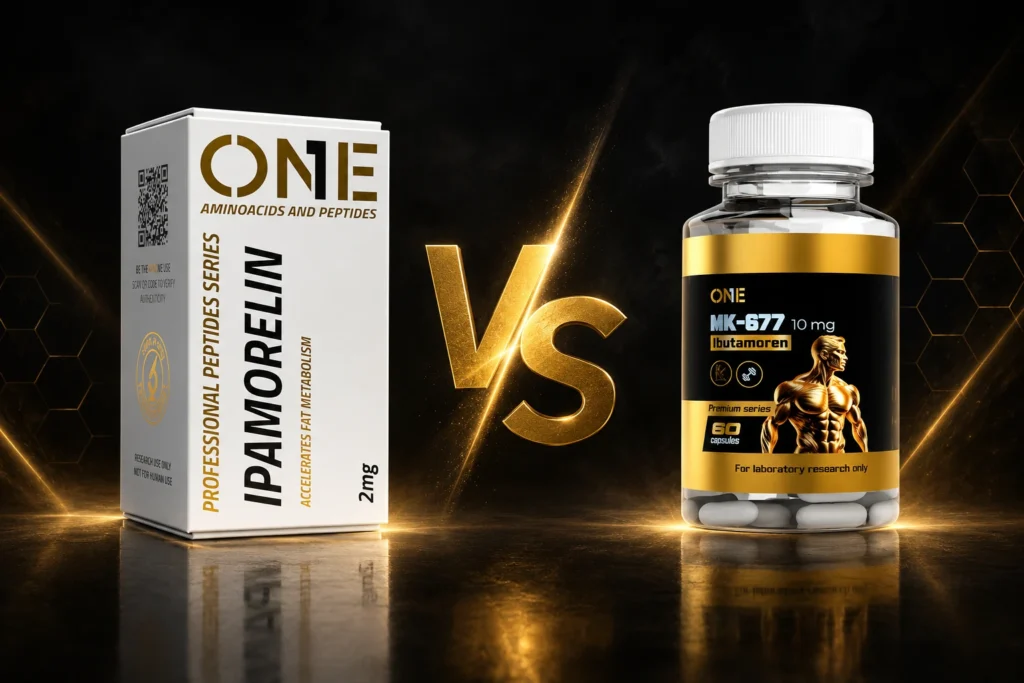
A research comparison of MK-677 and ipamorelin, focusing on GHS-R1a signaling, selectivity, administration route, human evidence and WADA status.
