
Benzyl alcohol is the antimicrobial preservative that defines bacteriostatic water for injection. Present at 0.9% (9 mg/mL), it inhibits bacterial growth between withdrawals, which is what allows a single vial to be entered multiple times during laboratory reconstitution of research peptides without the diluent itself becoming a contamination route. ℹ️ Research-use context: this article describes […]

Bacteriostatic water is sterile Water for Injection that contains 0.9% (9 mg/mL) benzyl alcohol as a bacteriostatic preservative, manufactured under pharmacopeial aseptic conditions in a multiple-dose container. In a laboratory setting it serves as a diluent for reconstituting research peptides, where the preservative lets a vial be punctured repeatedly while limiting microbial growth between withdrawals. […]
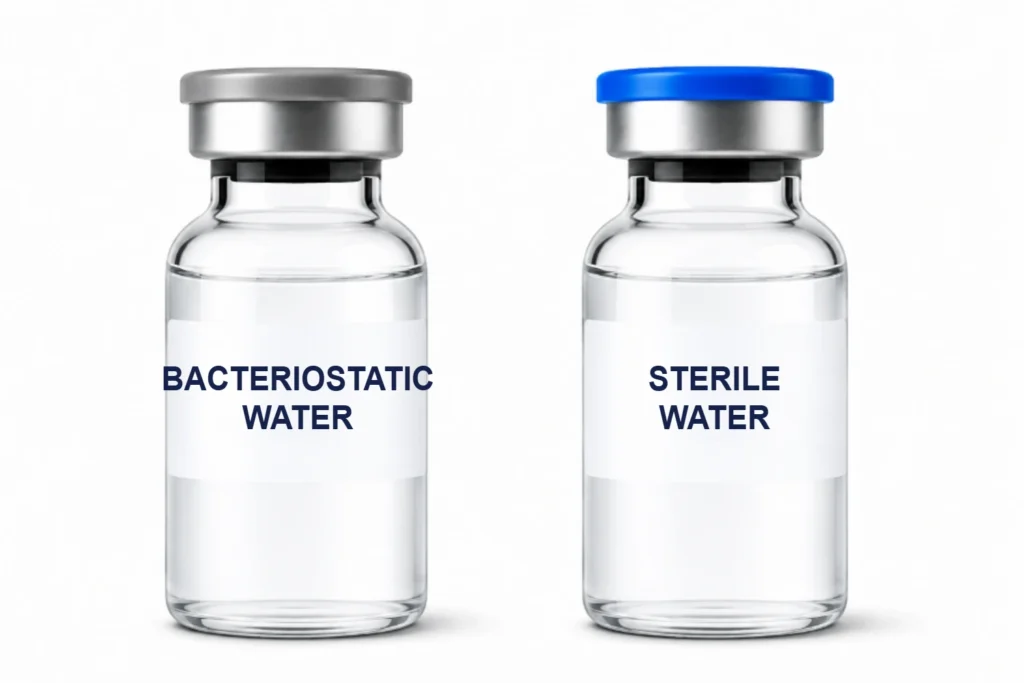
Bacteriostatic water is sterile water that contains a small amount of an antimicrobial preservative — usually 0.9% (9 mg/mL) benzyl alcohol — which suppresses bacterial growth and allows a multiple-dose vial to be entered repeatedly over time. Sterile water for injection (SWFI) contains no preservative and is intended for single use. In the lab, that […]
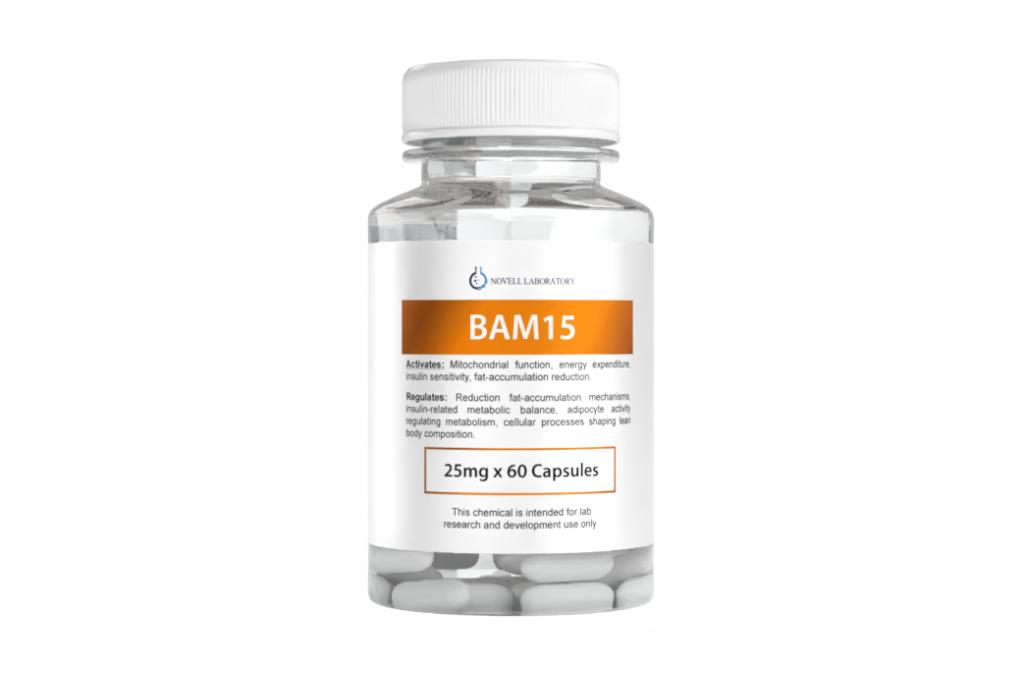
BAM-15 is a relatively new compound in energy-metabolism research. Metabolic pharmacology has a long and disturbing history with mitochondrial uncouplers. 2,4-dinitrophenol (DNP) was used as a weight-loss drug in the 1930s — and has left a legacy of deaths from hyperthermia, cataracts, and multiple organ failure. The Food and Drug Administration has withdrawn DNP from the market […]

NMN has been the star of longevity supplementation for the last five years. It appears on David Sinclair’s podcasts, in biohacker protocols, and on premium drugstore shelves. Marketing easily exceeds science here – and at the same time, some laboratory observations on NMN and NAD+ are so thoroughly documented that they cannot be ignored. This article clears up the picture: what exactly is […]

The evolution of the pharmacology of obesity treatment in the last decade has been in the sequence of “adding receptors” – from a GLP-1 monoagonist (semaglutide → Ozempic, Wegovy), through a GLP-1 + GIP agonist (tirzepatide → Mounjaro, Zepbound), to a GLP-1 + GIP + glucagon triagonist (retatrutide in phase III). CagriSema adds a separate signaling pathway to this narrative – amylin – that is still not […]

Most of today’s high-profile weight-loss molecules – semaglutide, tirzepatide, retatrutide – act on the incretin axis. It affects one specific biochemical pathway: GLP-1 (and related) receptors. Tesofensine represents a completely different pharmacological route: it inhibits the reuptake of three neurotransmitters at the same time – dopamine, norepinephrine and serotonin. A mechanism more similar to classic psychostimulants, but in a new generation version with a different […]

GHK-Cu is the skincare star of recent years. It appears in descriptions of premium serums, in dermatologists’ educational materials on Instagram and in beauty blogs under the slogans “copper tripeptide changes the skin”. Marketing easily exceeds science here – and vice versa: reliable data is sometimes hidden under a layer of promises in which it is difficult to distinguish what has been demonstrated in the laboratory from what […]

Tirzepatide has two distinct regulatory statuses, which this article keeps separate from the first sentence to the last: as an approved medicinal product – Mounjaro (type 2 diabetes, FDA and EMA approval in 2022) and Zepbound (obesity, FDA approval 2023, EMA 2024). In this status, tirzepatide has dosing protocols in clinical settings, prescription availability, and […]
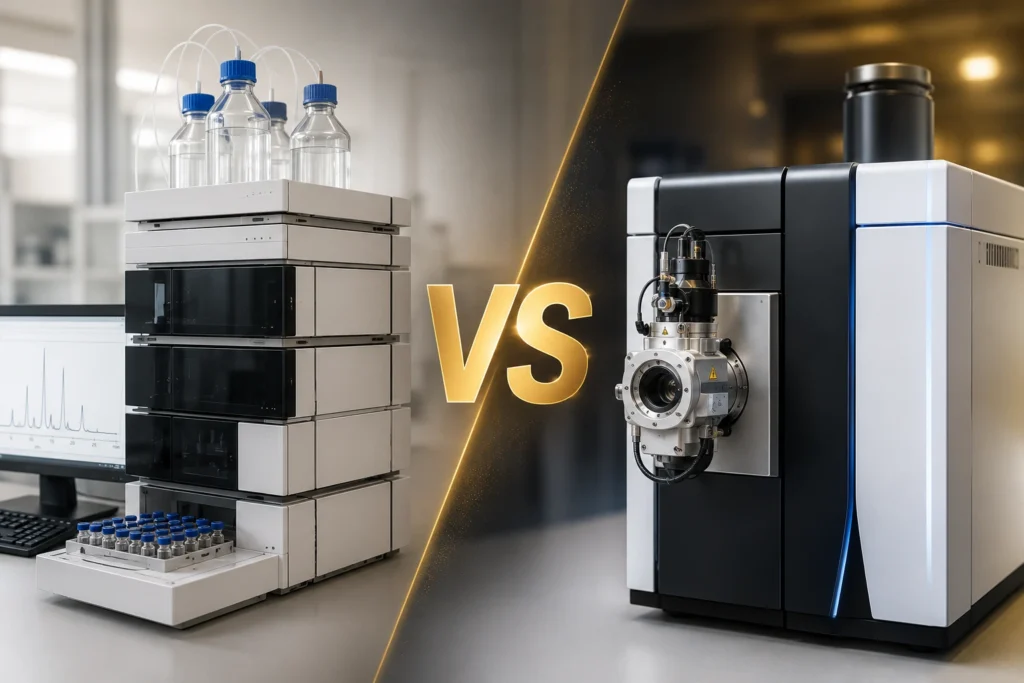
In a laboratory working with peptides, there comes a moment when the supplier sends a certificate of analysis with two key data: an HPLC chromatogram with the declaration “purity ≥98%” and a mass spectrum with the molecular mass consistent with the theoretical value. To a person without a background in analytical chemistry, both documents look like a technical formality – a strip of peaks, a few numbers, the signature of a QC employee. […]
 ES
ES  EN
EN  DE
DE