
Orforglipron (LY3502970, brand Foundayo) is an oral, small-molecule GLP-1 receptor agonist developed by Eli Lilly and approved by the FDA in 2026. Unlike the peptide GLP-1 agonists (semaglutide, tirzepatide) administered by injection, orforglipron is a non-peptide molecule taken orally without the food-related restrictions characteristic of oral semaglutide. An oral GLP-1 receptor agonist was, for years, […]
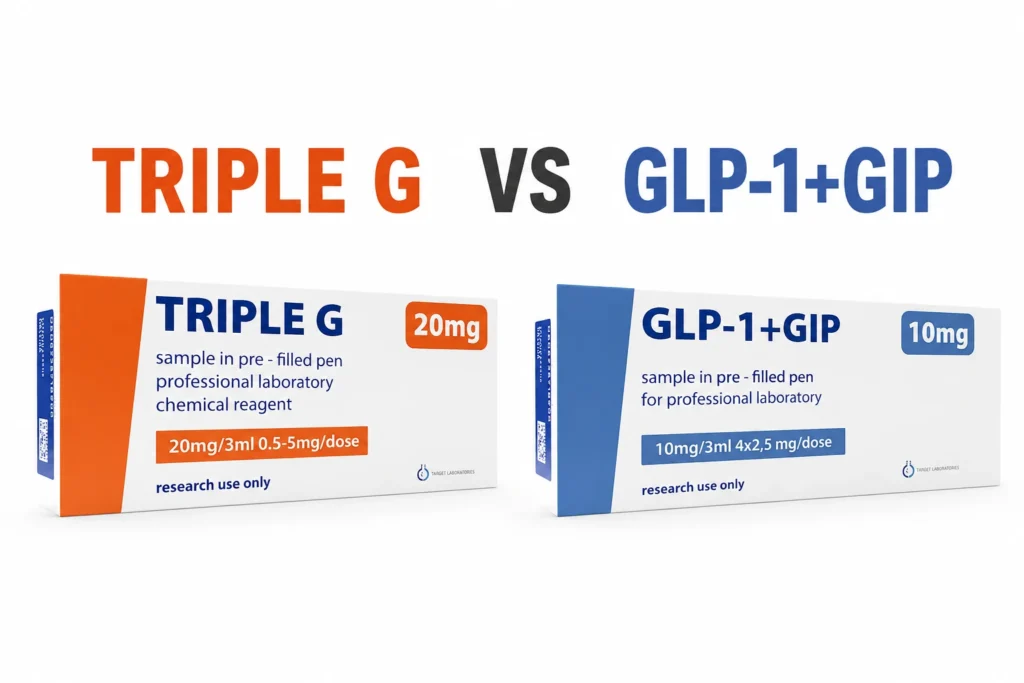
Regulatory note — a critical distinction in the status of the two peptides Tirzepatide functions as a registered medicinal product (Mounjaro — T2D, FDA and EMA 2022; Zepbound — obesity, FDA 2023, EMA 2024) and as a research reagent (RUO) in laboratory distribution. Retatrutide is not registered in any major jurisdiction — the phase III […]
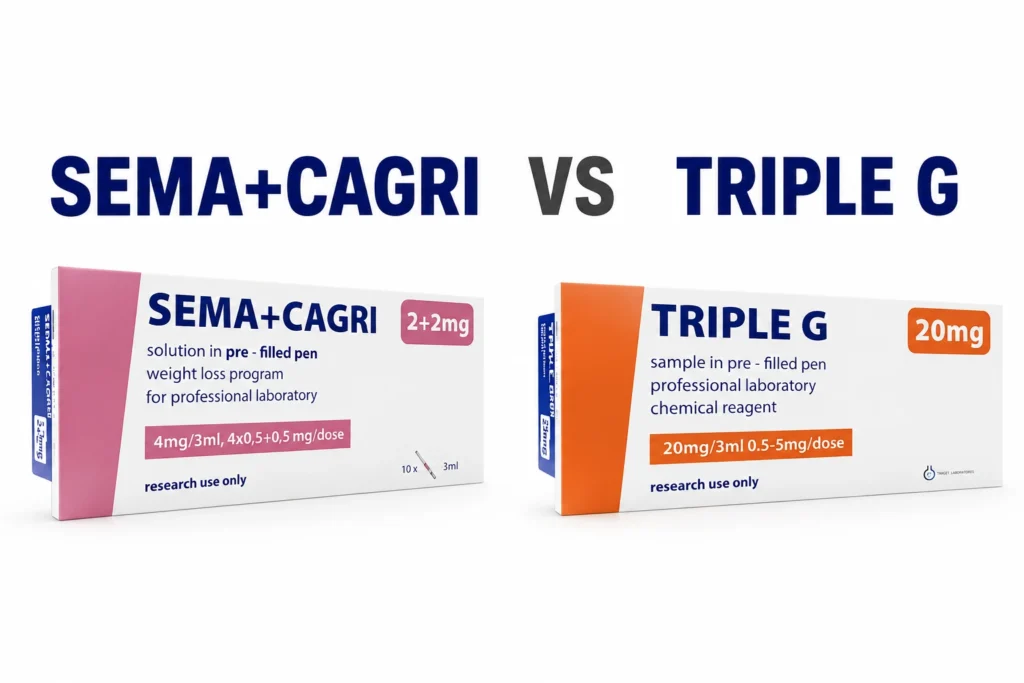
The anti-obesity pharmacology of the past decade has revolved around a design question: what should be added to GLP-1 agonism to achieve an additive or synergistic effect in body weight reduction? CagriSema and tirzepatide represent two different answers. CagriSema (Novo Nordisk) adds a second peptide — an amylin analogue (cagrilintide). Tirzepatide (Eli Lilly) adds a […]

Discussions of novel pharmacological targets in obesity and metabolic syndrome are today dominated by incretins — semaglutide, tirzepatide, retatrutide — all acting on the GLP-1 axis and related receptors. Far less space in the mainstream conversation is given to an enzyme called NNMT (Nicotinamide N-Methyltransferase) — a metabolic pathway rarely discussed outside the narrow niche […]
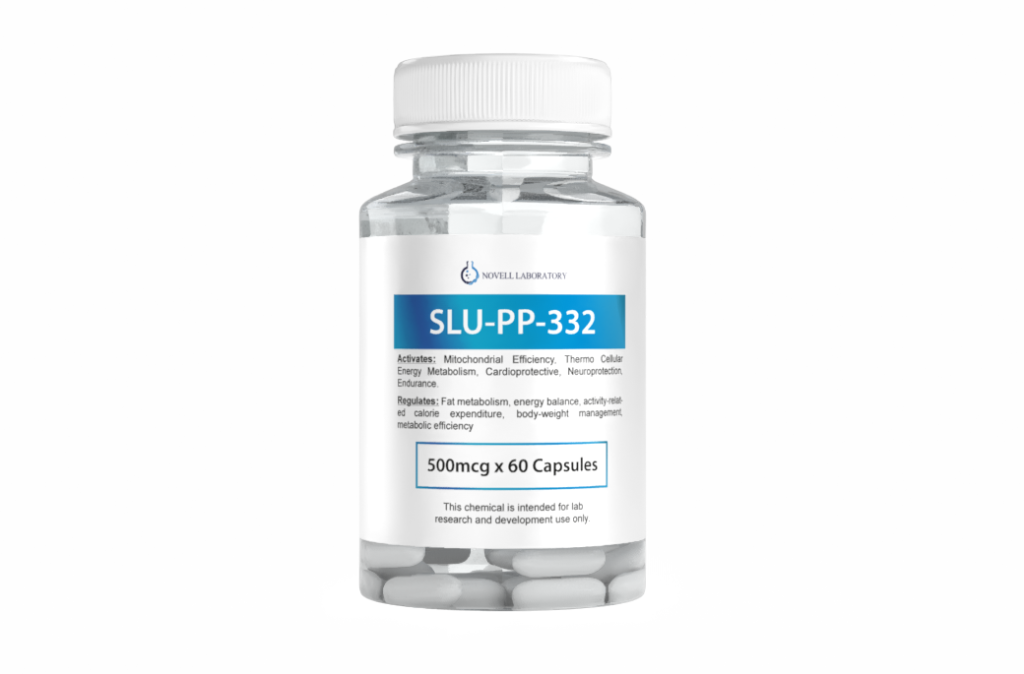
In October 2024 the journal Nature Metabolism published a paper that triggered a wave of headlines about an “exercise pill”. Burris’s team at Saint Louis University showed that the small organic molecule SLU-PP-332 — a pan-agonist of ERR receptors — increased running time to exhaustion in mice by roughly 70%, without physical training. The biohacker […]
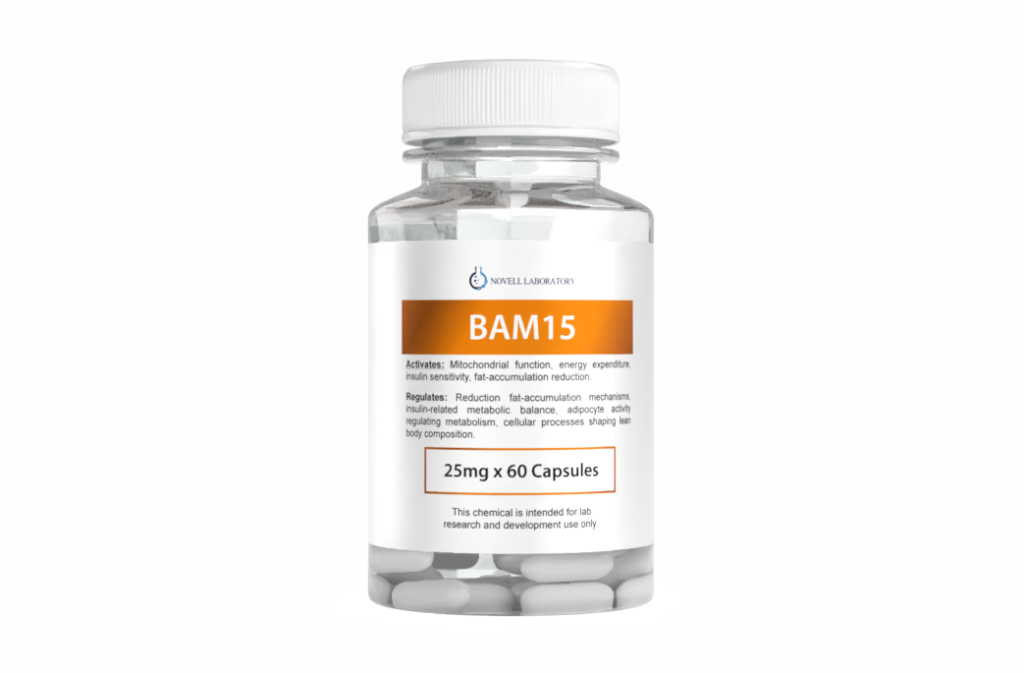
BAM-15 is a relatively new compound in energy-metabolism research. Metabolic pharmacology has a long and disturbing history with mitochondrial uncouplers. 2,4-dinitrophenol (DNP) was used as a weight-loss drug in the 1930s — and has left a legacy of deaths from hyperthermia, cataracts, and multiple organ failure. The Food and Drug Administration has withdrawn DNP from the market […]

The evolution of the pharmacology of obesity treatment in the last decade has been in the sequence of “adding receptors” – from a GLP-1 monoagonist (semaglutide → Ozempic, Wegovy), through a GLP-1 + GIP agonist (tirzepatide → Mounjaro, Zepbound), to a GLP-1 + GIP + glucagon triagonist (retatrutide in phase III). CagriSema adds a separate signaling pathway to this narrative – amylin – that is still not […]

Most of today’s high-profile weight-loss molecules – semaglutide, tirzepatide, retatrutide – act on the incretin axis. It affects one specific biochemical pathway: GLP-1 (and related) receptors. Tesofensine represents a completely different pharmacological route: it inhibits the reuptake of three neurotransmitters at the same time – dopamine, norepinephrine and serotonin. A mechanism more similar to classic psychostimulants, but in a new generation version with a different […]

Tirzepatide has two distinct regulatory statuses, which this article keeps separate from the first sentence to the last: as an approved medicinal product – Mounjaro (type 2 diabetes, FDA and EMA approval in 2022) and Zepbound (obesity, FDA approval 2023, EMA 2024). In this status, tirzepatide has dosing protocols in clinical settings, prescription availability, and […]

GLP-1, GIP, glucagon – how do incretins work in regulating metabolism In 1964, two research teams independently observed a phenomenon that at first glance seemed to be a measurement anomaly. Glucose given orally to a healthy person caused a much greater insulin release than the same dose of glucose given intravenously – at the same blood glucose level. The difference is not […]
 DE
 EN
 ES

