 DE
 EN
 ES



GHRP-6 – Research Use Only (RUO). Chemical reagent intended only for laboratory tests. It is not intended for human consumption or diagnostic purposes.
Related categories and reagents: In the context of this area of research, it is also worth comparing CJC without DAC and GHRP-2.
GHRP-6 vs GHRP-2. Two hexapeptides from the same class of ghrelin receptor GHS-R1a agonists, differing in sequence and molar mass: GHRP-6—873.01 g/mol; GHRP-2—817.97 g/mol. Despite sharing a receptor, the literature describes them as distinct research tools, including because of different accompanying response profiles.
GHRP-6 vs CJC-1295 without DAC. This is not the same mechanism. CJC-1295 (3,367.9 g/mol) is a GHRH analogue described in relation to GHRH-R, not the ghrelin receptor. The mass difference—873 versus 3,368 g/mol—reflects a difference in class: a hexapeptide compared with a 29-amino-acid analogue of a hypothalamic hormone.
GHRP-6 (Growth Hormone Releasing Peptide-6) is a synthetic hexapeptide that is one of the first secretagogues of growth hormone (GHS) discovered. This peptide was developed in the 1980s by Dr. Cyril Bowers’ team and was a breakthrough in research on alternative mechanisms for regulating growth hormone secretion.
GHRP-6 is a historically important compound in the field of endocrinology because its discovery led to the identification of the GHS-R (Growth Hormone Secretagogue Receptor) receptor and then to the discovery of the endogenous ligand of this receptor – ghrelin. This peptide remains a valuable research tool in neurobiology and endocrine research.
GHRP-6 is a synthetic hexapeptide with the sequence His-D-Trp-Ala-Trp-D-Phe-Lys-NH2 that acts as an agonist of the GHS-R1a receptor. It is one of the “classic” peptides from the GHRP series, widely used in scientific research since the 1980s.
The peptide is characterized by:
GHRP-6, like other peptides from this family, does not show any structural similarity to endogenous GHRH (Growth Hormone Releasing Hormone), which confirms the existence of a separate mechanism for regulating growth hormone secretion.

GHRP-6 is a synthetic peptide belonging to the first generation of growth hormone secretagogues. It was discovered by screening peptide libraries for compounds that stimulate GH secretion independently of the GHRH-R receptor.
| Year | Event |
|---|---|
| 1984 | Discovery of GHRP-6 by Bowers’ team |
| 1989 | In vivo performance characteristics |
| 1996 | Identification of the GHS-R receptor |
| 1999 | Discovery of ghrelin as an endogenous ligand |
GHRP-6 played a key role in:
GHRP-6 consists of 6 amino acids:
H-His-D-Trp-Ala-Trp-D-Phe-Lys-NH2
Item characteristics:
| Parameter | Value |
|---|---|
| Summary formula | C46H56N12O6 |
| Molar mass | 873.01 g/mol |
| CAS number | 87616-84-0 |
| Number of amino acids | 6 |
| C-end | Amidated (-NH2) |
| Solubility | Soluble in water |
| Form | Freeze-dried powder (white) |
| UV absorption | Strong at 280 nm (2x Trp) |
| Peptide | Sequence | Mass (g/mol) |
|---|---|---|
| GHRP-6 | His-D-Trp-Ala-Trp-D-Phe-Lys | 873,01 |
| GHRP-2 | D-Ala-D-2Nal-Ala-Trp-D-Phe-Lys | 817,97 |
| Hexarelin | His-D-2MeTrp-Ala-Trp-D-Phe-Lys | 887,04 |
Quality parameters:
| Test | Method | Specification |
|---|---|---|
| Cleanliness | HPLC | ≥98% |
| Appearance | Visual | White lyophilisate |
| Solubility | Test | Clear in water |
HPLC:
– Strong UV absorption at 280 nm (two tryptophans)
– Possibility of fluorescence detection
– Excellent separation from isomers
Freeze-dried form:
– Temperature: -20°C (optimal)
– Permissible: 2-8°C (up to 1 month)
– Protect from light (two tryptophans!)
– Shelf life: 24 months at -20°C
After reconstitution:
– Solvent: sterile water
– Storage: 2-8°C in the dark
– Use within 7-14 days
– Freezing aliquots recommended
Due to the presence of two tryptophan residues:
GHRP-6 is an agonist of the GHS-R1a receptor (ghrelin receptor), a GPCR coupled to the Gq/11 protein. In vitro tests analyze:
Binding characteristics:
– Affinity for GHS-R1a
– Selectivity vs. other GPCRs
– Comparison with ghrelin and other GHRPs
Intracellular signaling:
– Activation of phospholipase C
– IP3 and DAG production
– Release of Ca2+ from the ER
– PKC activation
GHRP-6 is often compared to:
In vitro studies have described potential interactions with:
IMPORTANT: The product is intended for in vitro testing only. Not intended for:
– Use in humans or animals
– Diagnostic or therapeutic purposes
– Any clinical use
GHRP-6 is a historically important synthetic hexapeptide that contributed to the discovery of the GHS-R and ghrelin receptor. Thanks to its well-understood structure and mechanism of action, it remains a valuable tool in endocrinological and neurobiological research.
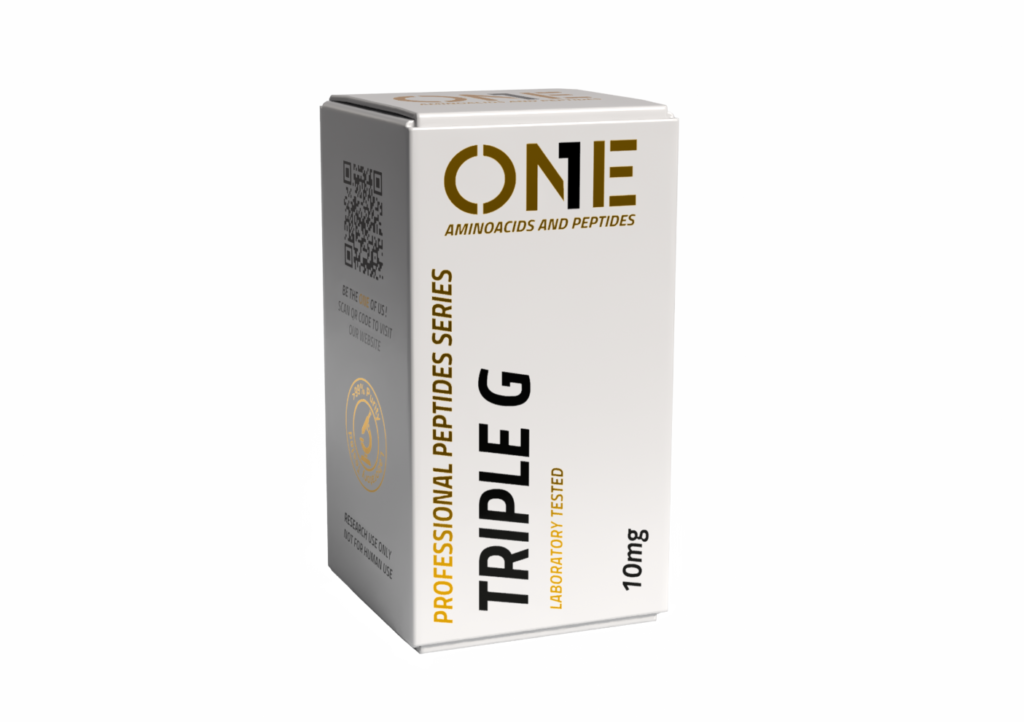
One Peptides GHRP-6 10 mg material offers:
GHRP-6 (Growth Hormone Releasing Peptide-6) is a synthetic hexapeptide with the sequence His-D-Trp-Ala-Trp-D-Phe-Lys-NH2 and a molar mass of 873.01 g/mol. It contains two tryptophans (including one D-Trp) and two D-amino acids. It is an agonist of the GHS-R1a receptor. The CAS number is 87616-84-0.
GHRP-6 was one of the first GH secretagogues discovered in the 1980s. His research led to the identification of the GHS-R receptor in 1996, followed by the discovery of ghrelin, the endogenous ligand of this receptor, in 1999. It is therefore a key compound in the history of endocrinology.
GHRP-6 contains two tryptophans (at positions 2 and 4) that are sensitive to UV light. Exposure to light can lead to photooxidation and degradation of the peptide. Therefore, the solution should be stored in the dark, preferably in vials made of dark glass or wrapped in aluminum foil.
The main differences are the amino acid sequence: GHRP-6 has histidine at the N-terminus and D-tryptophan at position 2, while GHRP-2 has D-alanine at the N-terminus and D-2-naphthylalanine at position 2. GHRP-6 has a higher molar mass (873 vs. 818 g/mol). Both act on the GHS-R1a receptor.
GHRP-6 is used in in vitro studies on the GHS-R1a receptor and its signaling, structure-activity studies of GH secretagogues, comparisons with ghrelin and other peptides, and as a historical standard in endocrinology. It is not intended for use on humans or animals.
The most important features of the ONE GHRP-6 10 mg product:
Research context: see the overview what research says about GHRP-2 and GHRP-6 in the context of laboratory research and RUO framing.
Parent category: Peptides for Regeneration organize RUO reagents associated with recovery-related research contexts.
 DHL Express
Have a question about this product? Ask it below. We publish questions together with our answer after review.
No questions yet. Be the first to ask.




marice –
very good product