 EN
 DE
 ES



GLP-1 GIP – Research Use Only (RUO). Chemical reagent intended only for laboratory tests. It is not intended for human consumption or diagnostic purposes.
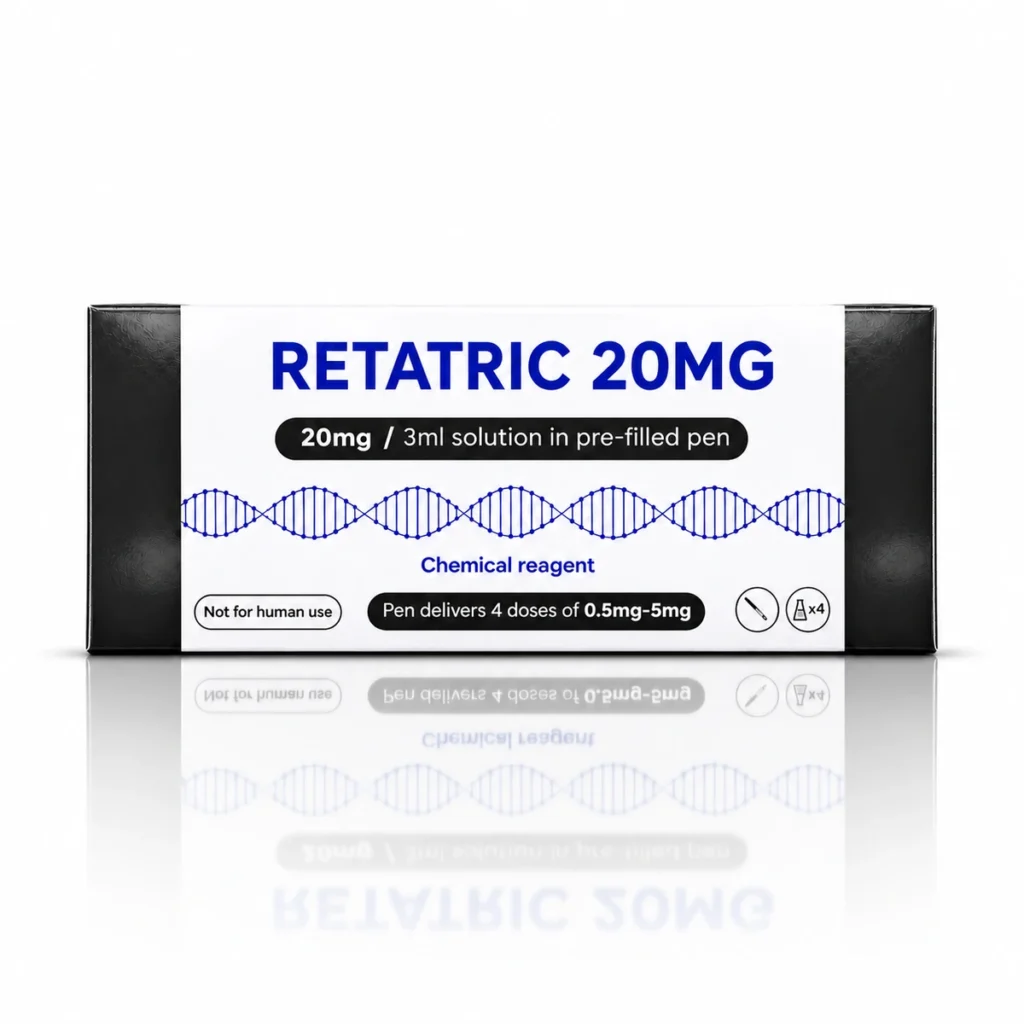
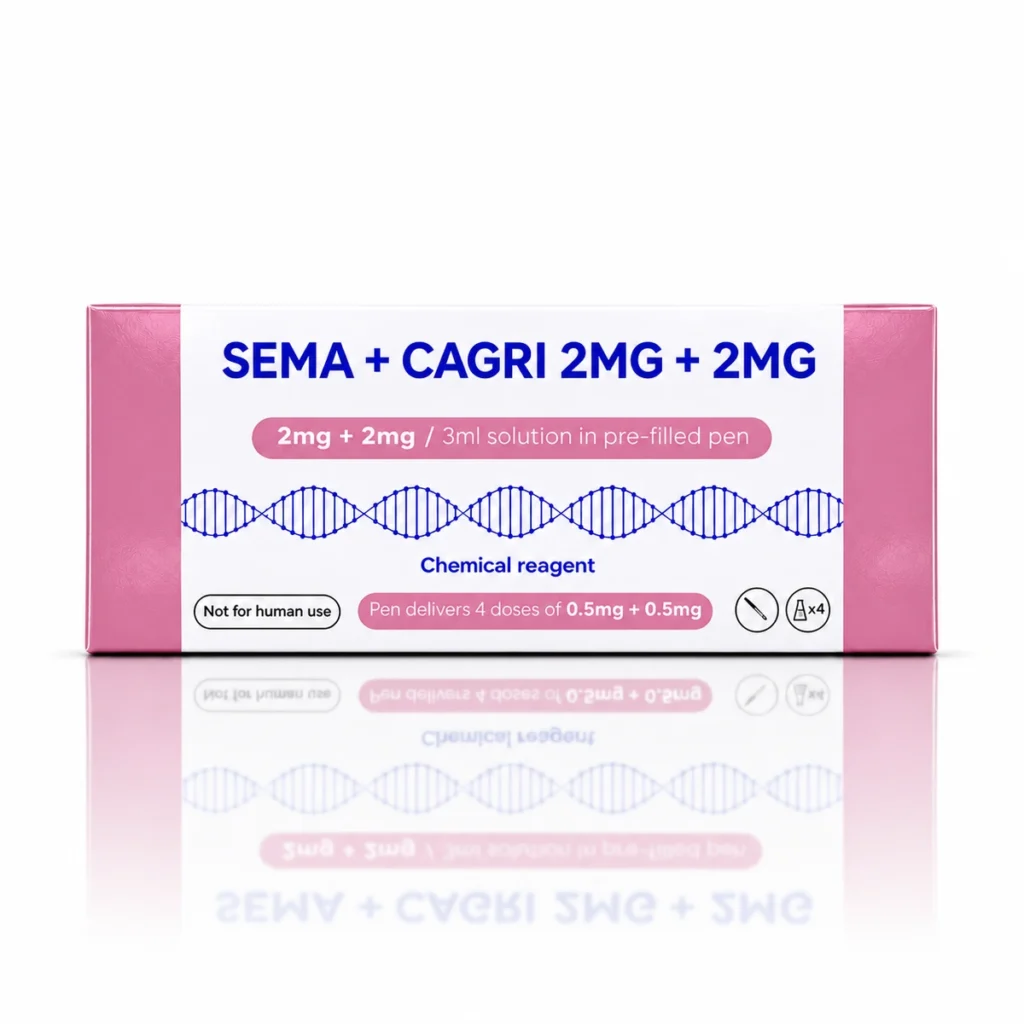
Related categories and reagents: In the context of this area of research, it is also worth comparing Semaglutide 2 mg and Retatrutide 5 mg.
What actually distinguishes tirzepatide, semaglutide and retatrutide. All three are synthetic incretin analogues, but they differ in the number of receptors against which they are described in the literature. Semaglutide (31 amino acids, 4,113.58 g/mol) is described as an agonist of one receptor—the GLP-1 receptor. Tirzepatide is described as an agonist of two—the GLP-1 and GIP receptors. Retatrutide (39 amino acids) is described as an agonist of three—the GLP-1, GIP and glucagon receptors. These are not variants of the same reagent with different potency, but three distinct receptor profiles studied in separate programs.
GLP-1/GIP is a synthetic peptide that is a dual agonist of incretin receptors – the GLP-1 receptor (Glucagon-Like Peptide-1 Receptor) and the GIP receptor (Glucose-dependent Insulinotropic Polypeptide Receptor). Incretin peptides are natural intestinal hormones secreted in response to food intake that play a key role in the regulation of glucose homeostasis.
The concept of dual GLP-1/GIP agonism was created in response to the need for research on the synergistic effect of both incretin systems. GLP-1 and GIP activate different but complementary signaling pathways, which makes their combination an interesting tool in research on pancreatic physiology and metabolism.
GLP-1/GIP is a peptide designed to activate both major incretin receptors. In the body, GLP-1 and GIP are secreted by different types of enteroendocrine cells (L and K cells, respectively) and act synergistically to regulate insulin secretion.
In research studies, dual GLP-1/GIP agonists serve as:
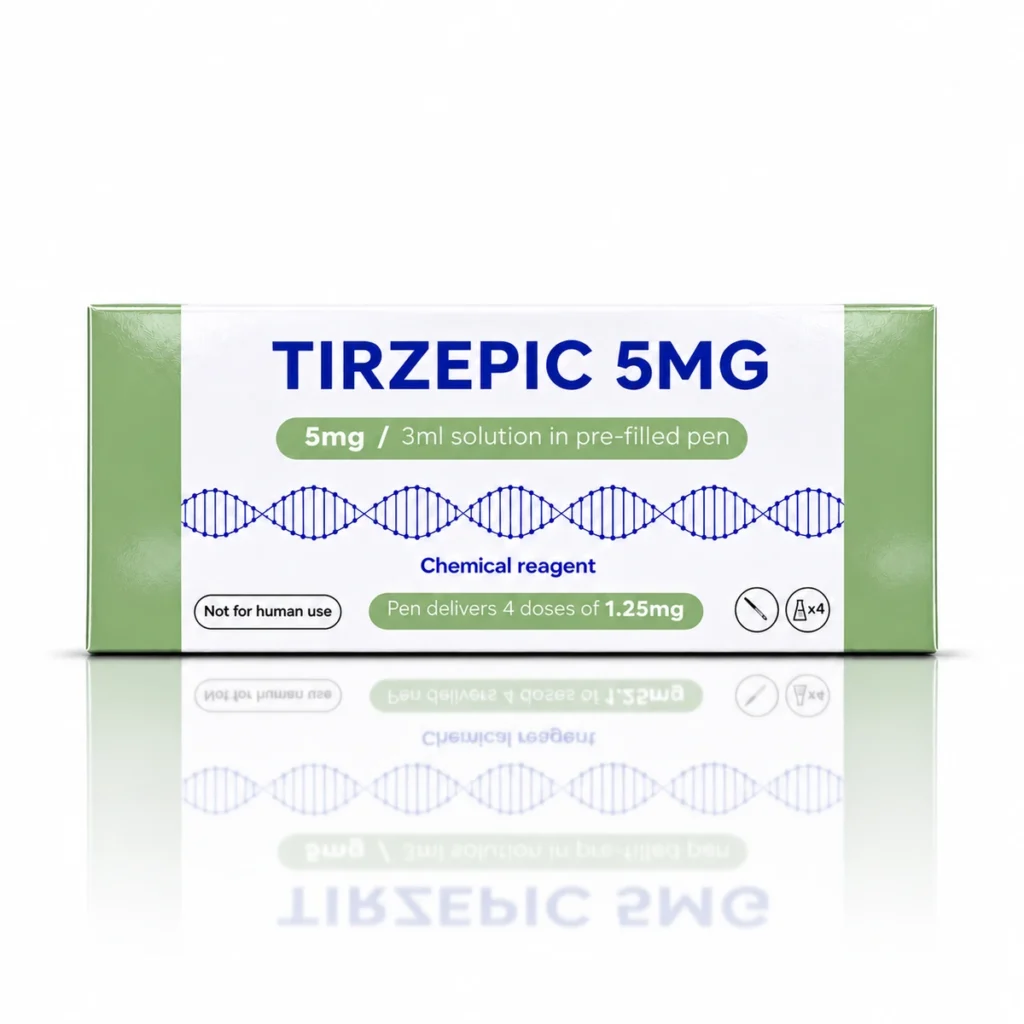
The One Peptides GLP-1/GIP 5 mg material is supplied in the form of a high-purity lyophilized powder, intended for use in biochemical and endocrinological research. A reagent of the same class of dual GLP-1R and GIPR agonists, as a ready-made solution with no reconstitution, is TIRZEPIC 5 mg PEN.

GLP-1/GIP is a synthetic peptide combining agonist properties against two main incretin receptors. Incretins are intestinal hormones that enhance insulin secretion in response to oral glucose intake (the “incretin effect”).
| Incretin | Source | Receptor | Main function |
|---|---|---|---|
| GLP-1 | L cells (intestine) | GLP-1R | ↑ insulin, ↓ glucagon |
| GIP | K cells (intestine) | GIPR | ↑ insulin |
GLP-1(7-36) amide:
– 30 amino acids (active form)
-Proglucagon product
– Fast degradation by DPP-4 (t1/2 ~ 2 min)
– Receptor: GLP-1R (GPCR, class B)
GIP (1-42):
– 42 amino acids
– proGIP product
– Degradation by DPP-4
– Receptor: GIPR (GPCR, class B)
| Aspect | Selective agonist | Dual agonist |
|---|---|---|
| Receptors | GLP-1R OR GIPR | GLP-1R AND GIPR |
| Effect | Single trail | Synergism |
| Examples | Exenatide, GIP(1-42) | Tirzepatide* |
*Tirzepatide is an example of an approved dual drug.
GLP-1(7-36) amide:
HAEGTFTSDVSSYLEGQAAKEFIAWLVKGR-NH2
GIP (1-42):
YAEGTFISDYSIAMDKIHQQDFVNWLLAQKGKKNDWKHNITQ
| Characteristic | GLP-1R | GIPR |
|---|---|---|
| Class | Class B GPCRs | Class B GPCRs |
| G-protein | Gs (mostly) | Gs (mostly) |
| Signaling | cAMP/PKA | cAMP/PKA |
| Location | Pancreas, CNS, GIT | Pancreas, tissue fat |
| Parameter | Typical value |
|---|---|
| Molar mass | Depends on the design |
| GLP-1R activity | EC50 nanomolar |
| GIPR activity | EC50 nanomolar |
| Stability | Enhanced vs native |
| Form | Freeze-dried powder |
Quality parameters:
| Test | Method | Specification |
|---|---|---|
| Cleanliness | HPLC | ≥98% |
| Appearance | Visual | White lyophilisate |
| Solubility | Test | Clear in water |
Freeze-dried form:
– Temperature: -20°C (optimal)
– Permissible: 2-8°C (up to 1 month)
– Protect from light and moisture
– Shelf life: 24 months at -20°C
After reconstitution:
– Solvent: sterile water or PBS
– Storage: 2-8°C
– Use within 7-14 days
– Freezing aliquots recommended
– Avoid repeated freezing/thawing
Dual agonists may contain modifications to increase stability:
GLP-1R and GIPR are class B GPCRs (secretin-like). In vitro tests analyze:
GLP-1R Activation:
– Ligand binding to the extracellular domain
– Conformational change of the receptor
– Activation of the Gs protein
– cAMP production
GIPR activation:
– Analogous mechanism to GLP-1R
– Coupling with Gs
– cAMP/PKA pathway
– Crosstalk with other routes possible
In studies on pancreatic β cells (INS-1, MIN6 lines):
| Trail | Effect |
|---|---|
| cAMP/PKA | ↑ insulin secretion |
| Epac2 | Granule exocytosis |
| CREB | Gene transcription |
| PI3K/Act | Cell survival |
In vitro tests analyze:
| Parameter | Selective GLP-1 | Selective GIP | Dual |
|---|---|---|---|
| GLP-1R activation | +++ | – | ++ |
| GIPR activation | – | +++ | ++ |
| Effect on cAMP | + | + | ++ |
| Signaling | Single | Single | Combined |
IMPORTANT: The product is intended for in vitro testing only. Not intended for:
– Use in humans or animals
– Diagnostic or therapeutic purposes
– Any clinical use
GLP-1/GIP is a synthetic dual agonist of incretin receptors, activating both GLP-1R and GIPR. Its ability to simultaneously modulate both incretin systems makes it a valuable tool in research on pancreatic physiology and mechanisms of metabolic regulation.
GLP-1/GIP is a synthetic peptide that is a dual agonist of two incretin receptors: GLP-1R and GIPR. Incretins are intestinal hormones (GLP-1 and GIP) that enhance insulin secretion in response to food intake. A dual agonist activates both receptors simultaneously, allowing the study of the synergistic effects of both systems.
Selective agonists (e.g. exenatide for GLP-1R, GIP(1-42) for GIPR) activate only one receptor. A dual GLP-1/GIP agonist activates both receptors, which may lead to additive or synergistic effects on signaling pathways, especially in pancreatic β-cell studies.
In lyophilized form, the peptide is stored at -20°C, protected from light and moisture. After reconstitution in sterile water or PBS, the solution is stored at 2-8°C for up to 7-14 days. It is recommended to freeze small portions (aliquots) for longer storage.
The incretin effect is a phenomenon in which oral administration of glucose causes greater insulin secretion than intravenous administration of the same amount of glucose. This is caused by the secretion of incretins (GLP-1 and GIP) by intestinal cells in response to food in the digestive tract.
GLP-1/GIP is used in in vitro studies on: the physiology of pancreatic β cells, mechanisms of insulin secretion, signaling through incretin receptors, and as a comparative tool for selective agonists. It is not intended for use on humans or animals.
The most important features of the ONE GLP-1/GIP 5 mg product:
 DHL Express
Have a question about this product? Ask it below. We publish questions together with our answer after review.
No questions yet. Be the first to ask.


Reviews
There are no reviews yet.