
GLP-1 medications reduce appetite so effectively that in trials the people treated took in 16–39% less energy than the people on placebo (Mozaffarian et al., 2025). With a drop like that, the question is no longer “how to eat less” but “how to fit what the body needs into a smaller amount of food”. This […]

After treatment with obesity medications ends, body weight returns at an average rate of about 0.4 kg a month, and after semaglutide and tirzepatide faster – about 0.8 kg a month. The model in a review of 37 trials also shows that blood pressure, glucose and lipids return to pre-treatment values within roughly a year […]

The gut–brain axis is a two-way communication system between the digestive tract and the central nervous system, based on hormonal and neural signals. Its central hub is the hypothalamus — the brain region that integrates information about the body’s energy state and regulates appetite and energy expenditure. It is here that all the signals described […]

Leptin and ghrelin are two hormones with opposing effects on appetite. Leptin, secreted by adipose tissue, is a long-term satiety signal — it informs the brain about the state of the energy reserves. Ghrelin, secreted mainly by the stomach, is a short-term hunger signal — it intensifies appetite before a meal. Together they form the […]
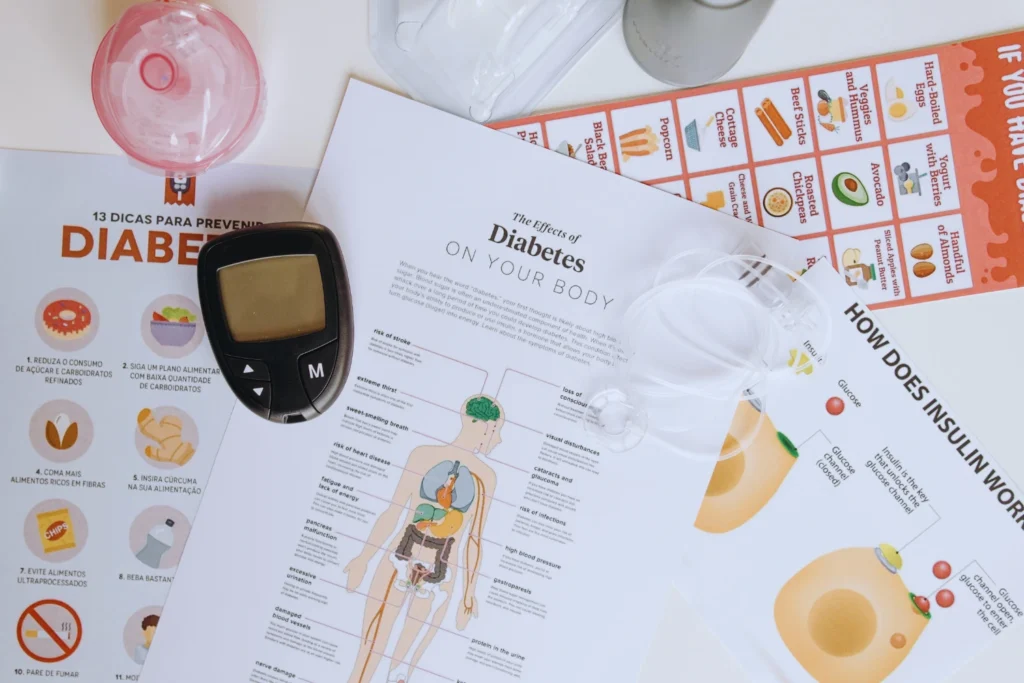
Insulin is an anabolic hormone that regulates energy balance — it lowers blood glucose and promotes energy storage, including in adipose tissue. Insulin resistance is a state in which cells respond more weakly to insulin, which leads to a compensatory rise in its concentration. This article describes what research says about the role of insulin […]

Metabolic adaptation is the reduction in energy expenditure during and after an energy deficit — greater than would follow from the loss of body mass alone. The body responds to an energy shortfall with an “energy-sparing mode”: it lowers resting expenditure, spontaneous activity and hormonal signalling. This is a phenomenon, not an excuse — and […]

The body weight set point is a concept describing body weight as a homeostatically regulated parameter — defended by the body much like temperature or blood pressure. According to this model, the brain seeks to keep weight within a defined range and activates compensatory mechanisms whenever weight deviates from it. This is the physiological explanation […]

Triple agonism is a pharmacological strategy based on the simultaneous stimulation of three hormone receptors that regulate metabolism: GLP-1, GIP and glucagon. Rather than acting on a single pathway, one molecule activates three in parallel — which in metabolism research is analysed as a qualitatively different approach from single or dual agonism. The most extensively […]

Thermogenesis is the production of heat by the body as a result of metabolic reactions. A particular form of it is mitochondrial uncoupling — a process in which the energy from the oxidation of nutrients is dissipated as heat rather than stored as ATP. This is the mechanism behind the action of brown adipose tissue […]

Metabolism is the sum of all the chemical reactions through which the body obtains energy from nutrients and uses it to sustain life: the work of the heart, breathing, thinking, tissue repair and movement. Measured as energy expenditure, it is one of the most tightly regulated parameters in human physiology — and, at the same […]
 EN
 DE
 ES

