 EN
 DE
 ES

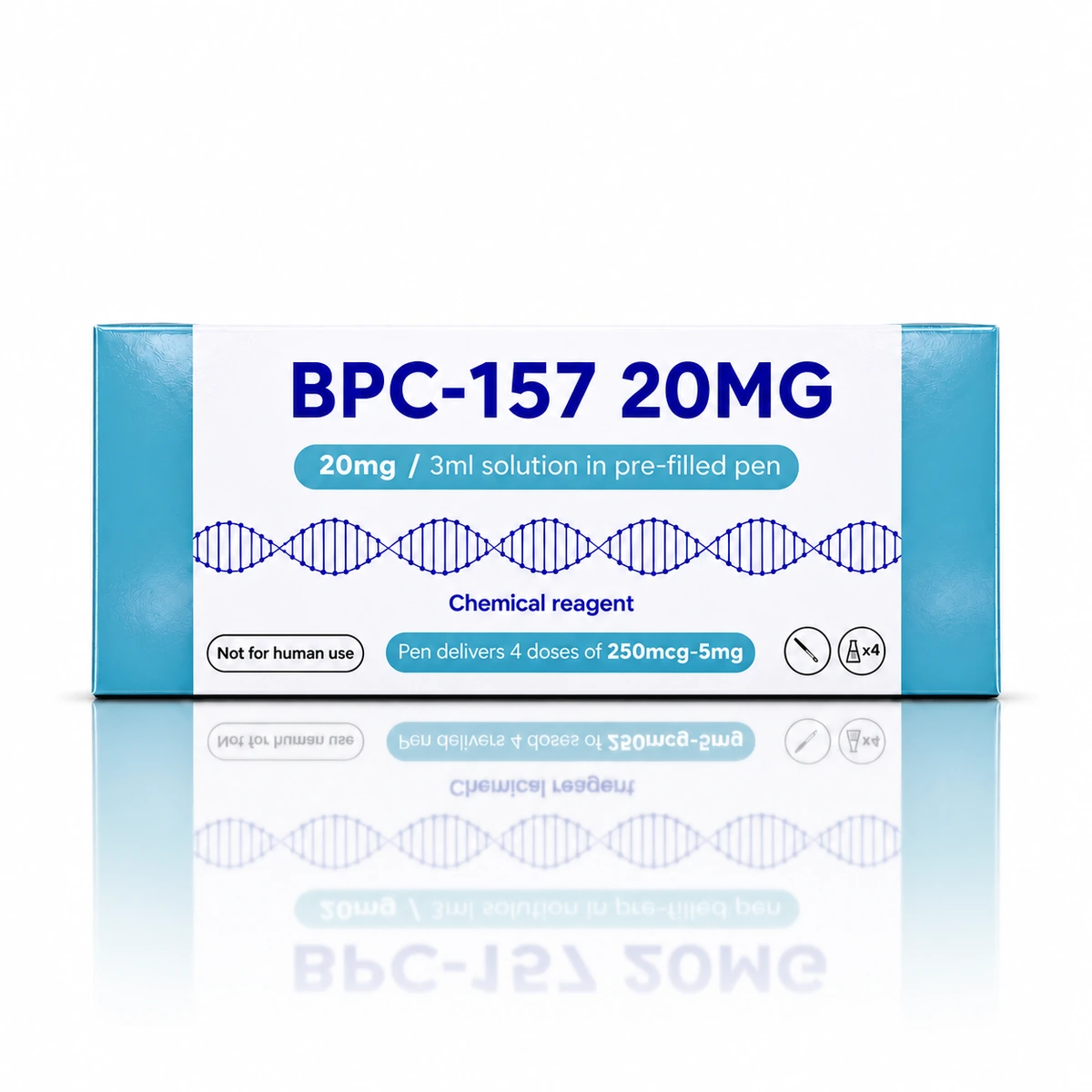

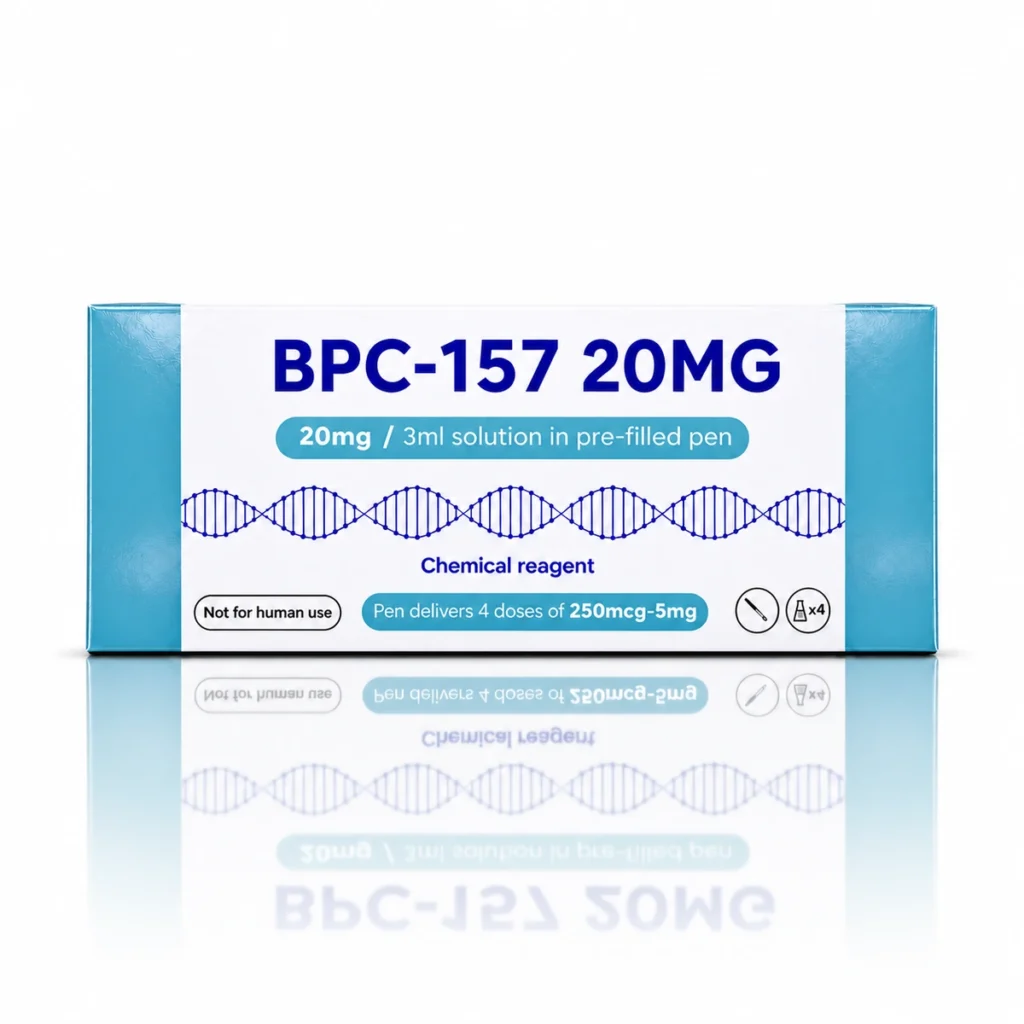
BPC-157 20 mg PEN is a research reagent (Research Use Only) in the form of a pre-dissolved pen. The pen is the physical format of the reagent – it may look similar to pharmaceutical pen medicines, but BPC-157 is not a registered medicine in any jurisdiction. Label: “For research use only. Not for human use”. Athletes subject to anti-doping control: BPC-157 is currently on the WADA Prohibited List, category S0. Note: BPC-157 in oral capsule form (a separate product in the One Peptides catalogue) is a research reagent (RUO) – this is a separate regulatory position from the RUO pen. The same peptide, two different regulatory frameworks, two different documentation paths.
BPC-157 is one of the best documented regenerative peptides in preclinical literature from the last three decades. This cytoprotective pentadecapeptide was discovered by the team of Professor Predrag Sikiric at the University of Zagreb in the 1990s – isolated from a protein present in human gastric juice. More than thirty years of animal-model publications cover tendon, ligament, muscle, gastric ulcer, vascular and peripheral nerve regeneration. A full literature overview is available in the BPC-157 mechanism and scientific research article.
In the One Peptides catalogue, the peptide is available in a separate physical format – as an RUO research reagent in a pre-dissolved pen. The format simplifies laboratory work because it does not require lyophilizate reconstitution. It is an alternative to lyophilized vial SKUs (5 mg, 10 mg). The broader mechanistic background of regenerative peptides is described in the guide to regenerative peptides.
BPC-157 (Body Protection Compound) is a cytoprotective pentadecapeptide with the sequence Gly-Glu-Pro-Pro-Pro-Gly-Lys-Pro-Ala-Asp-Asp-Ala-Gly-Leu-Val (single-letter notation: GEPPPGKPADDAGLV). The molecule contains 15 amino acids and has a molecular mass of 1419.53 Da. It comes from a fragment of a larger cytoprotective protein present in mammalian gastric juice, including human gastric juice.
A distinctive structural feature of BPC-157 is the presence of four proline residues at positions 3, 4, 5 and 8 of the sequence. These residues give the peptide unusual resistance to proteolytic hydrolysis, including pepsin in the gastric environment. Structural stability is the basis for research on BPC-157 bioavailability in models using oral, subcutaneous and intraperitoneal administration.
| Parameter | Value |
|---|---|
| Sequence | Gly-Glu-Pro-Pro-Pro-Gly-Lys-Pro-Ala-Asp-Asp-Ala-Gly-Leu-Val |
| Single-letter notation | GEPPPGKPADDAGLV |
| Number of amino acids | 15 |
| Molecular mass | 1419.53 Da |
| Class | Cytoprotective pentadecapeptide / multidirectional regenerative modulator |
| Origin | Fragment of a gastric-juice cytoprotective protein |
| Stability | Resistant to proteolytic hydrolysis (4 proline residues at positions 3, 4, 5, 8) |
| Physical form | Pre-dissolved solution in a pen |
| Concentration in pen | 20 mg / pen (3 mL of solution) |
| HPLC purity | >=98% |
BPC-157 does not have one single target receptor. The pharmacological profile of this pentadecapeptide is based on modulation of several parallel signaling pathways.
NO/cGMP axis. Work from the Sikiric group indicates that BPC-157 affects nitric oxide synthase activity and cGMP signaling, with observed improvement of microcirculation in regenerating tissues.
Angiogenic factors (VEGF, FGF). BPC-157 stimulates formation of new blood vessels. Hsieh et al. (2017) demonstrated activation of the VEGFR2 receptor in endothelial cells.
Growth factors (EGR-1, TGF-beta, c-Met/HGF). BPC-157 modulates expression of early growth-response transcription factors. Chang et al. (2014) indicate an effect of the pentadecapeptide on growth hormone receptor expression in tendon fibroblasts.
Inflammation modulation. In animal models, BPC-157 reduces concentrations of pro-inflammatory cytokines: TNF-alpha, IL-6, IL-1beta. The profile is pro-resolving: faster shutdown of the inflammatory response and transition into the regenerative phase.
Effects on the CNS and peripheral nerves. Modulation of dopaminergic (DA) and serotonergic (5-HT) systems has been described. Peripheral-nerve studies report effects on regeneration after sciatic nerve injury in rat models. A deeper comparison between BPC-157 and TB-500 mechanisms is available in the article comparing two regenerative peptides.
| Feature | BPC-157 PEN (RUO) | BPC-157 capsules (RUO) | BPC-157 as a medicine |
|---|---|---|---|
| Regulatory status | RUO research reagent | RUO research reagent | No registration in any jurisdiction |
| Physical form | Pre-dissolved pen (3 mL of solution) | Oral capsules | – |
| Documentation | HPLC report from an independent laboratory | HPLC report from an independent laboratory | – |
| Indication | Laboratory research | Laboratory research | – |
| Label | “For research use only. Not for human use” | „For research use only. Not for human use” | – |
The active substance (BPC-157) is the same across these frameworks, but the products belong to one RUO regulatory line, different packaging forms. The RUO pen is a chemical reagent with an HPLC report from an independent laboratory. BPC-157 capsules are a research reagent (RUO). A pharmaceutical BPC-157 medicine does not exist – no regulatory authority has authorized this pentadecapeptide as a medicinal product.
BPC-157 PEN as an RUO reagent is used in tissue-regeneration work well documented in preclinical literature.
The BPC-157 pen is tested by HPLC at an independent laboratory.
Details of the testing process and the published lab reports are available under quality testing and certificates.
This guide describes technical handling of the BPC-157 pen in the context of a laboratory research reagent. It is not an instruction for administration to humans or animals; an RUO pen is not a pharmaceutical dosage form.
Pen content. BPC-157 PEN 20 mg contains 20 mg of pre-dissolved pentadecapeptide in 3 mL of solution. Nominal concentration is ~6.7 mg/mL.
No reconstitution required. The pen contains a ready-to-sample peptide solution, without the need to add bacteriostatic water, water for injection or PBS. Eliminating the dissolution step (the full lyophilizate guide is available in the article how to dissolve peptides) simplifies the protocol and reduces volumetric-error risk.
Sampling the solution. Use a laboratory syringe or a microliter applicator with appropriate precision. The solution should be clear – cloudiness, sediment or color change indicates that the batch should not be used for further work. The peptide calculator helps convert the starting concentration from the pen into the target working concentration for serial dilutions in PBS at pH 7.4.
Stability. Unopened pen: typically up to 24 months at 2-8°C, protected from light. After first sampling: up to 28 days at 2-8°C. Avoid freeze-thaw cycles.
This is not an instruction for administration to humans. BPC-157 pen in RUO trade is not a medicinal product; BPC-157 is not registered as a medicine in any jurisdiction.
BPC-157 PEN (this product) is a Research Use Only reagent in the EU chemical-reagent market. Label: “For research use only. Not for human use”. It is not a medicinal product, dietary supplement or food product.
BPC-157 oral capsules (a separate catalogue product) are also a research reagent (RUO), in a different physical form. Same active substance and a separate product card. Do not confuse the two catalogue items.
BPC-157 as a pharmaceutical medicine – no registration. No regulatory authority (EMA, FDA, MHRA, PMDA, TGA) has authorized BPC-157 as a medicinal product.
WADA. BPC-157 is on the WADA Prohibited List, category S0 – prohibited at all times (in and out of competition). Status may change. Verification of current guidelines rests with athletes under supervision.
The active substance is the same. The difference is the physical form. Lyophilized vials (5 mg and 10 mg in the catalogue) contain dry peptide powder that requires reconstitution in bacteriostatic water or PBS. PEN 20 mg contains a pre-dissolved peptide solution, ready for sampling without reconstitution and with a higher nominal concentration. A deeper distinction between BPC-157 variants (BPC vs ARG BPC-157) is described in the article comparing research-peptide variants.
Both products are RUO research reagents with the same active substance — they differ in physical form (solution in a pen, capsules) and have separate product cards with their own analytical documentation. Do not confuse the two catalogue items.
No. BPC-157 PEN is a Research Use Only chemical reagent. The pen format can visually resemble products such as Ozempic or Mounjaro, but BPC-157 is not a registered medicine in any jurisdiction. Similarity of the physical format does not change the regulatory distinction.
Typically up to 28 days at 2-8°C. Avoid freeze-thaw cycles.
No. The pen format is a pre-dissolved solution, ready for sampling with a laboratory syringe and without adding solvent. This is the fundamental difference from lyophilized vials.
BPC-157 is on the WADA Prohibited List (category S0) – prohibited at all times (in and out of competition). Status may change. Responsibility for compliance with anti-doping rules rests with the athlete.
Parent category: Peptides for Regeneration organize RUO reagents associated with recovery-related research contexts.
Research Use Only chemical reagent. BPC-157 PEN 20 mg is not a medicinal product, dietary supplement or food product. It is not intended for administration to humans or animals outside a controlled experimental environment. BPC-157 is not a registered medicine in any jurisdiction (no EMA, FDA, MHRA or PMDA registration); the visual similarity of the pen format to pharmaceutical pens does not change its regulatory status. Do not confuse the RUO pen with oral BPC-157 capsules (a separate product with research reagent (RUO) status). BPC-157 is on the WADA Prohibited List, category S0; athletes subject to anti-doping control should verify current guidance. The information in this description is educational and scientific; it is not medical advice, administration instruction or a suggestion of clinical use.
Have a question about this product? Ask it below. We publish questions together with our answer after review.
No questions yet. Be the first to ask.




Reviews
There are no reviews yet.