Longevity – peptides studied in the context of aging biology
The thematic category brings together products from various chemical classes that share a common research area – biology of aging, NAD+ metabolism and longevity signal peptides. In one category you will find research reagents from different chemical classes, all supplied under the Research Use Only (RUO) frame – the NAD+ precursor NMN (a nucleotide) alongside peptides and research chemicals (Epithalon, MOTS-c, 5-amino-1MQ, GHK-Cu). Each item in the catalog meets the standard HPLC ≥98%, has mass spectrometry (MS) identity confirmation, full batch analysis certificate and – at peptide positions – a preserved 2-8°C cold chain. Browse the available category products and check the RUO frame stated on each item card. The broader context of the biology of aging is described guide to anti-aging peptides.
What is the Longevity category in the One Peptides catalogue
Longevity is multi-product thematic category — brings together items from different chemical classes that share a common Research Use Only (RUO) regulatory frame. The common denominator is neither the chemical structure nor the target receptor – the common denominator is the research area: biology of aging, nicotinamide adenine dinucleotide (NAD+) metabolism, signal peptides and mechanisms referred to in the literature as anti-aging.
A category serves a function educational and navigational, and not identity for a single substance. It includes:
- RUO research reagent (NMN – NAD+ precursor, nucleotide),
- RUO research peptides (Epithalon, MOTS-c, GHK-Cu – Research Use Only reagents),
- research chemicals RUO (5-amino-1MQ – small molecule NNMT inhibitor, research reagent).
Each product in this category has its own card stating its RUO frame. Presence in one category does not imply interchangeability of products, similar registration or similar trading conditions. The product card is a clear and binding source of the formal status of a given item.
Main mechanisms in the area of longevity
The longevity research field in the current literature focuses on several distinct molecular mechanisms. Products in this category represent different axes of this field.
NAD+ metabolism. Nicotinamide adenine dinucleotide (NAD+) is an essential coenzyme sirtuin (SIRT1, SIRT3, SIRT6), PARP (DNA repair enzymes) and CD38. The pool of NAD+ in cells decreases with age – the literature estimates a decline of around 50% between the ages of 20 and 60. Two research strategies attempt to rebuild the NAD+ pool: precursors (NMN, NR – substrates of the salvage pathway leading to NAD+) and catabolism inhibitors (e.g. 5-amino-1MQ as an inhibitor of NNMT – an enzyme that consumes the methyl-SAM donor and drains the nicotinamide pool).
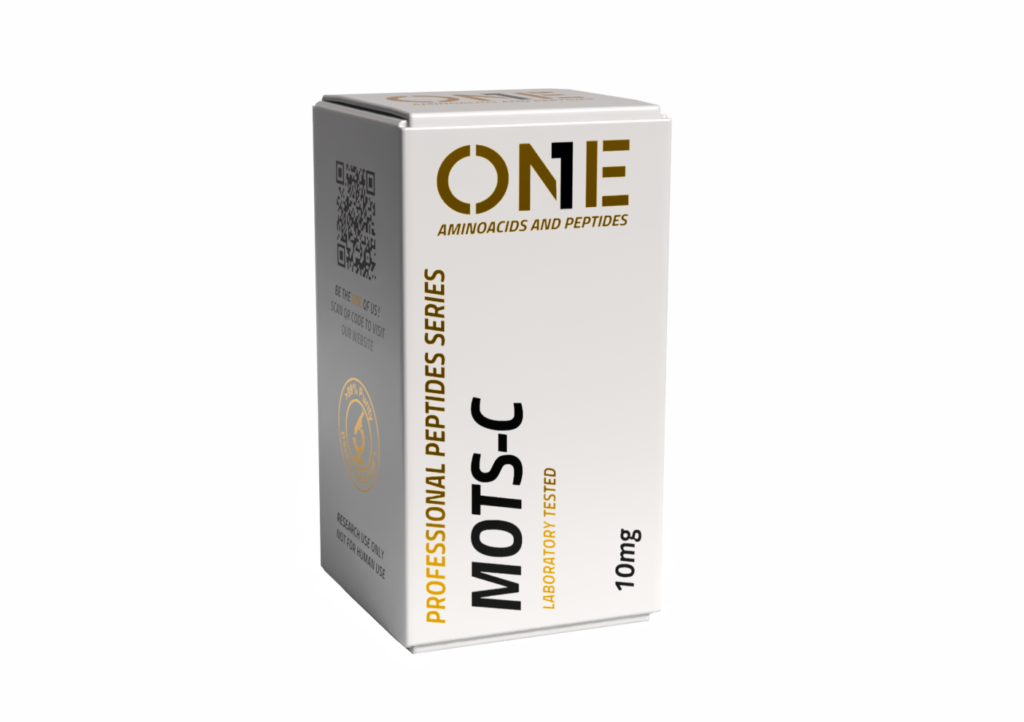
Mitochondrial peptides. MOTS-c this endogenous peptide encoded by the mitochondrial genome (12S rRNA), acting as a mitochondrial-to-nuclear retrograde signaling. It activates AMPK kinase, modulating glucose and lipid homeostasis. Serum MOTS-c levels decline with age, making this peptide one of the research models in the context of the biology of aging.
Telomeres and replication. Epithalon (tetrapeptide with the sequence Ala-Glu-Asp-Gly) is tested in models regulation of telomerase activity — enzyme responsible for extending chromosome ends in cells with high replication capacity. Research models range from cell culture to preclinical work.
Extracellular matrix and skin. GHK-Cu this copper tripeptide (Gly-His-Lys bound to copper ion) studied in models extracellular matrix remodeling, collagen expression and skin repair processes. It is one of the most frequently cited peptides in the cosmetic dermatology literature – the broader context is described guide to peptides in cosmetology.
These mechanisms are not mutually exclusive – on the contrary, they are often analyzed in the literature as complementary axes of the biology of aging.
Products in a category – different classes, common RUO frame
| Product |
Class |
Regulatory frame |
| NMN 500 mg 60 capsules |
NAD+ precursor (nucleotide) |
RUO research reagent |
| Epithalon 10 mg vial |
Tetrapeptide |
RUO research reagent |
| MOTS-c 10 mg vial |
Mitochondrial peptide |
RUO research reagent |
| 5-amino-1MQ 50 mg 30 capsules |
NNMT inhibitor (small molecule) |
RUO research reagent |
| GHK-Cu |
Copper peptide |
RUO research reagent |
Important: All products in this category are described in the language of Research Use Only reagents – with no indications for use in humans and no health claims – regardless of their chemical class. Each product card maintains its own formal framework: the NAD+ precursor, the research peptides and the research chemical are each supplied as RUO reagents. Presence in a category does not change the individual RUO status of a given product.
NAD+ and the biology of aging – the scientific context
NAD+ is one of the most widely studied molecules in the field of aging biology. It plays a role coenzyme in hundreds of metabolic reactions and substrate for three families of regulatory enzymes: sirtuin (NAD+-dependent deacetylases), PARP (DNA repair, consumes NAD+ in response to genome damage) and CD38 (NAD+ hydrolase, the activity of which increases with age).
The decline in the NAD+ pool with age is one of the best documented biochemical phenomena of aging. Estimates of the NAD+ pool reduction appear in the literature 50% between 20 and 60 years of age — values vary between tissues and measurement methods, but the direction of decline is consistent.
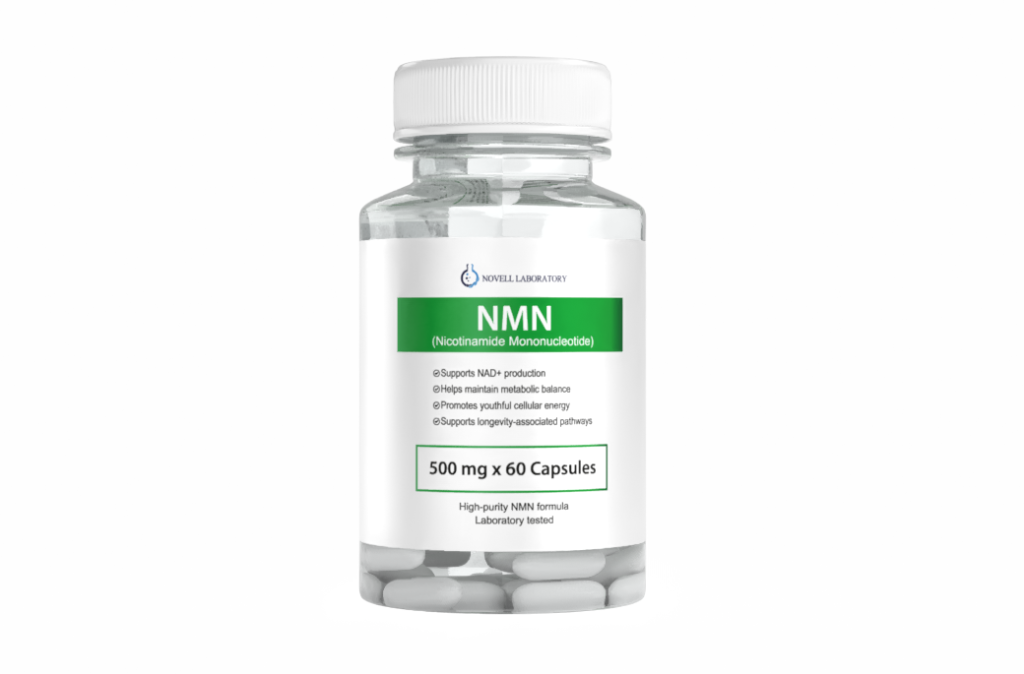
Forerunner strategy. Salvage pathway substrates — NMN (nicotinamide mononucleotide) and NR (nicotinamide riboside) — are converted into NAD+ in cells by NMNAT enzymes. The precursor administration strategy has the most extensive literature in the field and is represented in the One Peptides catalog by NMN as an RUO research reagent.
Strategy of catabolism inhibitors. The second way is inhibition of enzymes that consume the NAD+ precursor. NNMT (nicotinamide N-methyltransferase) methylates nicotinamide using a SAM donor, withdrawing the substrate from the NAD+ salvage pathway and draining the methyl-donor pool. 5-amino-1-methylquinolinium (5-amino-1MQ) it is studied in the literature as an NNMT inhibitor – in this category it represents a strategy of saving the NAD+ pool by blocking the catabolic enzyme. It remains RUO reagent, not a medicinal product and not a dietary supplement.
Signal peptides and longevity
The three peptides in the category represent different signaling mechanisms in the field of aging biology.
MOTS-c – mitochondrial peptide. A 16 amino acid sequence encoded in the mitochondrial genome (12S rRNA region). MOTS-c is there endogenous peptide, the level of which in serum decreases with age. It functions as a mitochondrial signal – modeled in the literature as exercise-mimetic and AMPK kinase activator. One of the better described examples of retrograde signaling from the mitochondrion to the nucleus. Presented in the catalog as RUO reagent.
Epithalon – telomeric tetrapeptide. Ala-Glu-Asp-Gly (AEDG) sequence. In the literature studied in models telomerase regulation — an enzyme that synthesizes telomeric sequences at the ends of chromosomes. Models include cell lines and preclinical work. A tetrapeptide with a short sequence and a simple mass profile – present in the catalog as an RUO reagent.
GHK-Cu – copper peptide. Gly-His-Lys tripeptide bound to the copper(II) ion. Widely described in context in the literature extracellular matrix remodeling (expression of collagen, elastin, metalloproteinases), antioxidant activity and research on skin repair processes. Presented in the catalog as RUO reagent.
All peptides in this category are Research Use Only reagents. They are not subject to registration as medicines, they are not dietary supplements, and they have no indications for use in humans. Intended only for laboratory tests in accordance with the center’s protocol. The full context of the legal status of peptides is described article on EU law for research reagents.
Frequently asked questions
Which regulatory frame applies to products in the Longevity category?
The category includes products from various chemical classes, but they all share a single regulatory frame: Research Use Only (RUO) research reagents. NMN is represented in the One Peptides catalog as an RUO research reagent (NAD+ precursor, nucleotide). Epithalon, MOTS-c and GHK-Cu peptides also have status Research Use Only reagents — they are not drugs or supplements. 5-amino-1MQ as a small molecule likewise has the status research chemical RUO. Grouping these items in one category is purely for navigational and educational purposes – a common research area and a common RUO frame across different chemical classes.
How does NMN differ from the peptides in this category?
The difference is purely structural – all of these items are Research Use Only reagents. NMN is a small molecule (a nucleotide, NAD+ precursor). RUO peptides (Epithalon, MOTS-c, GHK-Cu) are chains of amino acids. 5-amino-1MQ is also a small molecule (an NNMT inhibitor). They share the same RUO status and are all provided as chemical reagents for laboratory research only – they are not dietary supplements and not medicinal products; only their chemical class differs.
Can Longevity products be combined in a protocol?
The question concerns research decisions designed by the center conducting the research. The product card does not contain any combination recommendations and does not contain recommendations for human use. All items in this category are Research Use Only reagents – the experimental design, possible combinations and their substantive justification are subject only to the protocol of the research center and the ethical framework applicable therein.
Are any of these products registered as medicines?
NO. None of the products in the Longevity category are registered as medicinal products — neither by EMA, nor by FDA, nor by URPL. NMN, Epithalon, MOTS-c, GHK-Cu and 5-amino-1MQ are all Research Use Only reagents – they are not subject to registration as medicines and are not dietary supplements.
Are the category products on the WADA list?
The WADA status for research peptides and NAD+-modulating compounds is updated annually in the Prohibited List published by the World Anti-Doping Agency. Signal peptides and compounds that modulate the NAD+ pool may be subject to restrictions depending on the formal classification given by WADA. Persons covered by the anti-doping program (professional athletes, candidates for national and international competitions) are obliged to verify the current version of the Prohibited List and consult decisions with a sports doctor and the anti-doping authority competent for the discipline.
Related categories and articles
The Longevity category groups Research Use Only research reagents from different chemical classes: NMN (NAD+ precursor, nucleotide), the research peptides (Epithalon, MOTS-c, GHK-Cu) and the research chemical (5-amino-1MQ). All are chemical reagents for laboratory research only; they are NOT medicinal products and NOT dietary supplements. Each product card clearly identifies the RUO frame.
 EN
EN  DE
DE  ES
ES  PL
PL