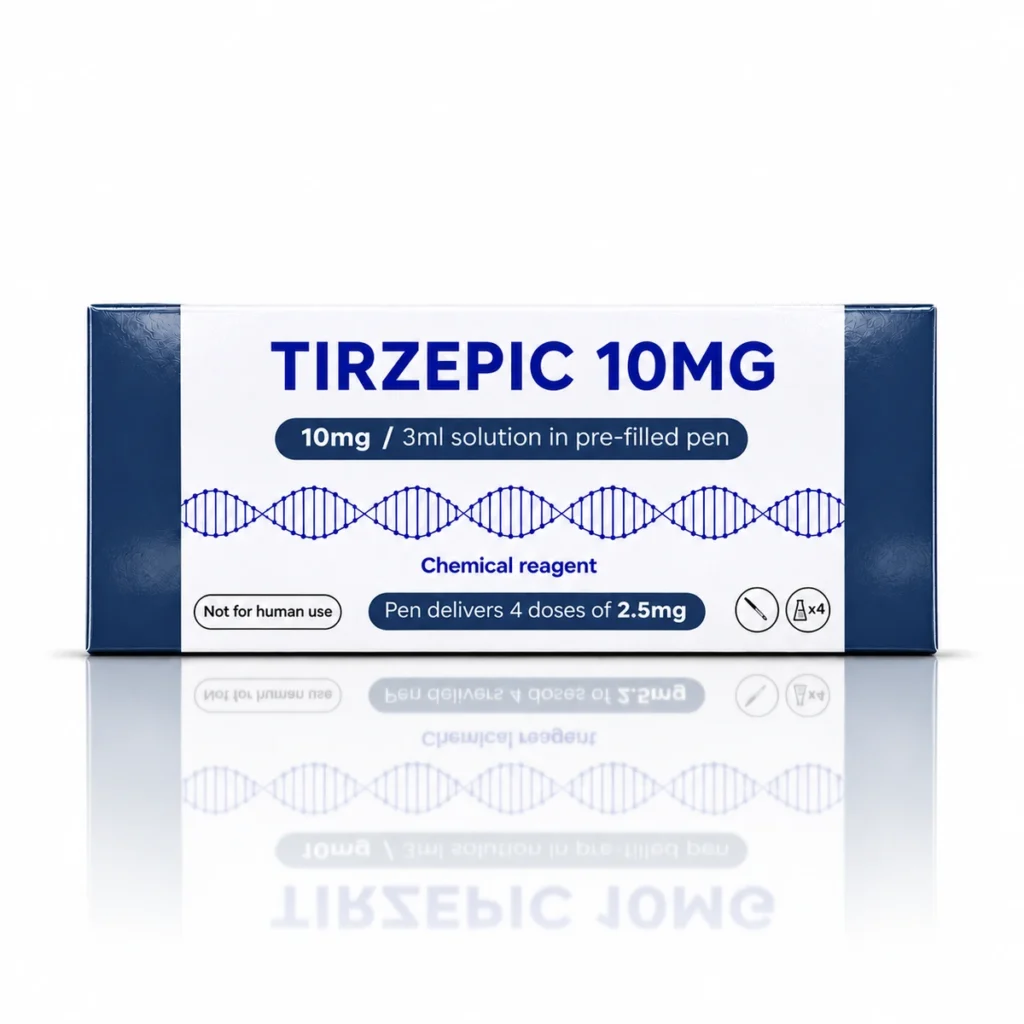
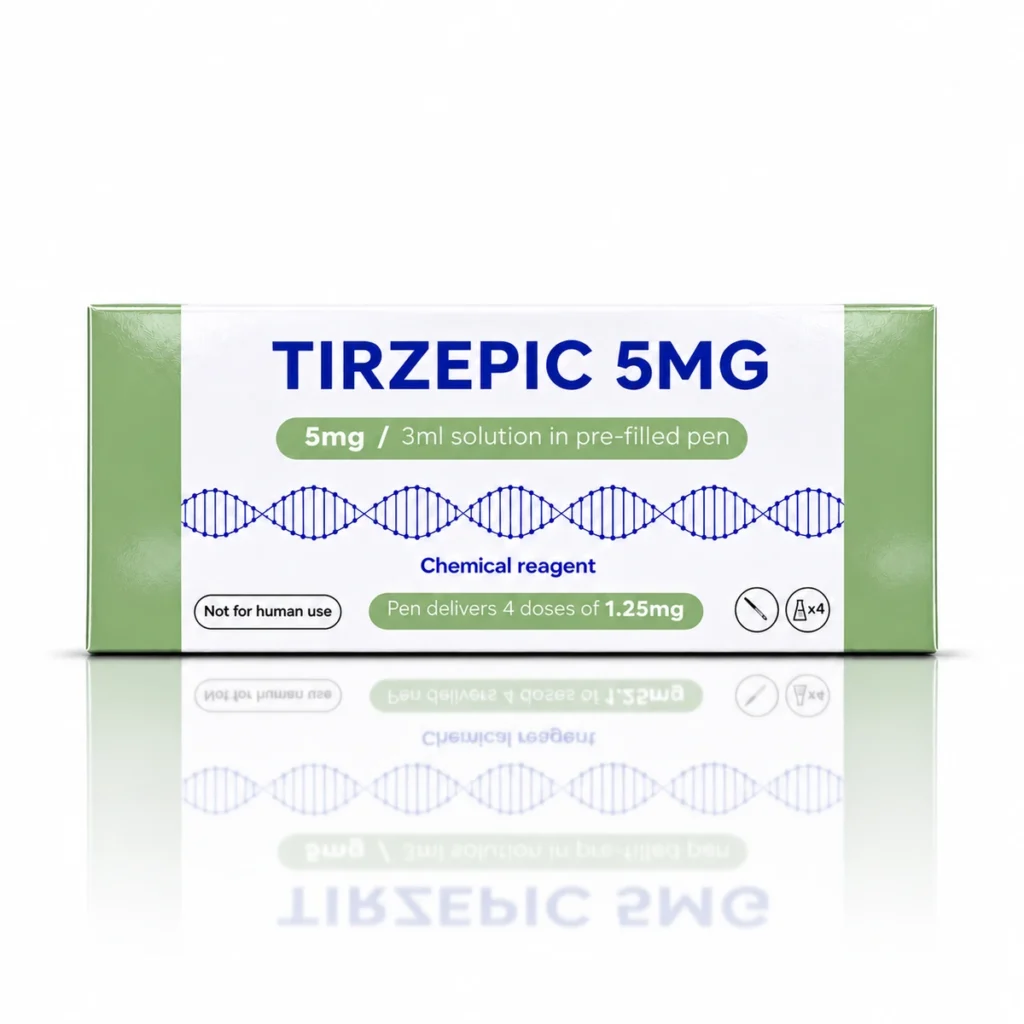
GLP-1 (Glucagon-Like Peptide-1) — incretin peptide for metabolic studies
GLP-1 is an incretin peptide composed of 30-31 amino acids, playing an important role in research on metabolic pathways and activation of the GLP-1R receptor. In animal and cellular models, its involvement in the modulation of pancreatic beta cell function and in the regulation of signaling pathways related to glucose metabolism has been demonstrated. The substance is intended exclusively for scientific research (Research Use Only) – it is not a medicinal product or a dietary supplement. Take a look at the GLP-1+GIP preparation in the One Peptides offer.
Incretins are a subclass of a broader group: the umbrella category of metabolic compounds (RUO) also includes non-incretin compounds.
What is GLP-1?
Glucagon-Like Peptide-1 (GLP-1) is an endogenous incretin peptide produced by L cells of the small intestine in response to the presence of nutrients in the gastrointestinal lumen. This peptide was first described in the 1980s, when the products of post-translational processing of proglucagon were identified. GLP-1 consists of 30-31 amino acid residues (GLP-1(7-36)amide and GLP-1(7-37) forms) and works by binding to the GLP-1R receptor, which belongs to the family of G-protein-coupled receptors (class B GPCRs).
Orforglipron is a small non-peptide molecule (C48H48F2N10O5, 883.0 g/mol) that acts on the same GLP-1R receptor but is not a peptide. It is not in the One Peptides catalogue. The differences between orforglipron and peptide GLP-1 agonists are covered in Orforglipron — the first GLP-1 tablet.
Under experimental conditions, GLP-1 is rapidly enzymatically degraded by dipeptidyl peptidase IV (DPP-IV), resulting in a short half-life of approximately 2-3 minutes. This property makes native GLP-1 an important reference point in comparative studies with its long-acting analogues. The mechanism of GLP-1R receptor activation involves stimulation of the cAMP/PKA pathway, which in pancreatic beta cell models leads to the observed modulation of glucose-dependent insulin secretion.
GLP-1 variants available
| Product |
Form |
Content |
| Semaglutide (Sema G) 2 mg |
lyophilisate |
2 mg |
| GLP-1+GIP 5 mg |
lyophilisate |
5 mg |
The product is tested by HPLC at an independent laboratory, and the test is repeated periodically. Detailed specifications are available on the product card.
GLP-1+GIP 5 mg – product characteristics
GLP-1+GIP 5 mg offered by One Peptides is a preparation combining GLP-1 and GIP (Glucose-dependent Insulinotropic Polypeptide) incretin peptides in one 5 mg lyophilisate. This combination enables the study of simultaneous activation of two incretin pathways – the GLP-1R receptor and the GIPR receptor – which corresponds to the contemporary direction of research on dual incretin agonists. The preparation is suitable for in vitro experiments on pancreatic beta cell models and for in vivo studies on animal models regarding glucose metabolism and the synergy of incretin pathways. For studies requiring a longer duration of action, it is worth considering GLP-1 analogues such as SEMA G (semaglutide).
How does GLP-1 differ from similar peptides?
GLP-1 vs SEMA G (Semaglutide)
Native GLP-1 and semaglutide act on the same receptor (GLP-1R), but they differ significantly in their pharmacokinetics. GLP-1 is degraded by DPP-IV within minutes, while SEMA G – due to modification at position 8 (Aib), C-18 fatty acid acylation and PEG spacer – has a half-life of days in animal models. This difference makes native GLP-1 a suitable tool for studying acute receptor activation, while SEMA G is suitable for protocols requiring prolonged stimulation. See the SEMA G category
GLP-1 vs. HGH Fragment 176-191
These two peptides act through different mechanisms. GLP-1 activates the GLP-1R receptor and modulates pathways related to glucose metabolism in cell models, while HGH Fragment 176-191 is a C-terminal fragment of growth hormone, studied in the context of lipid metabolism in adipocyte models. Fragment 176-191 does not interact with the GH receptor in terms of growth stimulation. Both peptides are used in metabolic studies, but they involve different signaling pathways. See the HGH category Fragment 176-191
FAQ – Frequently asked questions
1. What research is GLP-1 used for?
GLP-1 is used in studies on GLP-1R receptor activation, cAMP/PKA signaling pathways in pancreatic beta cell models, and in experiments on incretin metabolism. This peptide also serves as a reference point in comparative studies with structurally modified analogues.
2. Why does native GLP-1 have such a short half-life?
Native GLP-1 is a substrate of the DPP-IV enzyme, which cleaves the two N-terminal amino acids, generating the inactive metabolite GLP-1(9-36). Under in vivo conditions in animal models, the half-life is approximately 2-3 minutes. This property is important when planning experimental protocols.
3. Is GLP-1+GIP from the One Peptides offer a medicinal product?
NO. GLP-1+GIP offered by One Peptides is a substance intended exclusively for scientific research (Research Use Only). It is not a medicinal product, dietary supplement or food intended for consumption.
4. What is the difference between GLP-1 and GLP-2?
GLP-1 and GLP-2 are two different peptides derived from the same precursor, proglucagon. GLP-1 acts through the GLP-1R receptor and is mainly studied in the context of glucose metabolism, while GLP-2 activates the GLP-2R receptor and is the subject of research on intestinal epithelial cell proliferation. Their signaling pathways and biological effects are different.
Quality and standards at One Peptides
GLP-1+GIP in the One Peptides offer is tested by HPLC (High-Performance Liquid Chromatography) at an independent laboratory for content and purity. The reports are published on our quality page. Production and quality control standards guarantee repeatability of results in laboratory conditions.
 EN
 DE
 ES