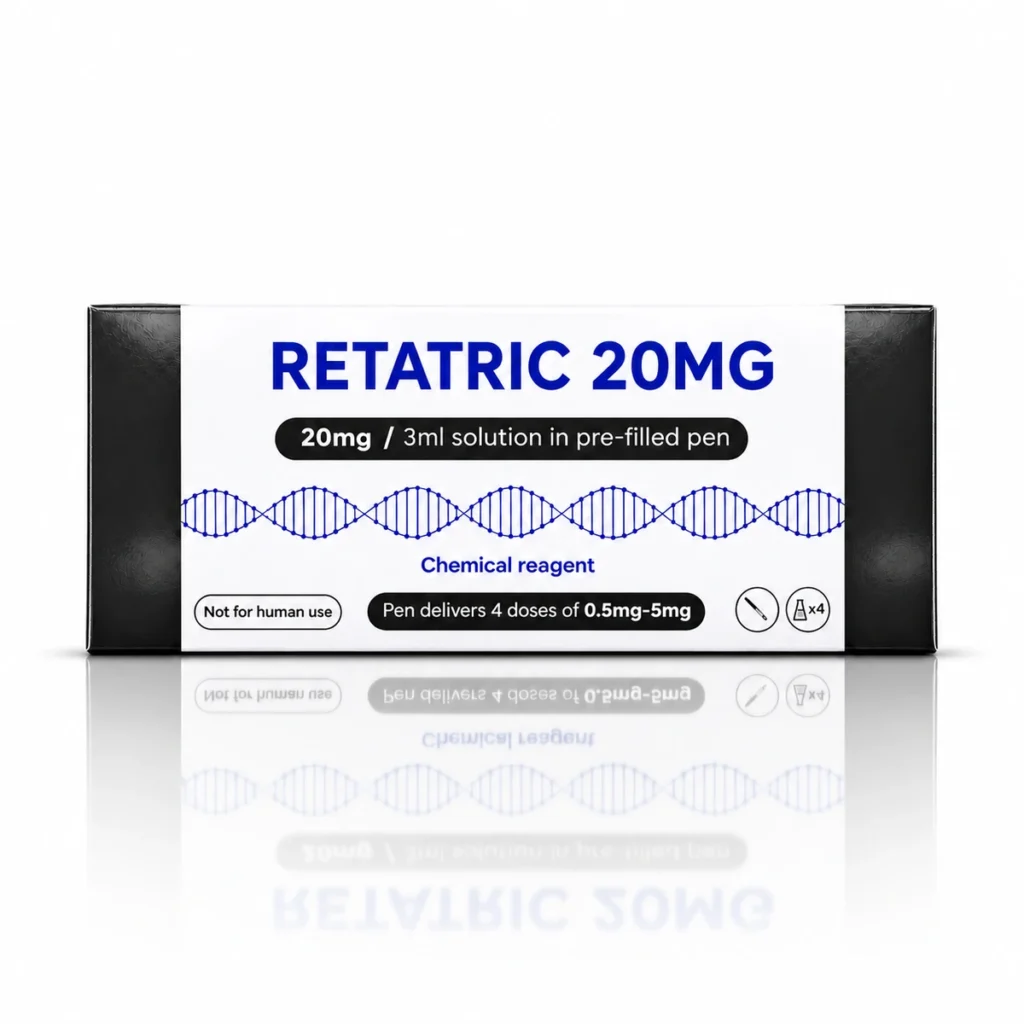
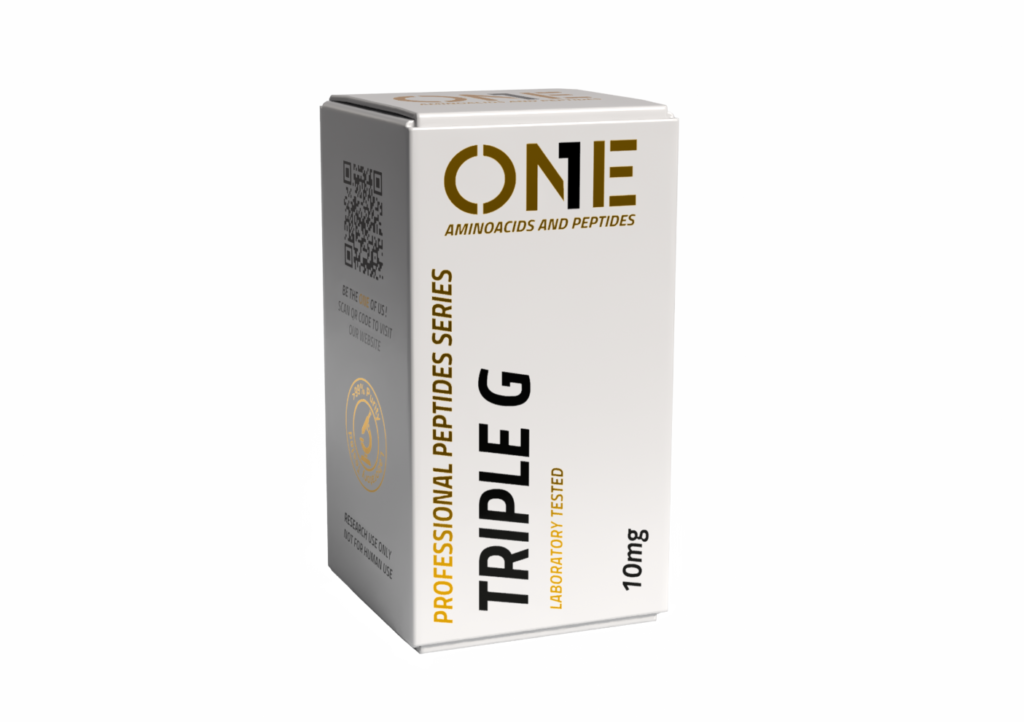
TRIPLE G — retatrutide, triple agonist of GIP, GLP-1 and glucagon receptors
TRIPLE G is a synthetic peptide based on the structure of retatrutide – a triple agonist of GIP, GLP-1 and glucagon receptors. It is a new generation compound, tested in the context of simultaneous activation of three signaling pathways related to incretin and glucagon metabolism. In cellular and animal models, TRIPLE G modulates signaling cascades through all three receptors, providing a unique research tool. The product is intended for research purposes only (Research Use Only). Browse the available TRIPLE G variants in the One Peptides catalogue.
The informal shorthand used for retatrutide in online searches is explained in a separate entry: a glossary explanation of “reta”.
TRIPLE G is part of a broader group: metabolic modulators – research reagent category.
What is the Triple G peptide?
Triple G is the catalogue name for retatrutide (LY3437943) — a synthetic peptide belonging to the class of triple agonists, designed to simultaneously activate three receptors: GIP-R (glucose-dependent insulinotropic polypeptide receptor), GLP-1R (glucagon-like peptide-1 receptor) and GCGR (glucagon receptor). The concept of triple agonism was developed on the basis of research on incretin peptides conducted since the 1980s, and retatrutide is one of the first compounds implementing this strategy in a single molecule.
The mechanism of action of TRIPLE G involves binding to three separate class B GPCRs. Activation of GLP-1R triggers the cAMP/PKA pathway in pancreatic beta cells, stimulating glucose-dependent insulin secretion. GIP-R activation engages complementary incretin pathways, enhancing the metabolic signal. Simultaneous activation of GCGR – the glucagon receptor – turns on pathways related to lipid metabolism and thermogenesis in hepatocytes and adipocytes.
TRIPLE G is available as high-purity lyophilisates (5 mg and 10 mg), which enable precise preparation of working solutions for in vitro and in vivo experiments. This peptide is not a medicinal product and is not intended for human use.
TRIPLE G variants available
| Variant |
Form |
Research use |
| Retatrutide 5 mg |
Lyophilisate |
Tri-receptor activation studies in vitro and in vivo |
| Triple G 10 mg |
Lyophilisate |
Longer experimental series from a single production batch |
Each variant is tested by HPLC at an independent laboratory. Detailed specifications are available on the product page.
Which TRIPLE G variant should you choose?
The 5 mg lyophilisate is suitable both for preliminary in vitro studies on cell lines expressing GIP-R, GLP-1R and GCGR receptors and for shorter series of experiments on animal models. The 10 mg lyophilisate supports longer series from a single production batch.
For research teams planning long-term protocols with multiple experimental groups, it is recommended to order several units to ensure continuity of supply from the same production batch. This allows for consistency of results between series of experiments.
How does TRIPLE G differ from similar compounds?
TRIPLE G vs SEMA G
The fundamental difference between these peptides lies in the number of receptors activated. SEMA G (semaglutide analogue) is a selective agonist of a single receptor – GLP-1R. TRIPLE G simultaneously activates three receptors: GIP-R, GLP-1R and GCGR. In studies on cellular models, this means that TRIPLE G triggers signaling pathways inaccessible to SEMA G – in particular the glucagon cascade in hepatocytes and the GIP-R signal in pancreatic beta cells. This three-way activation constitutes a distinct approach to the study of metabolic modulation. SEMA G remains a valuable tool for studying isolated GLP-1R activation. View category: SEMA G
TRIPLE G vs GLP-1 (native peptide)
Native GLP-1 is an endogenous incretin peptide with a very short half-life (approximately 2-3 minutes), acting exclusively through the GLP-1R receptor. TRIPLE G, as an engineered peptide, combines activity at three receptors in one molecule and has structural modifications that extend its stability in experimental models. Native GLP-1 is a reference point in comparative studies – it allows us to determine what increase in metabolic activity results from additional GIP-R and GCGR stimulation in relation to GLP-1R activation alone. See category: GLP-1
FAQ – Frequently asked questions
1. What is the Triple G peptide and what is triple agonism?
TRIPLE G is a synthetic peptide based on the structure of retatrutide, which simultaneously activates three receptors: GIP-R, GLP-1R and GCGR. Triple agonism means the ability to simultaneously stimulate three separate signaling pathways in one molecule, which distinguishes it from selective single receptor agonists.
2. In which research models is TRIPLE G used?
TRIPLE G is used in studies on cell lines expressing GIP-R, GLP-1R and GCGR receptors (e.g. HEK293 cells transfected with individual receptors, INS-1 cells, MIN6). It is also used in animal models to study the simultaneous activation of incretin and glucagon pathways.
3. Is TRIPLE G a medicinal product or dietary supplement?
NO. TRIPLE G offered by One Peptides is a substance intended exclusively for scientific research (Research Use Only). It is not a medicine, dietary supplement or product intended for human use.
4. How should TRIPLE G be stored?
TRIPLE G in freeze-dried form should be stored at -20 degrees Celsius, in a dry place protected from light. After reconstitution, the solution should be stored at a temperature of 2-8 degrees Celsius, aliquoted and used according to the instructions on the product page.
5. How does TRIPLE G differ from dual GIP/GLP-1 agonists?
Dual agonists activate two receptors – most often GIP-R and GLP-1R. TRIPLE G adds a third component – activation of the glucagon receptor (GCGR), which in cellular models turns on additional pathways related to lipid metabolism and thermogenesis. This difference constitutes a separate research tool for analyzing the contribution of individual receptors to the metabolic response.
Quality and standards at One Peptides
TRIPLE G is tested by HPLC at an independent laboratory for content and purity, and the test is repeated periodically.
 EN
 DE
 ES