 EN
EN  DE
DE  ES
ES  PL
PL 


One-Peptides PT-141 10 mg – RUO class research reagent
PT-141, also known as bremelanotide, is a synthetic cyclic heptapeptide with CAS number 189691-06-3, offered by One-Peptides in the form of 10 mg lyophilized powder intended for research uses only (Research Use Only, RUO). This product is not a drug, dietary supplement or substance approved for any use outside a laboratory environment. This classification is in accordance with Art. 3a of the Pharmaceutical Law and the regulations of the Chief Sanitary Inspectorate.
The origins of PT-141 date back to research conducted at the University of Arizona in the 1990s by a team led by Victor Hruby and Mac Hadley. This molecule was created as a metabolite and derivative of Melanotan II (MT-II) – a synthetic analogue of alpha-MSH (alpha-melanocytostimulating hormone). Unexpected effects on sexual behavior in rodents were observed during studies of MT-II in animal models, which turned researchers’ attention to centrally acting melanocortin receptor agonists as a tool for studying the neuroendocrine pathways regulating these behaviors.
General description
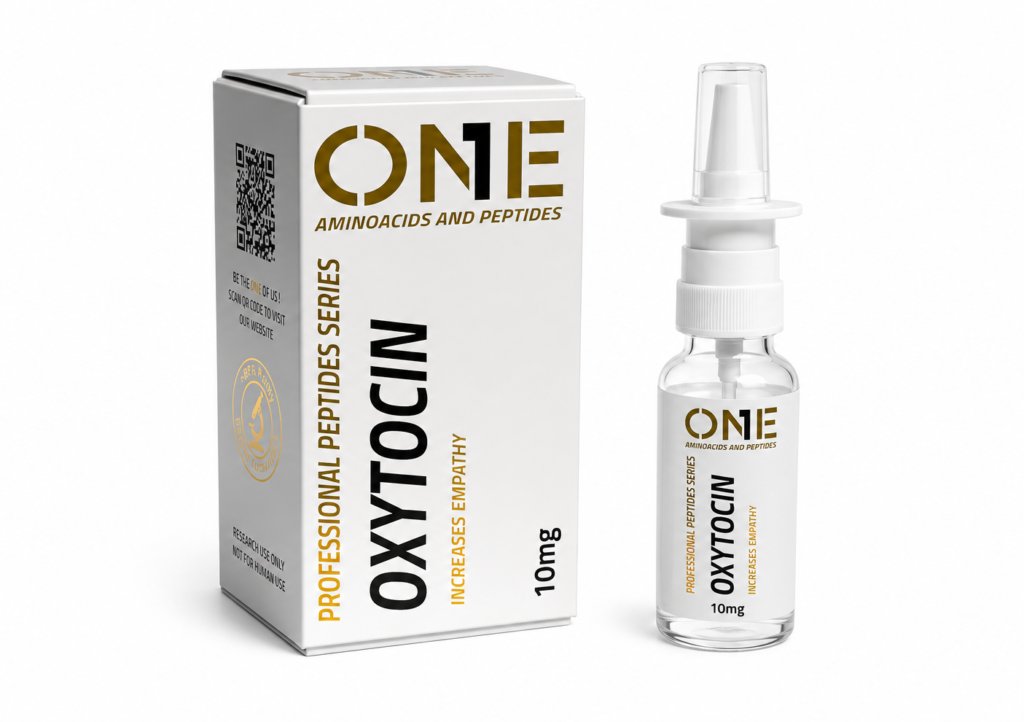
In laboratory practice, this reagent is often compared with OXYTOCIN 10 mg and KISSPEPTIN-10 5 mg, to assess differences in performance profile across consistent study protocols.
PT-141 belongs to the group of synthetic melanocortin peptides – a class of molecules that mimic the action of endogenous melanocortin hormones (alpha-MSH, beta-MSH, gamma-MSH, ACTH) by activating melanocortin receptors (MC1R–MC5R). Scientific interest in this particular molecule is due to its unique receptor selectivity profile – PT-141 has preferential affinity for MC3R and MC4R receptors with minimal activity at MC1R, which distinguishes it from previous melanocortin agonists with a broad receptor profile.
Unlike many melanocortin peptides, PT-141 does not contain modifications in the form of C-terminal full-sequence amidation – instead, it has a free carboxyl group at the C-terminus (-OH structure), which affects its pharmacokinetic profile and receptor selectivity. This structural detail is an important subject of research in the context of structure-activity relationships (SAR) of melanocortin peptides.

What is PT-141 (bremelanotide)?
PT-141 is a synthetic cyclic heptapeptide with the sequence: Ac-Nle-cyclo[Asp-His-D-Phe-Arg-Trp-Lys]-OH, in which the cyclic part of the molecule is formed by a lactam bond between the side chain of aspartic acid (Asp) and the side chain of lysine (Lys).
Summary formula: C50H68N14O10
Molecular weight: 1025.18 g/mol
CAS number: 189691-06-3
In terms of biochemical classification, PT-141 is an agonist of melanocortin receptors – proteins from the G protein-coupled receptor (GPCR) superfamily. This molecule contains several non-standard modifications to natural peptide sequences:
- Nle (norleucine) in position 1 — instead of the methionine present in alpha-MSH, which eliminates the susceptibility to sulfur oxidation
- D-Phe (D-phenylalanine) — D configuration isomer introducing conformational rigidity to the ring part of the molecule
- N-terminal acetylation (Ac-) — protection against aminopeptidases
- Asp-Lys lactam bridge — creating a cyclic heptapeptide structure with limited conformational freedom
These modifications are the result of systematic SAR research conducted at the University of Arizona and constitute an example of rational design of peptides with modified receptor selectivity.
Structure and physicochemical properties
Lactam bridge and conformation
The central structural element of PT-141 is the intramolecular lactam (amide) bond between the gamma-carboxyl of Asp and the epsilon-amine group of Lys. This bridge forms a 20-membered macrolactam ring that limits the rotational freedom of the peptide chain and stabilizes the beta-bend conformation (beta-turn) in the His-D-Phe-Arg-Trp region. It is this conformation that is recognized by melanocortin receptors — solution NMR studies have shown that active melanocortin analogues adopt a similar beta-bend motif in this region.
Comparative structural studies show that the lactam bridge in PT-141 imparts greater conformational rigidity to the molecule than the disulfide bridge present in some cyclic alpha-MSH analogues. This difference translates into changed proportions of affinity for MC3R relative to MC4R.
Selectivity of MC3R vs. MC4R
One of the most important aspects of the pharmacology of PT-141 is its selectivity profile for melanocortin receptor subtypes. Radioligand binding studies and functional tests (cAMP accumulation, Ca2+ mobilization) indicate the following profile:
- MC4R: high affinity, full agonist activity (EC50 in the nanomolar range)
- MC3R: moderate affinity, partial to full agonist activity
- MC1R: low affinity — unlike alpha-MSH and MT-II
- MC5R: low to moderate affinity
- MC2R (ACTH receptor): no significant activity
This differentiation is important for research because MC3R and MC4R perform different functions in the neuronal circuits of the hypothalamus. MC4R dominates the regulation of appetitive behavior and energy homeostasis, whereas MC3R modulates autonomic and neuroendocrine circuits in ways that are often complementary and sometimes antagonistic to MC4R. Studies in MC3R knockout mice (MC3R-/-) showed a phenotype different from MC4R knockout (MC4R-/-), highlighting the non-redundancy of these two receptors.
Stability and solubility
The freeze-dried form of PT-141 is stable at -20 °C for a minimum of 24 months. The main degradation pathways include hydrolysis of the lactam bond under extreme pH conditions (< 2.0 or > 9.0) and oxidation of Trp residues under the influence of UV radiation or oxygen radicals.
Solubility: PT-141 dissolves in distilled water (up to ~5 mg/ml), saline solutions and DMSO. The optimal pH of the working solution is in the range of 4.0–6.0. After reconstitution, the solution should be stored in aliquots at -80 °C.
Mechanism of action at the molecular level
MC4R pathway: coupling with Gs and Gq
The binding of PT-141 to the MC4R receptor triggers two parallel signaling pathways, which is an example of the so-called biased agonism:
Gs/cAMP/PKA pathway:
1. Activation of the Gs protein leads to stimulation of adenylate cyclase (AC)
2. Increase in intracellular cAMP concentration
3. Activation of protein kinase A (PKA)
4. Phosphorylation of CREB transcription factors (cAMP response element-binding protein)
Gq/PLC/Ca2+ pathway:
1. Activation of the Gq/11 protein triggers phospholipase C-beta (PLC-beta)
2. Hydrolysis of PIP2 to IP3 and DAG
3. Mobilization of Ca2+ from the endoplasmic reticulum
4. Activation of PKC and downstream kinases
The proportion of activation of these two pathways varies depending on the cell type and the level of receptor expression. In hypothalamic neurons, the Gs/cAMP pathway appears dominant, while activation of the Gq/PLC pathway is more frequently observed in peripheral cells. This duality of signaling constitutes an interesting research problem in the context of biased pharmacology (biased pharmacology).
Interactions with the dopaminergic system
Studies in animal models indicate that the behavioral effects observed after administration of MC4R agonists are partially dependent on dopaminergic neurotransmission. In the case of hypothalamic neurons, activation of MC4R leads to modulation of dopamine release in the mesocorticolimbic pathway – these observations were obtained by in vivo microdialysis in rats. Administration of a dopamine D1/D2 receptor antagonist partially blocked the behavioral effects induced by melanocortin agonists, suggesting the existence of a functional connection between the melanocortin and dopaminergic systems.
Applications in scientific research
Studies of sexual behavior in animal models
PT-141 is one of the basic pharmacological tools in the study of neuroendocrine regulation of sexual behavior in rodents. In female rat models, administration of PT-141 affects the lordosis response (lordosis response) — standardized index of sexual receptivity assessed by the number of lordosis per number of montages (lordosis quotient, LQ). Changes in the frequency of montages were observed in male rats (mount frequency), latency to intromission and latency to ejaculation.
It is worth emphasizing that these effects are observed after central (intraventricular) administration, which indicates a central – and not peripheral – mechanism of action, distinguishing melanocortin agonists from peripherally acting vasoactive compounds.
Structure-activity relationship research (SAR)
PT-141 is often used as a reference molecule in SAR studies of melanocortin peptides. Comparison of the activity of PT-141 with other agonists – alpha-MSH, NDP-alpha-MSH (superpotent analogue), MT-II, SHU9119 (MC3R/MC4R antagonist) – allows mapping of structural determinants responsible for receptor selectivity and activation efficiency of individual signaling pathways.
Particularly interesting are studies comparing lactam bridges with different ring sizes (cyclo[Asp-Lys] vs cyclo[Glu-Lys] vs cyclo[Asp-Orn]) – each of these modifications changes the proportions of MC3R/MC4R activity and may prefer a different signaling profile (Gs vs Gq).
Neuroendocrine models
In studies on neuronal cultures and brain sections, PT-141 is used to examine synaptic plasticity in the melanocortin circuits of the hypothalamus. Electrophysiological experiments (patch-clamp) on neurons of the arcuate nucleus (nucleus arcuatus) showed that MC4R activation by PT-141 modulates ion currents – both excitatory (depolarization through TRPC cation channels) and inhibitory (hyperpolarization of AgRP neurons by opening Kir potassium channels).
Comparison with other melanocortin agonists
In the context of research tools, PT-141 occupies a specific niche:
– Unlike alpha-MSH: is resistant to degradation by aminopeptidases (N-terminal acetylation) and carboxypeptidases
– Unlike MT-II: does not have an amidated C-terminus and shows an altered MC3R/MC4R activity ratio
– Unlike SHU9119: is an agonist (not antagonist) of MC3R/MC4R
– Unlike THIQ (small molecule MC4R agonist): it is a peptide, which allows for different pharmacokinetic and distribution studies
Summary
PT-141 (bremelanotide) 10 mg from One-Peptides is a synthetic cyclic melanocortin heptapeptide with a molecular weight of 1025.18 g/mol, supplied in the form of a lyophilisate for laboratory reconstitution. This molecule – with a characteristic Asp-Lys lactam bridge and D-Phe/Nle modifications – is a valuable research tool in the pharmacology of MC3R/MC4R receptors, the neurobiology of appetitive behaviors and studies of interactions between the melanocortin and dopaminergic systems.
The product is intended for research use only (Research Use Only). It is not a medicine or food. All data presented in this description comes from published scientific research and does not constitute claims about health properties.
Research conclusions
- PT-141 is a preferential agonist of MC3R and MC4R receptors with minimal activity on MC1R, which distinguishes it from other melanocortin peptides
- The Asp-Lys lactam bridge stabilizes the beta-fold conformation recognized by melanocortin receptors and modulates the MC3R/MC4R activity ratio
- Activation of MC4R by PT-141 simultaneously activates the Gs/cAMP and Gq/PLC pathways – an example of biased pharmacology (biased agonism)
- In rodent models, the behavioral effects of PT-141 show partial dependence on dopaminergic neurotransmission
- Comparative SAR studies using PT-141 as a reference molecule provide data on the structural determinants of melanocortin receptor selectivity
FAQ
What is the optimal method for reconstituting PT-141 lyophilisate?
It is recommended to dissolve it in sterile deionized water or saline solution (0.9% NaCl). Solubility in water is up to ~5 mg/ml. It is also possible to use DMSO as a co-solvent (up to 10% of the final volume). After dissolving, the solution should be divided into single aliquots.
What is the half-life of PT-141 in solution and in vivo (animal models)?
In an aqueous solution (pH 5.0, 4 °C), PT-141 is stable for approximately 7-14 days. In pharmacokinetic models in rats, the half-life after subcutaneous administration was estimated to be approximately 2-4 hours, with major elimination via the renal route.
What substances are incompatible with PT-141 in a laboratory environment?
Strong oxidants (H2O2, Cu2+ ions) may lead to the oxidation of Trp and His residues. Solutions with pH > 8.5 accelerate the hydrolysis of the lactam bond. Proteolytic enzymes (trypsin, chymotrypsin) degrade the peptide – in cell cultures the presence of proteases in the medium should be taken into account.
What are the recommended storage conditions?
Lyophilisate: -20 °C, hermetically closed vessel, inert gas atmosphere (argon), protected from light. Working solution: aliquots at -80 °C, thawing once. Do not store working solutions at room temperature for longer than 4 hours.
Scientific sources
- Hadley M.E., Dorr R.T. (2006). Melanocortin peptide therapeutics: historical milestones, clinical studies and commercialization. Peptides. (PMID: 16412534; review of melanocortin therapeutics)
- Wikberg JES, Mutulis F (2008). Targeting melanocortin receptors: an approach to treating weight disorders and sexual dysfunction. Nature Reviews Drug Discovery. (PMID: 18323849; melanocortin receptor pharmacology)
- Kingsberg SA et al. (2019). Bremelanotide for the Treatment of Hypoactive Sexual Desire Disorder: Two Randomized Phase 3 Trials. Obstetrics & Gynecology. (PMID: 31599840; Phase 3 trials for bremelanotide)








Reviews
There are no reviews yet.