 EN
EN  DE
DE  ES
ES  PL
PL 


Ironpump – Research Use Only (RUO) – A chemical not intended for human consumption or diagnostic purposes.
Ironpump 225 mg/ml is a multi-component laboratory formulation containing five amino acids in the form of an aqueous solution with a total concentration of 225 mg per 1 ml. The preparation is intended for research use only (Research Use Only) and does not constitute a medicinal product, dietary supplement or food within the meaning of applicable regulations.
The formula combines L-arginine, L-ornithine, L-citrulline, lysine and glycine – amino acids whose interaction on the L-arginine-nitric oxide (NO) pathway is the subject of intensive preclinical research. The scientific community’s interest in this combination results from the observed in vitro effects on nitric oxide synthesis, modulation of blood flow in tissue models and the potential to study vasodilation mechanisms.
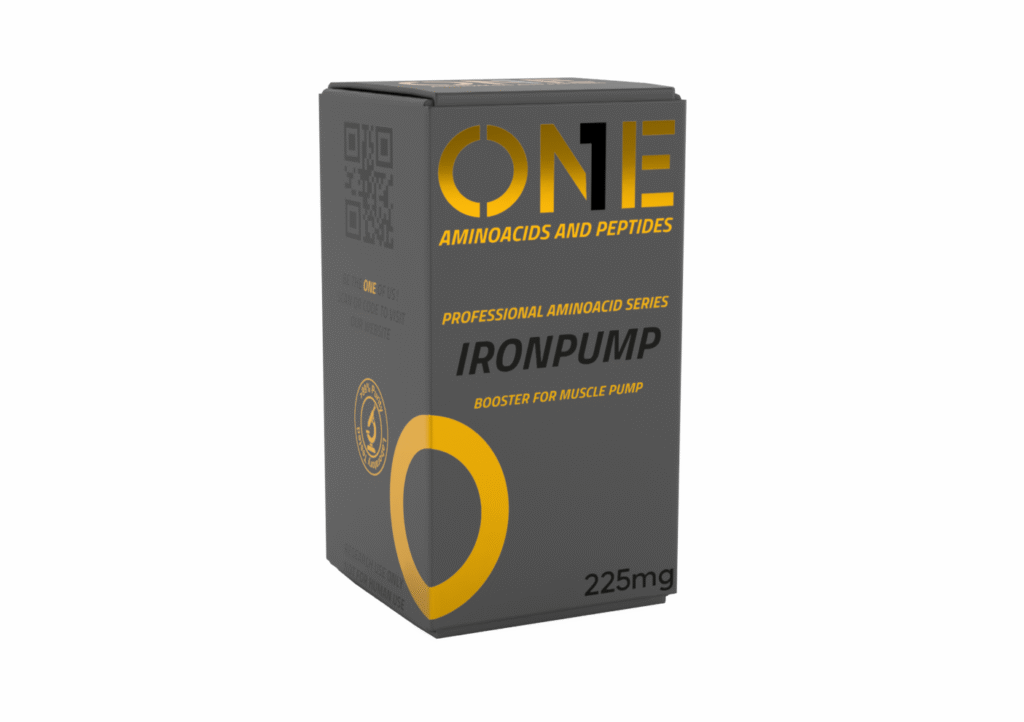
Ironpump belongs to the multi-component group amino acid solutions with a defined concentration profile. These types of formulations are used in research on amino acid metabolism, nitric oxide biosynthesis and transport mechanisms through cell membranes.
Each of the five components has a separate biochemical function, but it is their mutual interaction – especially in the context of the urea cycle and the NO-synthase pathway – that arouses the greatest interest of researchers. Scientific literature describes the synergistic effect of L-arginine and L-citrulline on the bioavailability of the substrate for eNOS (endothelial nitric oxide synthase), which makes this formulation a valuable tool in research on vascular physiology.
Total concentration: 225 mg/ml
Quantitative composition (per 1 ml of solution):
|
Component |
Concentration |
| L-arginine | 50 mg |
| L-ornithine | 50 mg |
| L-citrulline | 50 mg |
| Lysine (L-lysine) | 50 mg |
| Glycine | 25 mg |
Form: aqueous solution
Intended use: for laboratory tests only (RUO)
L-arginine is a proteinogenic amino acid with the molecular formula C₆H₁₄N₄O₂ and a molar mass of 174.20 g/mol. In a biochemical context, it is a direct substrate for the nitric oxide synthase (NOS) family of enzymes. The conversion of L-arginine to L-citrulline and nitric oxide (NO) by eNOS is one of the most intensively studied metabolic pathways in vascular biology.
Studies on endothelial cells (HUVEC line) showed that exposure to L-arginine at a concentration of 50–100 µM increases NO production measured by the Griess method. Activation of the PI3K/Akt pathway was also observed, leading to eNOS phosphorylation at Ser1177.
L-ornithine (C₅H₁₂N₂O₂, molar mass 132.16 g/mol) is a non-proteinogenic amino acid, an intermediate metabolite of the urea cycle. It is produced as a result of the hydrolysis of L-arginine by arginase and is a substrate for the synthesis of polyamines (putrescine, spermidine, spermine) through decarboxylation catalyzed by ODC (ornithine decarboxylase).
Studies on rat hepatocytes (in vitro model) showed that L-ornithine modulates the activity of ornithine carbamoyltransferase (OTC), an enzyme that limits the rate of the urea cycle. Polyamines derived from ornithine play a documented role in cell proliferation and stabilization of nucleic acids.
L-citrulline (C₆H₁₃N₃O₃, molar mass 175.19 g/mol) is a non-proteinogenic amino acid, a by-product of the reaction catalyzed by NOS. In model organisms, citrulline is converted to L-arginine in the kidneys by argininosuccinate synthetase (ASS) and argininosuccinate lyase (ASL), closing the so-called citrulline–arginine–NO pathway.
Studies in an animal model (Wistar rats) indicate that L-citrulline has higher bioavailability as an arginine precursor compared to exogenous L-arginine, probably due to bypassing first-pass metabolism in the liver and intestines, where arginase intensively degrades free arginine.
L-lysine (C₆H₁₄N₂O₂, molar mass 146.19 g/mol) is an exogenous amino acid from the group of amino acids with an aliphatic chain. In a research context, lysine is a substrate for synthesis carnitine (with methionine) and hydroxylysine – a component of collagen.
In studies on human skin fibroblasts (HDF line), it was observed that lysine at concentrations of 0.1–1.0 mM stimulates the synthesis of procollagen type I. Moreover, lysine has properties that modulate the transport of cationic amino acids through the CAT-1 transporter (SLC7A1), which may affect the bioavailability of arginine in cells exposed simultaneously to both amino acids.
Glycine (C₂H₅NO₂, molar mass 75.03 g/mol) is the simplest proteinogenic amino acid. It functions as an inhibitory neurotransmitter (glycine receptor, GlyR) and an NMDA receptor co-agonist. In metabolism, it serves as a one-carbon donor in the synthesis of purines and glutathione.
In cell cultures, glycine has cytoprotective properties – in studies on hepatocytes exposed to hypoxia, a reduction in cell membrane damage (measured by the release of LDH) was observed when glycine was used at a concentration of 1–5 mM. The mechanism of cytoprotection is probably related to the activation of glycine-dependent chloride channels.
The central biochemical pathway studied using the Ironpump formulation is the nitric oxide synthesis pathway. L-arginine undergoes oxidative conversion to L-citrulline and NO in a reaction catalyzed by nitric oxide synthase (NOS). The reaction requires cofactors: NADPH, FAD, FMN, tetrahydrobiopterin (BH₄) and a heme prosthetic group.
The presence of L-citrulline in the formulation creates a closed cycle of substrate regeneration: citrulline → argininosuccinate → arginine → NO + citrulline. This cyclic mechanism, described in the literature as the “citrulline-arginine recycling pathway”, allows for the maintenance of continuous NO synthesis even with a limited supply of exogenous arginine.
L-ornithine, as a metabolite of the urea cycle, connects the NO pathway with nitrogen metabolism. In vitro, it was observed that the arginine:ornithine ratio affects the direction of arginine metabolism – a shift towards ornithine (by arginase) reduces the availability of the substrate for NOS, while the simultaneous presence of citrulline compensates for this loss through arginine resynthesis.
L-lysine and L-arginine compete for the same membrane transporter – the y⁺ system (CAT-1, CAT-2). Studies on Caco-2 cells showed that the lysine:arginine molar ratio in the culture medium affects the transport kinetics of both amino acids. The Ironpump formulation uses a 1:1 ratio (50 mg:50 mg), which allows the study of the transport competition phenomenon under experimental conditions.
Glycine, as a precursor of glutathione (GSH) – together with cysteine and glutamate – supports the endogenous antioxidant system of the cell. In the context of the NO pathway, this is important because nitric oxide, in the presence of reactive oxygen species (ROS), can be converted to peroxynitrite (ONOO⁻), a strong oxidant. The presence of glycine as a GSH precursor in the formulation is an interesting subject of research on the redox balance in cells exposed to NO.
The Ironpump 225 mg/ml formulation has potential applications in the following research areas:
Study of the effect of multi-component amino acid formulations on NO synthesis in endothelial cells. Measurement of vascular relaxation in ex vivo models (isolated rat aorta) using myography.
Analysis of pharmacokinetic interactions between amino acids competing for common transporters (y⁺ system). Study of the conversion ratio of arginine→NO vs. arginine→ornithine depending on the composition of the medium.
Assessment of the effect of glycine on the redox balance in cells exposed to increased NO concentrations. Measurement of the GSH/GSSG ratio using the enzymatic method.
The influence of polyamines (ornithine→putrescine→spermidine pathway) on the rate of cell division in continuous line cultures.
Based on the available preclinical literature, the Ironpump 225 mg/ml formulation is an interesting research tool due to:
What is the mechanism of L-arginine and L-citrulline synergy in the context of NO synthesis?
L-citrulline is converted to L-arginine in the citrulline–argininosuccinate–arginine cycle, replenishing the substrate pool used by NOS. In studies on HUVEC cells, simultaneous exposure to arginine and citrulline prolonged the time of maintaining elevated NO levels compared to arginine alone.
Does L-lysine affect the bioavailability of L-arginine in vitro?
Yes – both amino acids compete for the CAT-1 transporter (y⁺ system). In studies on Caco-2 cells, the presence of lysine at an equimolar concentration reduced arginine transport by approximately 30%, which is an important experimental variable.
What is the stability of the solution in laboratory conditions?
Amino acid solutions at working concentration should be stored at 2-8°C, protected from light and used within 30 days of opening. It is recommended to check the pH of the solution before each use.
Which analytical methods are suitable for determining individual components?
HPLC liquid chromatography with UV detection (λ = 210 nm) after derivatization with OPA (o-phthalaldehyde) or FMOC-Cl is recommended. The method allows for the simultaneous determination of all five amino acids in one analytical cycle.
What reagents should Ironpump formulations not be combined with?
Avoid contact with strong oxidants (hydrogen peroxide >3%, peracetic acid) and solutions with pH <2 or >10, which may cause the degradation of amino acids. Do not mix with aldehydes (formaldehyde, glutaraldehyde), which react with amino groups.
 DHL Express




Reviews
There are no reviews yet.