 EN
EN  DE
DE  ES
ES  PL
PL 

A research-focused comparison of Melanotan II and PT-141, covering melanocortin receptor selectivity, evidence, safety signals and regulatory status.
GHRP-2 and GHRP-6 are two of the most frequently discussed members of the growth hormone-releasing peptide (GHRP) family—short, synthetic molecules that, in research models, stimulate the pituitary gland to release growth hormone. Both come from the same generation of secretagogues discovered by Cyril Y. Bowers’ team, and both act through the same receptor, the GHS-R1a ghrelin receptor. The notation varies: catalogs and search queries may use “GHRP-2”, “GHRP 2” or “ghrp2”, and similarly “GHRP-6”, “GHRP 6” or “ghrp6”. Each spelling refers to the corresponding hexapeptide.
This guide organizes the entire GHRP class, explains the mechanism of action on the growth hormone axis, compares the profiles of both peptides and indicates their regulatory status. A separate linked article provides a detailed, axis-by-axis comparison, including the Pralmorelin context.
The following text is educational in nature and is a review of published scientific literature on GHRP-2 and GHRP-6. Most cited studies used animal models, in vitro systems, or controlled clinical settings outside the European Union. The material does not constitute medical advice or encouragement of use. All One Peptides products in the freeze-dried peptides category are intended exclusively for laboratory tests (Research Use Only). GHRP-2 and GHRP-6 are on the WADA Prohibited Substances List (Category S2).
GHRP-2 and GHRP-6 are synthetic growth hormone-releasing peptides, ghrelin receptor agonists (GHS-R1a). In the literature, GHRP-2 (medically known as Pralmorelin) is described as a compound with stronger and more selective GH stimulation, while GHRP-6 is described as the first widely studied representative of the family with a more pronounced appetite-stimulating effect. Both remain only research reagents in the European Union.
The abbreviation GHRP stands for growth hormone-releasing peptides — a group of short, synthetic peptides designed to stimulate the pituitary gland to secrete growth hormone (GH) in experimental models more strongly and more reproducibly than natural stimuli. GHRP-2 and GHRP-6 are hexapeptides — each made of six amino acids, with different sequences, but with a common target receptor.
The story of the class begins unusually – with opioids. In the 1970s and 1980s, Cyril Y. Bowers’ team observed that certain met-enkephalin derivatives (based on a naturally occurring opioid peptide) could release growth hormone through a pathway independent of opioid receptors. Further structure–activity research made it possible to remove the opioid component while retaining and enhancing GH-releasing activity. The result of this optimization was the first fully characterized hexapeptide of this class, described in a landmark 1984 paper as a synthetic peptide acting specifically on the pituitary gland (Bowers et al. 1984). A whole generation of compounds emerged from this trend: GHRP-1, GHRP-2, GHRP-6, hexarelin, and later non-peptide mimetics available orally.
Within this family GHRP-6 has historical priority – it was one of the first widely studied secretagogues and served as a tool for characterizing the pathway itself, long before its natural ligand was identified. GHRP-2 appeared as an optimized molecule: shorter, with a modified sequence, described in the literature as a stronger and more selective stimulus for GH secretion. Despite the differences, both forms – whether written “GHRP 2” and “GHRP 6” or with a hyphen – belong to the same pharmacological class.
It is worth organizing the map of growth hormone secretagogues right away, because GHRP is only one of its branches. The class of ghrelin receptor agonists (GHS-R1a) includes injectable peptides (GHRP-2, GHRP-6, ipamorelin, hexarelin) and the non-peptide oral mimetic MK-677 (ibutamoren). GHRH analogues (sermorelin, CJC-1295) form a separate branch and act through a different receptor – the growth hormone releasing hormone receptor. This distinction helps organize the entire class and is discussed more broadly in the guide to regenerative peptides and their molecular mechanisms.
The heart of the action of both peptides is growth hormone secretagogue receptor type 1a (GHS-R1a) — a G protein-coupled receptor whose natural ligand is ghrelin, a hormone produced mainly in the stomach and regulating appetite and the somatotropic axis. The sequence of discoveries is notable: synthetic GHRPs were created before the natural ligand of this receptor was identified. For years, GHS-R was an “orphan” receptor – its synthetic agonists (GHRP) were known, but not the endogenous molecule that activates it. Ghrelin was described only in the late 1990s, which completed the picture of the entire axis (Müller et al. 2015).
At the molecular level, the binding of GHRP-2 or GHRP-6 to GHS-R1a activates the phospholipase C pathway, leading to an increase in the intracellular concentration of calcium ions. In the somatotropic cells of the pituitary gland this translates into release of stored growth hormone. This receptor is not exclusively found in the pituitary gland – expression mapping in the rodent brain has also shown its presence in the hypothalamus (arcuate nucleus) and other areas of the central nervous system, which explains why GHS-R1a activation affects GH secretion and appetite regulation simultaneously (Zigman et al. 2006).
GHRP activity can be considered at two levels. At the pituitary level, the peptide directly stimulates somatotropes. At the hypothalamic level, it modulates the balance between factors that stimulate and inhibit GH secretion: affects neurons producing GHRH and reduces somatostatin tone, a hormone that suppresses the release of growth hormone. The released GH then acts on the liver, stimulating the production of IGF-1 (insulin-like growth factor 1) – it is IGF-1 that mediates a significant part of the peripheral effects of the somatotropic axis and closes the negative feedback loop. This two-level mechanism, affecting the GH–IGF-1 axis while maintaining its pulsatile rhythm, is what distinguishes peptide secretagogues from simple administration of the hormone itself.
Fundamental difference from GHRH it comes down to the receptor and the pathway. GHRH analogues (like CJC-1295 or sermorelin) act through the GHRH receptor, triggering the cyclic AMP cascade. GHRPs act through the GHS-R1a and calcium pathway. That’s two independent molecular pathways leading to the same effect – the release of GH. This independence is the result of the most documented phenomenon in the literature of secretagogues: GHRP synergism with GHRH analogues. When a GHS-R1a agonist is combined with a GHRH analogue in the model, the observed GH response exceeds the sum of the effects of each compound administered alone. The explanation is mechanistic – two peptides activate two separate receptors on the same somatotropic cell, and GHRP additionally “opens the gate” by suppressing the inhibitory somatostatin signal (Ghigo et al. 1997; Camanni et al. 1998). This complementarity of mechanisms is one of the most frequently described properties of the entire class.
GHRP-2 is a second-generation hexapeptide with the sequence D-Ala-D-2-Nal-Ala-Trp-D-Phe-Lys-NH2. In the literature he is characterized as a secretagogue strong and relatively selective stimulation of growth hormone secretion. “Selectivity” here means that when GH is released, the accompanying stimulation of other hormonal axes – primarily co-secretion cortisol and prolactin — remains lower in models than in the case of GHRP-6. It was this profile that made GHRP-2 the molecule chosen for further validation.
As a GHS-R1a agonist, GHRP-2 remains ghrelinomimetic — activates the same receptor as ghrelin, so in addition to the somatotropic signal, it also carries a component affecting appetite and metabolism. Compared to GHRP-6, however, the effect on appetite is described as gentler and more limited, which may be a desirable feature for people examining a “pure” GH response.
The feature that distinguishes GHRP-2 from most research peptides is its existence international non-proprietary name (INN): Pralmorelin. Under this name, exactly the same molecule was approved in Japan as diagnostic reagent used in the growth hormone secretion stimulation test – lack of adequate GH response after Pralmorelin administration is a signal in the differentiation of growth hormone deficiency (Chihara et al., 2007). This is a rare case of an investigational compound whose identical molecule has documented clinical validation in a narrowly defined indication. The Pralmorelin thread – including how diagnostic validation relates to regulatory status in the European Union – expands in detail in a comparative article GHRP-2 vs GHRP-6 – differences and Pralmorelin.
It is important to be precise: the validation of Pralmorelin applies a one-time diagnostic test in a specific jurisdiction. This is not a registration of GHRP-2 as a therapy or approval for use outside diagnostics, and the compound does not have EMA registration in the European Union. All numbers and observations quoted in the literature about GHRP 2 are facts about the substance itself in the research context, and not recommendations for people.
GHRP-6 is a hexapeptide with the sequence His-D-Trp-Ala-Trp-D-Phe-Lys-NH2 – historically the first to be widely studied family representative. Much of the early mechanistic work on the secretagogue axis was based on it; Before ghrelin was known, GHRP-6 served as a tool to describe the receptor itself and its role in GH regulation.
There is one particularly well-documented property that stands out in the pharmacodynamic profile of GHRP-6: pronounced orexigenic effect, i.e. stimulating appetite. In animal models, GHRP-6 potently increases food intake by activating the ghrelin pathway in the hypothalamus—an effect consistent with GHS-R1a being a physiological hunger hormone receptor (Müller et al. 2015). For researchers examining appetite regulation and the ghrelin axis, this feature may be the intended model response; for studies focused only on GH secretion, it is a covariate that must be controlled.
Compared with GHRP-2, the GHRP-6 profile is described as less selective: in addition to GH release, more pronounced co-secretion of cortisol and prolactin, two hormones released upon strong GHS-R activation (Camanni et al. 1998). The growth hormone stimulation itself remains robust, but the “hormonal background” is richer than in the case of optimized GHRP-2. This difference in profiles – and not the difference in “strength” per se – is what separates the two peptides in research practice. The notation “GHRP 6” without a hyphen refers to exactly the same molecule and the same profile.
In brief: the same receptor, two different sequences and two distinct pharmacodynamic profiles. GHRP-2 is described as a stronger and more selective stimulus for GH secretion, with less impact on appetite and lower co-secretion of cortisol and prolactin. GHRP-6, the first widely studied compound of the family, is distinguished by a more pronounced appetite stimulation and a richer hormonal background. A practical implication for the experimental design: if the goal is to isolate the GH response, GHRP-2 provides the cleaner profile; if the appetite axis is being studied, GHRP-6 provides the stronger signal.
This juxtaposition necessarily simplifies the picture. A full comparison across sequence, pharmacodynamics, diagnostic validation and regulatory status, together with a table of differences, is available in the related article GHRP-2 vs GHRP-6. This overview guide remains at the class level to avoid duplicating the detailed analysis.
In the context of sports, the status of both peptides is clear. All growth hormone-releasing peptides – including GHRP-2 and GHRP-6 – are included in the World Anti-Doping Agency (WADA) Prohibited List. They are classified in category S2: peptide hormones, growth factors, related substances and mimetics, which directly includes growth hormone secretagogues and ghrelin receptor agonists (GHS). Substances in category S2 are prohibited at all times — both in-competition and out-of-competition (WADA, List of prohibited substances and methods, https://www.wada-ama.org/en/prohibited-list).
The practical consequence is simple: athletes under doping control cannot use GHRP in any form or under any name – this also applies to GHRP-2 known as Pralmorelin. Diagnostic validation in Japan does not change the compound’s anti-doping status.
This status also has an analytical dimension. GHRP-2 and its metabolites are detectable in routine doping control — methods have been developed for the determination of pralmorelin (GHRP-2) and its metabolite in urine using liquid chromatography coupled with tandem mass spectrometry (Okano et al. 2010). The very fact that anti-doping laboratories have validated procedures for detecting this class of compounds underlines why GHRPs remain substances intended only for research and not for use in sports.
The One Peptides catalog includes GHRP-2 and GHRP-6 reagents for laboratory tests in the form of a lyophilisate (powder) in a vial – typically in the 5 mg variant. This describes the reagent’s commercial form and does not suggest administration. The Research Use Only framework does not permit human use; these peptides are intended solely for in vitro work and research models consistent with the study protocol.
The analytical quality of each batch is fundamental to the reliability of the experiment. RUO class reagent should be supplied with documentation confirming:
The amino acid sequence and the measured mass in MS are the decisive identity criteria — the trade name alone is not sufficient to confirm which of the two hexapeptides is contained in the vial. Researchers working on the somatotropic axis can find both compounds in the categories GHRP-2 in the research offer and GHRP-6 as a laboratory reagent. To convert lyophilisate mass into working-solution concentration after reconstitution, use the peptide calculator.
A balanced assessment of GHRP requires clarity about the source of the evidence. Much of the knowledge about both peptides is based on animal models, in vitro systems and early clinical trials conducted outside the European Union. The most robust clinical reference for GHRP-2 comes from a diagnostic context (Pralmorelin), while conclusions for GHRP-6 are largely derived from mechanistic work on the ghrelin axis. The peer-reviewed body of work for GHRP-6 outside this area remains limited.
Observations accompanying GHS-R activation have been reported co-secretion of cortisol and prolactin — more pronounced for GHRP-6 than for GHRP-2 — transient effect on appetite and, with strong stimulation of the somatotropic axis, possible influence on carbohydrate metabolism (growth hormone and IGF-1 participate in the regulation of glycemia). These are observations from the research context, not a description of “adverse effects” within the meaning of a medicinal product.
The basic limitation is that the safety profile with long-term exposure outside of a supervised clinical context remains undetermined. GHRP-2 and GHRP-6 do not have EMA registration as medicinal products in the European Union, are not dietary supplements or foodstuffs and function only as research reagents. Any numerical data from the literature should be considered as information about the properties of substances in models and not as guidance for use in humans.
What is GHRP-2 (GHRP 2)?
GHRP-2 is a synthetic hexapeptide from the family of growth hormone-releasing peptides, an agonist of the GHS-R1a ghrelin receptor. In research models, it stimulates the pituitary gland to release growth hormone and is described as a strong and relatively selective stimulus. The same molecule has the international non-proprietary name Pralmorelin. The terms “GHRP-2” and “GHRP 2” refer to the same compound.
What is GHRP-6 (GHRP 6)?
GHRP-6 is a hexapeptide of the same class, historically the first widely studied GH secretagogue. It also acts through the ghrelin receptor, and its distinguishing feature is a stronger appetite stimulation in animal models and a more pronounced co-secretion of cortisol and prolactin than in the case of GHRP-2.
What is the difference between GHRP-2, GHRP 2 and ghrp2?
As in the substantive layer – these are three entries of the same name. The hyphenated form (“GHRP-2”) is the most common in the literature, the spaced variant (“GHRP 2”) and the hyphenated variant (“ghrp2”) appear in searches and catalogs. They all represent the same hexapeptide. Similarly, “GHRP-6”, “GHRP 6” and “ghrp6” describe one compound.
GHRP 2 and GHRP 6 – how do they differ in research?
They have a common receptor (GHS-R1a), but different sequences and different effects. GHRP-2 is described as stronger and more selective towards GH secretion, with less impact on appetite. GHRP-6 has a more pronounced appetite stimulation and a richer hormonal background. For a full comparison, see GHRP-2 vs GHRP-6.
How do GHRP-2 and GHRP-6 work?
They bind to the ghrelin receptor GHS-R1a in the pituitary and hypothalamus. They activate the calcium pathway in somatotropic cells, which leads to the release of growth hormone, and weaken the inhibitory signal of somatostatin. The released GH stimulates the liver to produce IGF-1. This is a mechanism independent of GHRH, therefore both classes work synergistically in the models.
What is pralmorelin?
Pralmorelin is the international non-proprietary name (INN) of a molecule identical to GHRP-2. Under this name, the compound was approved in Japan as a diagnostic reagent in a growth hormone secretion stimulation test. This is a rare case of an investigational peptide whose identical molecule has clinical validation in a specific indication.
Are GHRP-2 and GHRP-6 on the WADA list?
Yes. Both are on the WADA Prohibited Substances List in Category S2 (Peptide Hormones, Growth Factors, Related Substances and Mimetics), which includes growth hormone secretagogues and ghrelin receptor agonists. Substances in this category are prohibited at all times, in and out of competition. This also applies to GHRP-2 as Pralmorelin, and the methods for detecting GHRP-2 in urine are analytically validated.
GHRP-2 price – what does the availability of the reagent depend on?
In the research framework, we are not talking about the price of the consumer product, but about the availability of the laboratory reagent. Its valuation is influenced by analytical purity (HPLC), weight in the vial, scope of documentation (COA, MS) and form (lyophilisate). It is worth checking the current availability of GHRP-2 and GHRP-6 variants in the store’s research offer.
What is the difference between GHRP and GHRH?
These are two distinct classes acting through different receptors. GHRP (GHRP-2, GHRP-6, ipamorelin) are agonists of the GHS-R1a ghrelin receptor. GHRH analogues (CJC-1295, sermorelin) act through the GHRH receptor. Both pathways lead to the release of growth hormone through different molecular pathways, and in the models, their combination produces an effect greater than the sum of the individual actions.
Do GHRP-2 and GHRP-6 affect appetite?
In research models, yes, because they activate the ghrelin receptor, and ghrelin is a physiological regulator of appetite. The effect is clearly stronger for GHRP-6, which significantly stimulates food intake in animal models. GHRP-2 has a milder profile in this respect.
Are GHRP-2 and GHRP-6 approved for human use?
In the European Union, no. Both compounds are not registered by EMA as medicinal products, they are not dietary supplements or foodstuffs. They remain reagents intended only for laboratory tests (Research Use Only). The approval of GHRP-2 as Pralmorelin is for a narrow diagnostic indication in the Japanese jurisdiction.
How to confirm the identity of a GHRP-2 or GHRP-6 reagent?
Two parameters are binding: the amino acid sequence and the measured molecular mass in mass spectrometry, compared with theoretical values for a given hexapeptide. They are complemented by purity determined by HPLC (≥98%) and a certificate of analysis with a batch number. The trade name itself is not proof of identity.
Disclaimer All One Peptides products in the freeze-dried peptides category (including GHRP-2 and GHRP-6) are chemical reagents intended exclusively for laboratory tests (Research Use Only). They are not medicinal products, dietary supplements or foodstuffs. The information in this article is educational in nature and is a review of published scientific literature; does not constitute medical, pharmaceutical or dietary advice. GHRP-2 and GHRP-6 are on the WADA Prohibited List (Category S2) – athletes under doping control cannot use them. The approval of GHRP-2 (Pralmorelin) as a diagnostic reagent is for a specific indication only in the Japanese jurisdiction and does not support any human use of the peptide in the European Union.
Regulatory sources: World Anti-Doping Agency – List of Prohibited Substances and Methods, Category S2 (Peptide Hormones, Growth Factors, Related Substances and Mimetics): https://www.wada-ama.org/en/prohibited-list. Validation of Pralmorelin (GHRP-2) in the diagnosis of growth hormone deficiency – Chihara et al. (2007), below.

A research-focused comparison of Melanotan II and PT-141, covering melanocortin receptor selectivity, evidence, safety signals and regulatory status.
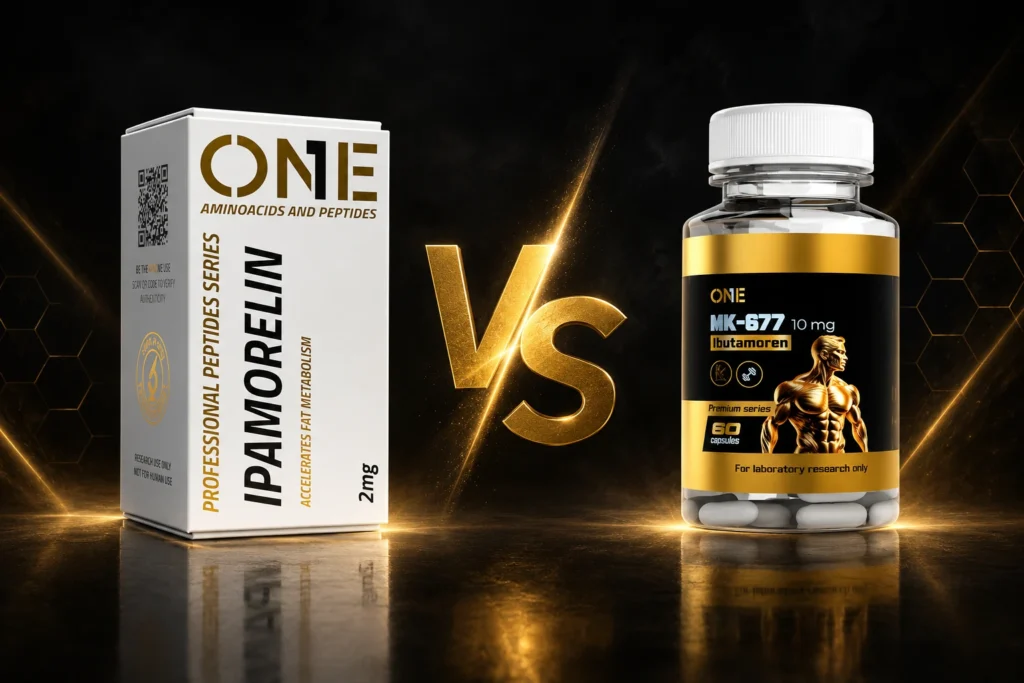
A research comparison of MK-677 and ipamorelin, focusing on GHS-R1a signaling, selectivity, administration route, human evidence and WADA status.
