 EN
EN  DE
DE  ES
ES  PL
PL 
Melanotan II vs PT-141 (Bremelanotide) — What Does the Research Say?

A research-focused comparison of Melanotan II and PT-141, covering melanocortin receptor selectivity, evidence, safety signals and regulatory status.
A research-focused comparison of Melanotan II and PT-141, covering melanocortin receptor selectivity, evidence, safety signals and regulatory status.
GHRP-2 and GHRP-6 are the two most frequently mentioned peptides from the family of growth hormone-releasing peptides – short, synthetic molecules that in research models stimulate the pituitary gland to release growth hormone. Both come from the same generation of secretagogues discovered by Cyril Y. Bowers’ team, and both act through the same receptor, the GHS-R1a ghrelin receptor. The record varies: in […]

Kisspeptin is a neuropeptide encoded by the KISS1 gene, an agonist of the KISS1R receptor (formerly GPR54), acting as the master regulator of the hypothalamic–pituitary–gonadal (HPG) axis. It is one of the most extensively clinically studied peptides in the context of fertility and sexual arousal. In laboratory trade it is available as a research reagent […]

Most peptides in the GH–IGF1 axis cluster act indirectly — secretagogues such as CJC-1295 or Ipamorelin stimulate the pituitary to release growth hormone, which only then triggers hepatic production of IGF-1. PEG-MGF escapes this scheme. Mechano Growth Factor is itself a splice variant of the IGF1 gene — an isoform that arises locally in skeletal […]

Among the synthetic growth-hormone-releasing peptides, Ipamorelin holds a special place — it is a molecule that pharmacological literature often describes with the adjective “clean”. Ipamorelin belongs to the group of peptide growth hormone secretagogues (GHS) and was one of the first compounds of this class deliberately designed to stimulate GH secretion without the signal “spilling […]
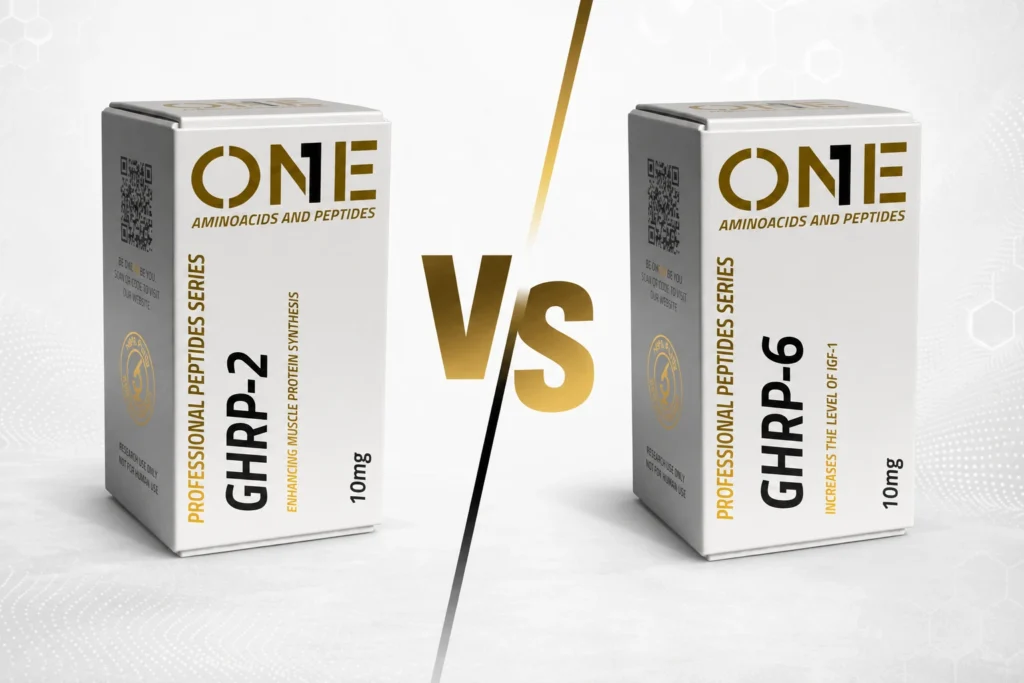
GHRP-2 and GHRP-6 are the two peptides most often set side by side from the growth hormone-releasing peptide family — compounds that, in research models, stimulate the pituitary to release growth hormone. Both come from the same generation of synthetic secretagogues discovered by Cyril Bowers’ team and act through the same receptor, yet they differ […]
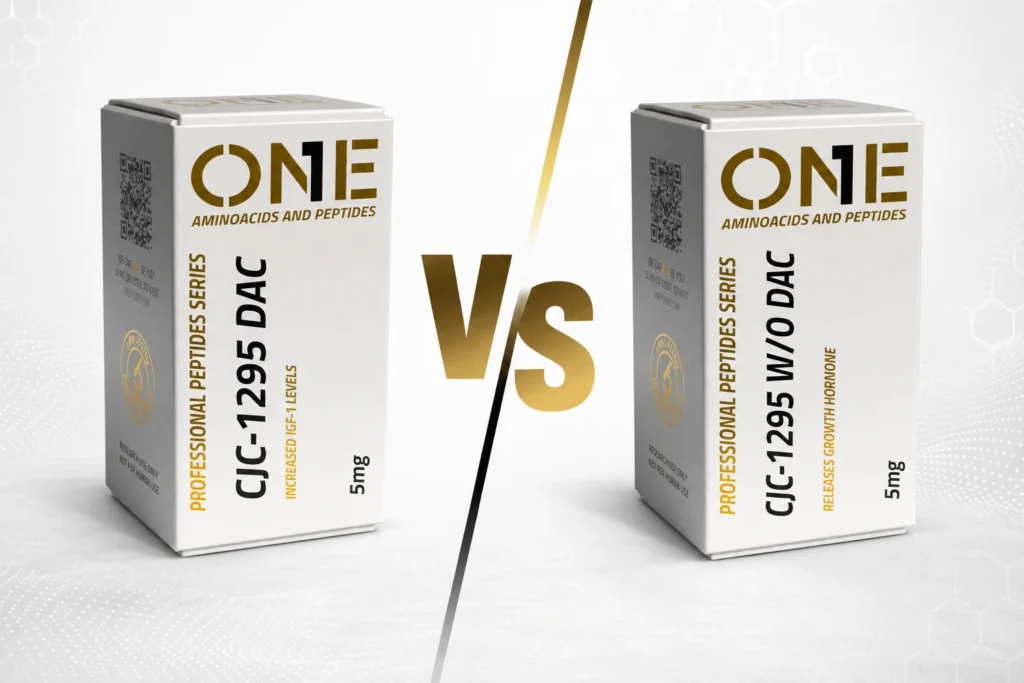
In the research-reagent trade, the name “CJC-1295” covers two distinct variants of the same peptide — differing by a single chemical modification that changes the half-life by two orders of magnitude. The DAC variant and the no-DAC variant are frequently confused, yet the difference between them is fundamental for anyone evaluating a reagent for the […]
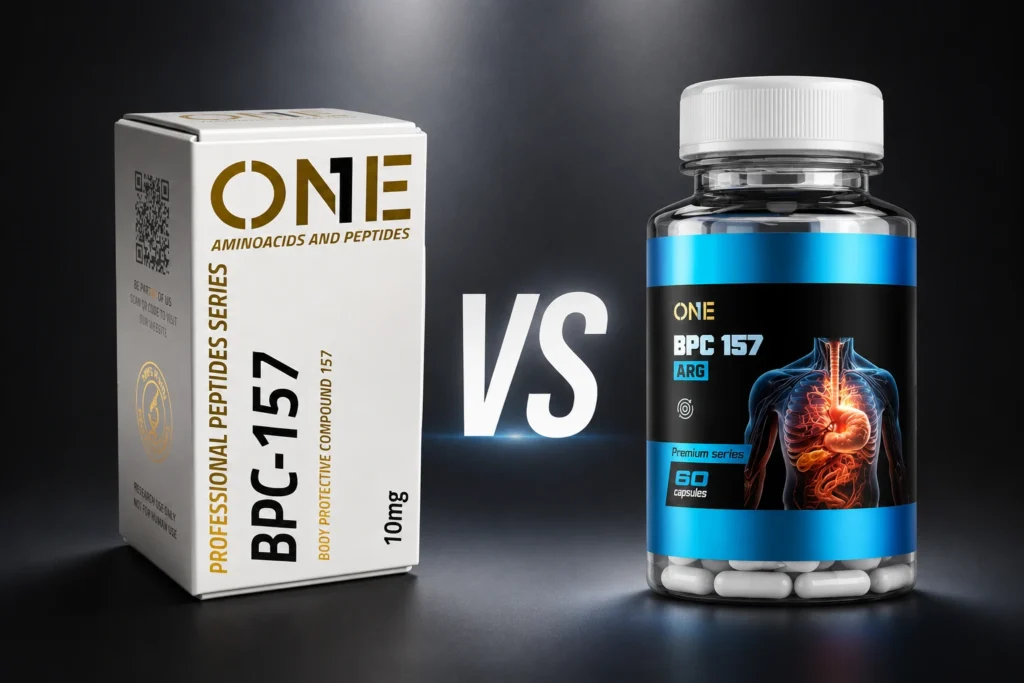
In the Research Use Only reagent market, the term “BPC-157” covers several chemical variants – differing in salt form, quality of synthesis and sometimes peptide sequence. The abbreviation ARG BPC-157 functions in suppliers’ catalogs as a separate marking and can be a source of real confusion – because it does not always refer to the same compound. For a researcher evaluating two “BPC-157” reagents for […]

Melanotan II was created in the mid-1980s by a team of Mac Hadley and Vincent Hruby from the University of Arizona working on an issue combining dermatology with peptide pharmacology: whether it is possible to induce skin pigmentation without exposure to ultraviolet radiation. Endogenous α-MSH (alpha-melanocyte-stimulating hormone) stimulates the MC1R receptor in melanocytes, triggering the eumelanin production cascade – if an analogue with […]

PT-141 was developed by the team of pharmacologist Mac Hadley at the University of Arizona working on synthetic analogues of α-melanocyte-stimulating hormone (α-MSH) – an endogenous proopiomelanocortin-derived peptide that regulates skin pigmentation through MC1R receptors in melanocytes. The hypothesis was practical: a stable α-MSH analogue could serve as an alternative to UV exposure in the induction of a protective tan. This is how the first analogue was created – Melanotan […]
