 EN
EN  DE
DE  ES
ES 

A research-focused comparison of Melanotan II and PT-141, covering melanocortin receptor selectivity, evidence, safety signals and regulatory status.
Bacteriostatic water is sterile water that contains a small amount of an antimicrobial preservative — usually 0.9% (9 mg/mL) benzyl alcohol — which suppresses bacterial growth and allows a multiple-dose vial to be entered repeatedly over time. Sterile water for injection (SWFI) contains no preservative and is intended for single use. In the lab, that preservative is the difference that matters when reconstituting lyophilized research peptides. For the full picture, see our full guide to bacteriostatic water.
ℹ️ Research-use context: this article describes bacteriostatic water as a diluent for laboratory reconstitution of research peptides. It is not medical advice or a human-use protocol.
Many research peptides ship as a lyophilized (freeze-dried) powder. To work with them in solution, the powder is reconstituted — dissolved back into a liquid — using a sterile diluent. Reconstitution sounds trivial, but the diluent isn’t passive. It sets the pH of the solution, it determines whether the vial stays usable after the first time it’s opened, and it influences how stable the dissolved peptide remains during the working window.
The core distinction comes down to preservation. A preservative-free diluent like SWFI is designed for a single entry: once the vial is opened, there is nothing to keep microbial contamination in check, so it is not meant to be re-entered. Bacteriostatic water solves that problem by carrying a bacteriostatic agent — “bacteriostatic” simply means it stops bacteria from multiplying rather than killing them outright. For research peptides supplied in small vials that are sampled multiple times across days or weeks, that property is exactly what makes a multi-use container practical in a laboratory setting.
The bacteriostatic agent in the standard United States Pharmacopeia (USP) monograph is benzyl alcohol at 0.9%, equivalent to 9 mg/mL. It works by disrupting bacterial cell membranes, which limits the growth of organisms that might be introduced when the vial closure is punctured. The USP monograph specifies bacteriostatic water as a multiple-dose container with a target pH around 5.7 (allowable range 4.5 to 7.0). The detail of why the preservative is 0.9% benzyl alcohol — and how it differs from ethanol — is covered in its own article.
That mildly acidic pH is worth noting, because peptide solubility and stability are pH-sensitive. Some peptides dissolve and hold up well in the slightly acidic environment that benzyl-alcohol-preserved water provides; others are better matched to a different diluent. There is no single “correct” diluent for every compound — the right choice depends on the peptide’s own chemistry, which is why a structured approach to dissolving the powder is useful (see the side link below).
Sterile saline — 0.9% sodium chloride solution — is a third option researchers encounter. It is isotonic and preservative-free, and while it is widely available, it behaves differently from both waters: it introduces electrolytes into the solution and, like SWFI, carries no antimicrobial agent, so it is also a single-use product by design. For some peptide work the added ions are irrelevant; for sensitive compounds they can matter. The comparison table below summarizes the practical differences.
| Property | Bacteriostatic water | Sterile water for injection (SWFI) | Sterile saline (0.9% NaCl) |
|---|---|---|---|
| Preservative | Yes — 0.9% / 9 mg/mL benzyl alcohol | None | None |
| Single vs multi-dose | Multiple-dose container | Single-dose | Single-dose |
| Dissolved solids | None (water + preservative) | None (pure water) | 0.9% sodium chloride (electrolytes) |
| Typical pH | ~5.7 (range 4.5–7.0) | Near-neutral, weakly buffered | ~4.5–7.0, isotonic |
| Typical lab use | Reconstituting research peptides in vials sampled repeatedly | One-time reconstitution, then discard | One-time reconstitution where isotonicity is wanted |
| Why for peptide reconstitution | Preservative keeps a multi-use vial usable across a working window; mildly acidic pH suits many peptides | No preservative — re-entry not advised | No preservative — re-entry not advised; adds ions |
For lyophilized research peptides that are reconstituted in a vial and then sampled more than once, bacteriostatic water is the diluent most labs reach for, precisely because the benzyl alcohol lets the container be entered repeatedly without bacterial overgrowth becoming the limiting factor. SWFI and saline remain appropriate when the work is a single reconstitution that will be used and discarded, or when a peptide’s chemistry specifically calls for a preservative-free, neutral, or isotonic medium. Whichever you select, match the diluent to the compound’s documented solubility profile rather than defaulting to whatever is on the shelf.
If you want the broader picture — what the product is, how it’s specified, and how it’s handled — see our full guide to bacteriostatic water. For the mechanics of getting powder into solution cleanly, our step-by-step peptide reconstitution walkthrough covers the workflow.
Is bacteriostatic water the same as sterile water?
No. Both are sterile, but bacteriostatic water contains an antimicrobial preservative (0.9% benzyl alcohol) that suppresses bacterial growth and allows a vial to be entered multiple times. Plain sterile water for injection has no preservative and is intended for a single use.
Can sterile water be used to reconstitute peptides?
Sterile water for injection can dissolve a lyophilized peptide, but because it has no preservative it is designed for single entry — once opened it should not be re-entered. For vials that will be sampled repeatedly in the lab, a preserved diluent is the more practical match.
Why is bacteriostatic water preferred for multi-use vials?
The benzyl alcohol acts as a bacteriostatic agent, meaning it stops introduced bacteria from multiplying each time the vial closure is punctured. That is what makes a multiple-dose container viable across a working window of days or weeks rather than a single use.
Does the mildly acidic pH of bacteriostatic water affect peptides?
It can. Bacteriostatic water sits around pH 5.7, and peptide solubility and stability are pH-dependent. Many peptides tolerate or prefer the slightly acidic environment, but compound-specific chemistry should guide the final diluent choice.
Bacteriostatic water and sterile water for injection are both sterile, but only bacteriostatic water carries a preservative (0.9% benzyl alcohol) that makes a multiple-dose vial practical for repeated sampling. Sterile saline and SWFI remain single-use, preservative-free options that suit one-time reconstitution or compounds with specific chemistry. For lyophilized research peptides handled over a working window, the preservative is the deciding factor — match the diluent to the peptide, and reach for lab-grade bacteriostatic water (10 mL) with COA when a multi-use vial is what the work calls for.

A research-focused comparison of Melanotan II and PT-141, covering melanocortin receptor selectivity, evidence, safety signals and regulatory status.
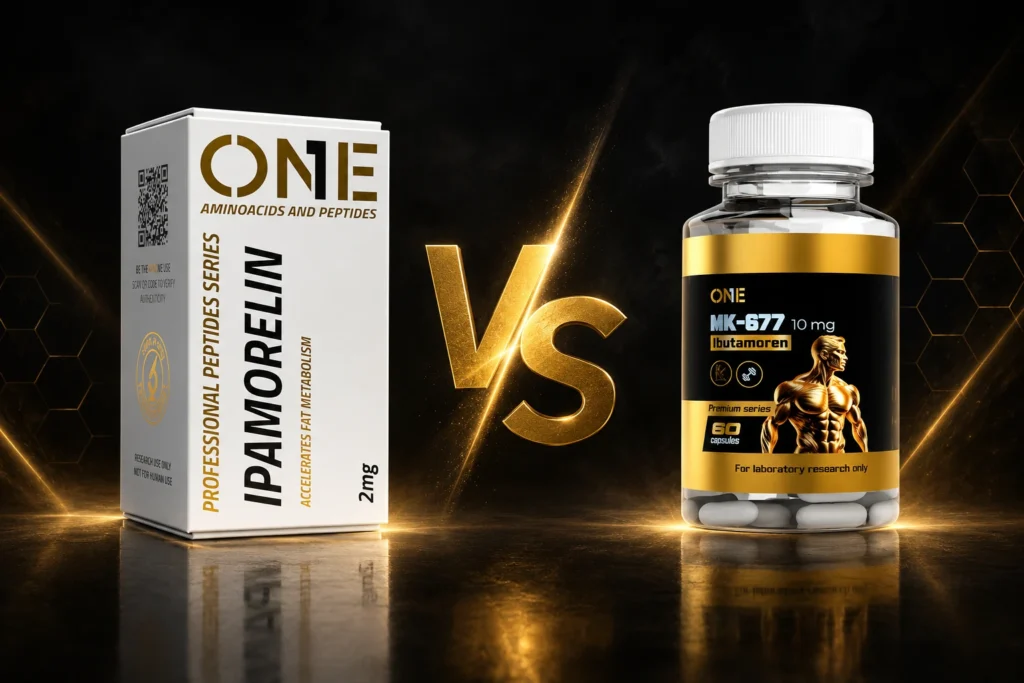
A research comparison of MK-677 and ipamorelin, focusing on GHS-R1a signaling, selectivity, administration route, human evidence and WADA status.
