
The gut–brain axis is a two-way communication system between the digestive tract and the central nervous system, based on hormonal and neural signals. Its central hub is the hypothalamus — the brain region that integrates information about the body’s energy state and regulates appetite and energy expenditure. It is here that all the signals described […]

Leptin and ghrelin are two hormones with opposing effects on appetite. Leptin, secreted by adipose tissue, is a long-term satiety signal — it informs the brain about the state of the energy reserves. Ghrelin, secreted mainly by the stomach, is a short-term hunger signal — it intensifies appetite before a meal. Together they form the […]
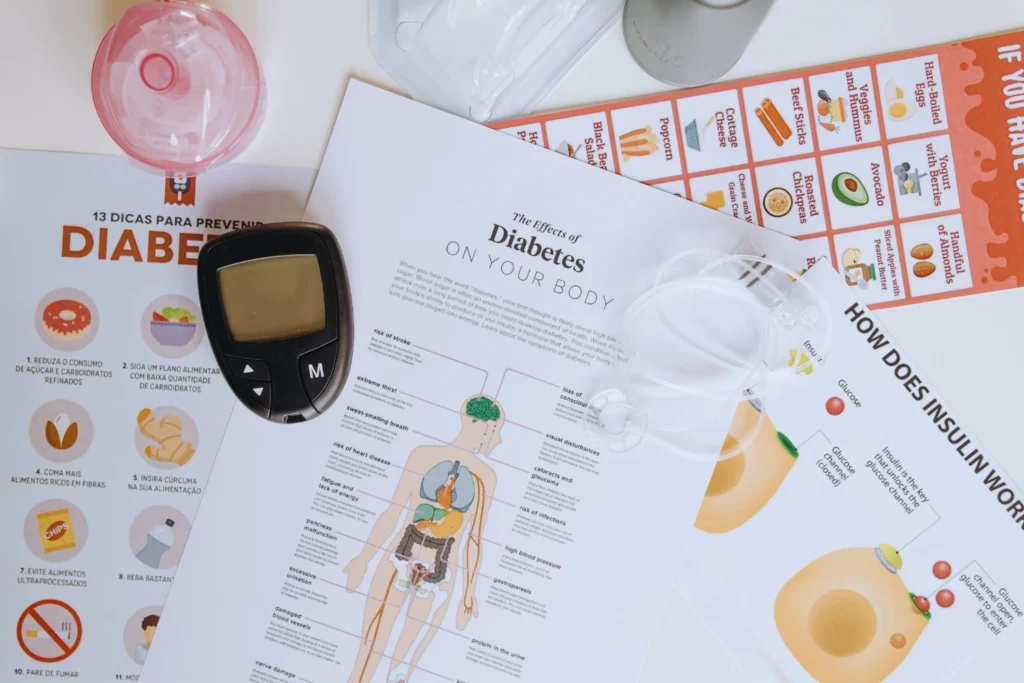
Insulin is an anabolic hormone that regulates energy balance — it lowers blood glucose and promotes energy storage, including in adipose tissue. Insulin resistance is a state in which cells respond more weakly to insulin, which leads to a compensatory rise in its concentration. This article describes what research says about the role of insulin […]

Metabolic adaptation is the reduction in energy expenditure during and after an energy deficit — greater than would follow from the loss of body mass alone. The body responds to an energy shortfall with an “energy-sparing mode”: it lowers resting expenditure, spontaneous activity and hormonal signalling. This is a phenomenon, not an excuse — and […]

The body weight set point is a concept describing body weight as a homeostatically regulated parameter — defended by the body much like temperature or blood pressure. According to this model, the brain seeks to keep weight within a defined range and activates compensatory mechanisms whenever weight deviates from it. This is the physiological explanation […]

Triple agonism is a pharmacological strategy based on the simultaneous stimulation of three hormone receptors that regulate metabolism: GLP-1, GIP and glucagon. Rather than acting on a single pathway, one molecule activates three in parallel — which in metabolism research is analysed as a qualitatively different approach from single or dual agonism. The most extensively […]

Thermogenesis is the production of heat by the body as a result of metabolic reactions. A particular form of it is mitochondrial uncoupling — a process in which the energy from the oxidation of nutrients is dissipated as heat rather than stored as ATP. This is the mechanism behind the action of brown adipose tissue […]

Metabolism is the sum of all the chemical reactions through which the body obtains energy from nutrients and uses it to sustain life: the work of the heart, breathing, thinking, tissue repair and movement. Measured as energy expenditure, it is one of the most tightly regulated parameters in human physiology — and, at the same […]

Orforglipron (LY3502970, brand Foundayo) is an oral, small-molecule GLP-1 receptor agonist developed by Eli Lilly and approved by the FDA in 2026. Unlike the peptide GLP-1 agonists (semaglutide, tirzepatide) administered by injection, orforglipron is a non-peptide molecule taken orally without the food-related restrictions characteristic of oral semaglutide. An oral GLP-1 receptor agonist was, for years, […]

Kisspeptin is a neuropeptide encoded by the KISS1 gene, an agonist of the KISS1R receptor (formerly GPR54), acting as the master regulator of the hypothalamic–pituitary–gonadal (HPG) axis. It is one of the most extensively clinically studied peptides in the context of fertility and sexual arousal. In laboratory trade it is available as a research reagent […]
 EN
EN  DE
DE  ES
ES